Setting carbon management in stone

Keeping global temperatures within limits deemed safe by the Intergovernmental Panel on Climate Change means doing more than slashing carbon emissions. It means reversing them.

“If we want to be anywhere near those limits [of 1.5 or 2 C], then we have to be carbon neutral by 2050, and then carbon negative after that,” says Matěj Peč, a geoscientist and the Victor P. Starr Career Development Assistant Professor in the Department of Earth, Atmospheric, and Planetary Sciences (EAPS).

Going negative will require finding ways to radically increase the world’s capacity to capture carbon from the atmosphere and put it somewhere where it will not leak back out. Carbon capture and storage projects already suck in tens of million metric tons of carbon each year. But putting a dent in emissions will mean capturing many billions of metric tons more. Today, people emit around 40 billion tons of carbon each year globally, mainly by burning fossil fuels.

Because of the need for new ideas when it comes to carbon storage, Peč has created a proposal for the MIT Climate Grand Challenges competition — a bold and sweeping effort by the Institute to support paradigm-shifting research and innovation to address the climate crisis. Called the Advanced Carbon Mineralization Initiative, his team’s proposal aims to bring geologists, chemists, and biologists together to make permanently storing carbon underground workable under different geological conditions. That means finding ways to speed-up the process by which carbon pumped underground is turned into rock, or mineralized.

“That’s what the geology has to offer,” says Peč, who is a lead on the project, along with Ed Boyden, the Y. Eva Tan Professor of Neurotechnology and Howard Hughes Medical Institute investigator at the McGovern Institute for Brain Research, and Yogesh Surendranath, the Paul M Cook Career Development Associate Professor of Chemistry. “You look for the places where you can safely and permanently store these huge volumes of CO2.”

Peč‘s proposal is one of 27 finalists selected from a pool of almost 100 Climate Grand Challenge proposals submitted by collaborators from across the Institute. Each finalist team received $100,000 to further develop their research proposals. A subset of finalists will be announced in April, making up a portfolio of multiyear “flagship” projects receiving additional funding and support.

Building industries capable of going carbon negative presents huge technological, economic, environmental, and political challenges. For one, it’s expensive and energy-intensive to capture carbon from the air with existing technologies, which are “hellishly complicated,” says Peč. Much of the carbon capture underway today focuses on more concentrated sources like coal- or gas-burning power plants.

It’s also difficult to find geologically suitable sites for storage. To keep it in the ground after it has been captured, carbon must either be trapped in airtight reservoirs or turned to stone.

One of the best places for carbon capture and storage (CCS) is Iceland, where a number of CCS projects are up and running. The island’s volcanic geology helps speed up the mineralization process, as carbon pumped underground interacts with basalt rock at high temperatures. In that ideal setting, says Peč, 95 percent of carbon injected underground is mineralized after just two years — a geological flash.

But Iceland’s geology is unusual. Elsewhere requires deeper drilling to reach suitable rocks at suitable temperature, which adds costs to already expensive projects. Further, says Peč, there’s not a complete understanding of how different factors influence the speed of mineralization.

Peč‘s Climate Grand Challenge proposal would study how carbon mineralizes under different conditions, as well as explore ways to make mineralization happen more rapidly by mixing the carbon dioxide with different fluids before injecting it underground. Another idea — and the reason why there are biologists on the team — is to learn from various organisms adept at turning carbon into calcite shells, the same stuff that makes up limestone.

Two other carbon management proposals, led by EAPS Cecil and Ida Green Professor Bradford Hager, were also selected as Climate Grand Challenge finalists. They focus on both the technologies necessary for capturing and storing gigatons of carbon as well as the logistical challenges involved in such an enormous undertaking.

That involves everything from choosing suitable sites for storage, to regulatory and environmental issues, as well as how to bring disparate technologies together to improve the whole pipeline. The proposals emphasize CCS systems that can be powered by renewable sources, and can respond dynamically to the needs of different hard-to-decarbonize industries, like concrete and steel production.

“We need to have an industry that is on the scale of the current oil industry that will not be doing anything but pumping CO2 into storage reservoirs,” says Peč.

For a problem that involves capturing enormous amounts of gases from the atmosphere and storing it underground, it’s no surprise EAPS researchers are so involved. The Earth sciences have “everything” to offer, says Peč, including the good news that the Earth has more than enough places where carbon might be stored.

“Basically, the Earth is really, really large,” says Peč. “The reasonably accessible places, which are close to the continents, store somewhere on the order of tens of thousands to hundreds thousands of gigatons of carbon. That’s orders of magnitude more than we need to put back in.”

Q&A: Climate Grand Challenges finalists on accelerating reductions in global greenhouse gas emissions

This is the second article in a four-part interview series highlighting the work of the 27 MIT Climate Grand Challenges finalists, which received a total of $2.7 million in startup funding to advance their projects. In April, the Institute will name a subset of the finalists as multiyear flagship projects.

Last month, the Intergovernmental Panel on Climate Change (IPCC), an expert body of the United Nations representing 195 governments, released its latest scientific report on the growing threats posed by climate change, and called for drastic reductions in greenhouse gas emissions to avert the most catastrophic outcomes for humanity and natural ecosystems.

Bringing the global economy to net-zero carbon dioxide emissions by midcentury is complex and demands new ideas and novel approaches. The first-ever MIT Climate Grand Challenges competition focuses on four problem areas including removing greenhouse gases from the atmosphere and identifying effective, economic solutions for managing and storing these gases. The other Climate Grand Challenges research themes address using data and science to forecast climate-related risk, decarbonizing complex industries and processes, and building equity and fairness into climate solutions.

In the following conversations prepared for MIT News, faculty from three of the teams working to solve “Removing, managing, and storing greenhouse gases” explain how they are drawing upon geological, biological, chemical, and oceanic processes to develop game-changing techniques for carbon removal, management, and storage. Their responses have been edited for length and clarity.

Directed evolution of biological carbon fixation

Agricultural demand is estimated to increase by 50 percent in the coming decades, while climate change is simultaneously projected to drastically reduce crop yield and predictability, requiring a dramatic acceleration of land clearing. Without immediate intervention, this will have dire impacts on wild habitat, rob the livelihoods of hundreds of millions of subsistence farmers, and create hundreds of gigatons of new emissions. Matthew Shoulders, associate professor in the Department of Chemistry, talks about the working group he is leading in partnership with Ed Boyden, the Y. Eva Tan professor of neurotechnology and Howard Hughes Medical Institute investigator at the McGovern Institute for Brain Research, that aims to massively reduce carbon emissions from agriculture by relieving core biochemical bottlenecks in the photosynthetic process using the most sophisticated synthetic biology available to science.

Q: Describe the two pathways you have identified for improving agricultural productivity and climate resiliency.

A: First, cyanobacteria grow millions of times faster than plants and dozens of times faster than microalgae. Engineering these cyanobacteria as a source of key food products using synthetic biology will enable food production using less land, in a fundamentally more climate-resilient manner. Second, carbon fixation, or the process by which carbon dioxide is incorporated into organic compounds, is the rate-limiting step of photosynthesis and becomes even less efficient under rising temperatures. Enhancements to Rubisco, the enzyme mediating this central process, will both improve crop yields and provide climate resilience to crops needed by 2050. Our team, led by Robbie Wilson and Max Schubert, has created new directed evolution methods tailored for both strategies, and we have already uncovered promising early results. Applying directed evolution to photosynthesis, carbon fixation, and food production has the potential to usher in a second green revolution.

Q: What partners will you need to accelerate the development of your solutions?

A: We have already partnered with leading agriculture institutes with deep experience in plant transformation and field trial capacity, enabling the integration of our improved carbon-dioxide-fixing enzymes into a wide range of crop plants. At the deployment stage, we will be positioned to partner with multiple industry groups to achieve improved agriculture at scale. Partnerships with major seed companies around the world will be key to leverage distribution channels in manufacturing supply chains and networks of farmers, agronomists, and licensed retailers. Support from local governments will also be critical where subsidies for seeds are necessary for farmers to earn a living, such as smallholder and subsistence farming communities. Additionally, our research provides an accessible platform that is capable of enabling and enhancing carbon dioxide sequestration in diverse organisms, extending our sphere of partnership to a wide range of companies interested in industrial microbial applications, including algal and cyanobacterial, and in carbon capture and storage.

Strategies to reduce atmospheric methane

One of the most potent greenhouse gases, methane is emitted by a range of human activities and natural processes that include agriculture and waste management, fossil fuel production, and changing land use practices — with no single dominant source. Together with a diverse group of faculty and researchers from the schools of Humanities, Arts, and Social Sciences; Architecture and Planning; Engineering; and Science; plus the MIT Schwarzman College of Computing, Desiree Plata, associate professor in the Department of Civil and Environmental Engineering, is spearheading the MIT Methane Network, an integrated approach to formulating scalable new technologies, business models, and policy solutions for driving down levels of atmospheric methane.

Q: What is the problem you are trying to solve and why is it a “grand challenge”?

A: Removing methane from the atmosphere, or stopping it from getting there in the first place, could change the rates of global warming in our lifetimes, saving as much as half a degree of warming by 2050. Methane sources are distributed in space and time and tend to be very dilute, making the removal of methane a challenge that pushes the boundaries of contemporary science and engineering capabilities. Because the primary sources of atmospheric methane are linked to our economy and culture — from clearing wetlands for cultivation to natural gas extraction and dairy and meat production — the social and economic implications of a fundamentally changed methane management system are far-reaching. Nevertheless, these problems are tractable and could significantly reduce the effects of climate change in the near term.

Q: What is known about the rapid rise in atmospheric methane and what questions remain unanswered?

A: Tracking atmospheric methane is a challenge in and of itself, but it has become clear that emissions are large, accelerated by human activity, and cause damage right away. While some progress has been made in satellite-based measurements of methane emissions, there is a need to translate that data into actionable solutions. Several key questions remain around improving sensor accuracy and sensor network design to optimize placement, improve response time, and stop leaks with autonomous controls on the ground. Additional questions involve deploying low-level methane oxidation systems and novel catalytic materials at coal mines, dairy barns, and other enriched sources; evaluating the policy strategies and the socioeconomic impacts of new technologies with an eye toward decarbonization pathways; and scaling technology with viable business models that stimulate the economy while reducing greenhouse gas emissions.

Deploying versatile carbon capture technologies and storage at scale

There is growing consensus that simply capturing current carbon dioxide emissions is no longer sufficient — it is equally important to target distributed sources such as the oceans and air where carbon dioxide has accumulated from past emissions. Betar Gallant, the American Bureau of Shipping Career Development Associate Professor of Mechanical Engineering, discusses her work with Bradford Hager, the Cecil and Ida Green Professor of Earth Sciences in the Department of Earth, Atmospheric and Planetary Sciences, and T. Alan Hatton, the Ralph Landau Professor of Chemical Engineering and director of the School of Chemical Engineering Practice, to dramatically advance the portfolio of technologies available for carbon capture and permanent storage at scale. (A team led by Assistant Professor Matěj Peč of EAPS is also addressing carbon capture and storage.)

Q: Carbon capture and storage processes have been around for several decades. What advances are you seeking to make through this project?

A: Today’s capture paradigms are costly, inefficient, and complex. We seek to address this challenge by developing a new generation of capture technologies that operate using renewable energy inputs, are sufficiently versatile to accommodate emerging industrial demands, are adaptive and responsive to varied societal needs, and can be readily deployed to a wider landscape.

New approaches will require the redesign of the entire capture process, necessitating basic science and engineering efforts that are broadly interdisciplinary in nature. At the same time, incumbent technologies have been optimized largely for integration with coal- or natural gas-burning power plants. Future applications must shift away from legacy emitters in the power sector towards hard-to-mitigate sectors such as cement, iron and steel, chemical, and hydrogen production. It will become equally important to develop and optimize systems targeted for much lower concentrations of carbon dioxide, such as in oceans or air. Our effort will expand basic science studies as well as human impacts of storage, including how public engagement and education can alter attitudes toward greater acceptance of carbon dioxide geologic storage.

Q: What are the expected impacts of your proposed solution, both positive and negative?

A: Renewable energy cannot be deployed rapidly enough everywhere, nor can it supplant all emissions sources, nor can it account for past emissions. Carbon capture and storage (CCS) provides a demonstrated method to address emissions that will undoubtedly occur before the transition to low-carbon energy is completed. CCS can succeed even if other strategies fail. It also allows for developing nations, which may need to adopt renewables over longer timescales, to see equitable economic development while avoiding the most harmful climate impacts. And, CCS enables the future viability of many core industries and transportation modes, many of which do not have clear alternatives before 2050, let alone 2040 or 2030.

The perceived risks of potential leakage and earthquakes associated with geologic storage can be minimized by choosing suitable geologic formations for storage. Despite CCS providing a well-understood pathway for removing enough of the carbon dioxide already emitted into the atmosphere, some environmentalists vigorously oppose it, fearing that CCS rewards oil companies and disincentivizes the transition away from fossil fuels. We believe that it is more important to keep in mind the necessity of meeting key climate targets for the sake of the planet, and welcome those who can help.

2022 MacVicar Faculty Fellows named

The Office of the Vice Chancellor and the Registrar’s Office have announced this year’s Margaret MacVicar Faculty Fellows: professor of mechanical engineering Kenneth Kamrin; professor of electrical engineering and computer science Jeffrey Lang; professor of earth, atmospheric and planetary sciences W. David McGee; and professor of chemistry Matthew Shoulders.

For 30 years, the MIT provost has recognized exemplary and sustained contributions to undergraduate education at MIT. The MacVicar Faculty Fellows program was named after Margaret MacVicar, the first dean for undergraduate education and founder of the Undergraduate Research Opportunities Program (UROP). Departments submit nominations and the selection process is highly competitive. Award recipients are appointed to a 10-year term and receive $10,000 per year of discretionary funds. Junior faculty are eligible for an initial three-year term, and the appointment can be converted to a 10-year fellowship if tenure is granted.

The 2022 Fellows join an elite academy of scholars who are committed to academic innovation and enhancing the student experience through teaching, leadership, mentoring, and advising.

Kamrin, Lang, McGee, and Shoulders’ exceptional instruction, improvements to curricula, and meaningful connections with undergraduates have had a significant impact on their departments, their students, and the Institute as a whole.

Matthew Shoulders

Matthew Shoulders is associate professor of chemistry and an associate member at the Broad Institute of MIT and Harvard. He received his undergraduate degree from Virginia Tech and a PhD in organic chemistry from the University of Wisconsin at Madison. Following a postdoc as an American Cancer Society fellow at the Scripps Research Institute, Shoulders joined MIT in 2012 and became associate professor with tenure in 2019.

Mentorship is at the center of Matthew Shoulders’ approach to teaching. Troy Van Voorhis, professor of chemistry and department head remarked, “In his 9 years at MIT, Matt has supervised 25 UROP students! That number is a testament to both his excellence as a mentor — it is his outstanding reputation among the undergraduates that bring UROPs to his group year in and year out — and also a testament to his dedication.”

Rachel Weissman ’21 wrote, “Beyond technical training, he mentors his undergraduates to become critical and analytical scientists…He always makes time to check in with students and understand their career and post-graduation goals so he can help them succeed.”

Shoulders has taught 5.111 (Principles of Chemical Science), 5.302 (Introduction to Experimental Chemistry), and has contributed to two edX classes in his department. His work on 5.111 through the edX platform served to address gaps in the classroom curriculum by providing online tools to help students better grasp the material.

To add to his long list of contributions, Shoulders also runs a 5.111 “bootcamp” which includes videos, tutorials, and practice problems to assist first-year students – particularly those who may not have taken AP chemistry in high school – in mastering some of the most challenging concepts of the GIR.

Van Voorhis continues, “Matt is someone who is willing to go above and beyond… [he] is beloved by the undergrads of MIT and with good reason.”

With everything he does, Shoulders brings a passion for chemistry and a genuine desire to introduce more students to it. One of his former students remarked, “He struck a very good balance between preparing us sufficiently for exams while still making lectures engaging and connecting them to the real world. I originally came in as a math major, and how much I enjoyed 5.111 definitely contributed to my switch to chemistry!”

Sylvia T. Ceyer, the John C. Sheehan Professor of Chemistry and MacVicar Faculty Fellow says, “Matt is extraordinarily talented … his cheerful willingness to take on additional educational tasks … coupled with his capacity to galvanize the students’ interest in learning and research … makes him a really special educator and mentor who radiates the very best.”

Junior Pedro Colón wrote, “It is committed professors like Professor Shoulders that make being an undergraduate student at MIT worthwhile and a notable part of my own life.”

On being named a 2022 fellow, Shoulders says, “I am tremendously honored and humbled … I am constantly inspired by the amazing scholars and students I get to work with here every day, and I am deeply grateful for the opportunity to keep learning from and contributing to this community.”

Kenneth Kamrin

“What an honor it is to be selected and to join such amazing company!” Kenneth Kamrin, professor of mechanical engineering says of becoming a MacVicar Fellow.

Kamrin received his PhD from MIT in 2008 and joined the mechanical engineering department in 2011. Shortly thereafter, he was appointed the Class of 1956 Career Development Chair and became an associate professor in 2016.

What sets Kamrin apart are his connections with students and the transformative impact he’s had on his department and undergraduate education at MIT.

Kamrin has taught two core mechanics classes, 2.001 and 2.002 (Mechanics and Materials I & II), and his teaching assistant Jeremy McCulloch ’22 reflects on the ways he helped students tackle some of the most fundamental topics in mechanical engineering. “He focused on addressing any questions or misunderstandings that students had. This made recitation more engaging and allowed [students] to focus on the material that was most difficult for them.”

McCulloch goes on to praise Kamrin’s special ability to guide students to discover new concepts on their own. “By providing them with just the right hints, he helps them learn the necessary material while still having an ‘aha’ moment that helps them gain a deeper understanding.”

Kamrin further demonstrates his belief in a growth mindset with his 2.002 bootcamp. Introduced in the spring of 2021, the bootcamp proved that students in upper-level classes can receive just as much benefit from customized mentoring and prep sessions as those in 2.001.

Assistant professor of mechanical engineering Carlos M. Portela writes, “Ken has been able to shape [2.002] into a beautifully organized sequence of concepts: a ‘knowledge tree’ consisting of a ‘trunk’ of fundamental concepts (followed by a handful of ‘branch’ topics, which stem from the trunk) and a searchable concept database.”

One Course 2 alumnus reflects, “After having completed 2.001 through 2.006, I can say with certainty that 2.002 is the class I understand best, even after a year and a half of having completed it, and I attribute it to Professor Kamrin’s attention to rigorous thinking.”

Kamrin is known for his engaging lectures and ability to captivate an audience. Last year, a department video titled the “Nature of Sand” caught the attention of National Geographic, the editors of which subsequently invited him to narrate a new television series called “Superstructures: Engineering Marvels.”

Quentin Berg Professor of Mechanics and MacVicar Faculty Fellow Rohan Abeyeratne concurs: “Ken is a master story-teller. He inspires the class by relating highly relevant anecdotes about applications, both historical and modern.”

Kamrin is also an innovator in the realm of digital education. Kamrin and fellow mechanical engineering professor Pedro Reis, led an experiment in the use of educational technology to alleviate student scheduling issues prior to the establishment of MITx. Their work highlighted the positive correlation between online learning and residential education and set the stage for the expansion of digital education across MIT.

From 2013-2020, Kamrin served as a UROP coordinator for mechanical engineering and is currently his department’s representative on the board of the MIT New Engineering Education Transformation (NEET) program. In 2021, he was appointed Undergraduate Officer and chair of its Undergraduate Programs Committee. In these important roles he helped to address the Covid-19 related stresses and hardships faced by underrepresented minority students and first-year students.

Kamrin writes, “My own undergraduate experience holds a special place in my heart, so I am especially honored to receive this award. At MIT, we are lucky to have such amazing students, who make the process of teaching even more fun.”

Jeffrey Lang

“When I first came to MIT as a student, I never envisioned teaching as part of my future career,” says Jeffrey Lang, professor of electrical engineering and computer science. “MIT is filled with exceptional educators from whom I have learned much along the way; to join them now as a MacVicar Fellow is a tremendous honor.”

Lang received his BS, MS, and PhD degrees from MIT’s department of electrical engineering and computer science. He joined Course 6 in electrical engineering in 1980, was named Vitesse Professor in 2013, and was awarded the Harold E. Edgerton Award in 1986 and the Graduate Student Council Teaching Award in 1987.

Over the past four decades Lang’s name has become synonymous with curricular innovation across EECS. Rajeev Ram, professor of electrical engineering and computer science and MacVicar Faculty Fellow says, “He has contributed to re-developing the heart of electrical engineering (circuits and electromagnetism) on 3 separate occasions. These three waves of curricular development have taken place over 22 years with Jeff playing key leadership roles.”

Tomás Palacios, professor of electrical engineering and computer science called Lang “a leader in the overall curriculum development in electrical engineering” and “one of the most active contributors” to the Course 6 redevelopment process.

One of Lang’s key contributions is in teaching 6.002 (Circuits and Electronics), a foundational subject in the electrical engineering curriculum. It was modernized in 2000 and spawned the textbook, “Foundations of Analog and Digital Electronic Circuits,” co-authored with the director of CSAIL, Anant Agarwal. Later, the subject became one of the very first edX classes, which has since reached more than 150,000 students in 133 countries worldwide.

Lang has also taught the core electromagnetics classes 6.013 and 6.014, and was responsible for creating hands-on laboratories for the modern circuits class, which allowed students to engage more directly with the course material.

Students say that his classes are challenging, yet inclusive and approachable. Junior Nina Gerszberg wrote, “Professor Lang is an amazing teacher due to his ability to take a complex subject and break it down into clear and engaging explanations…the fact that [he] is so passionate about circuits and electronics, made it easier for me to also get excited about the material too.”

Brooke McGoldrick ’20, MNG ’21, a mechanical engineering alumna, notes: “6.014 stands out as one of the most enjoyable courses from my undergraduate career. Following each demonstration, Professor Lang would concisely summarize the physical principles at work…[and] effectively connected the experiment to the concepts taught in lecture.”

Like his work on curricular reform, Lang’s tailor-made lectures provide students with uniquely enriching learning experiences. Karl K. Berggren, professor of electrical engineering, says that his classes are “meticulously crafted and organized, and invariably include meaningful laboratory experience (designed by him personally) with curricula that complement and strengthen the course.”

Beyond the classroom, Jeffrey Lang goes the extra mile for students and colleagues. Junior Nikita Romanov notes, “The first time I met Professor Lang…I was amazed by [his] enthusiasm in educating and mentoring people from the MIT community.”

Palacios shares a similar sentiment. “In addition to his technical mastery of the subjects… Professor Lang continuously inspires all of us with his kindness and attention to our students. He is extremely generous with his time, and always makes a point to help students whenever they need [it].”

W. David McGee

W. David McGee is associate professor with tenure in the Department of Earth, Atmospheric and Planetary Sciences (EAPS), Course 12. He holds a PhD in earth and environmental sciences from Columbia University, an MS in earth and environmental sciences from Tulane University, and an MA in teaching from Chatham College. He joined MIT in 2012 and became director of Terrascope — an innovative community for first-year learning and advising — in 2015.

McGee’s research addresses sustainability and its lasting implications on the environment and global ecosystem, which is at the heart of Terrascope’s mission. What is perhaps most noteworthy about his teaching is the way he helps students combine scientific principles with ethics and social awareness to take on the planet’s biggest issues both at home and abroad.

Department head and Schlumberger Professor of Earth and Planetary Sciences Robert van der Hilst notes, “David is reimagining MIT undergraduate education to include meaningful collaborations with communities outside of MIT, teaching students that scientific innovation is not enough.”

McGee oversees the cornerstone of the Terrascope program: 12.000 (Solving Complex Problems). Students work in teams to develop solutions and technologies for real-world, environmental issues and present them to a panel of experts. Spring break trips enable the students to experience their solutions firsthand in the communities they affect.

Van der Hilst continues, “David’s exemplary teaching in Terrascope comes through his refreshing perspective of our planetary situation through the foundations of science and how solutions must be formulated through the intersection of science with ethical paths forward informed by community engagement.”

J. Taylor Perron, associate department head and Professor of Geology in EAPS commented that McGee’s directorship has been transformative and that many “undergraduates consider Terrascope to be a pillar of environmental thought and education at MIT.”

McGee is also the associate department head for diversity, equity, and inclusion (DEI) in EAPS and is responsible for creating a roadmap for positive systemic change. He additionally collaborates with students in the department to support and advance “Unlearning Racism in Geoscience,” a nationwide initiative by the American Geophysical Union focused on creating more equitable practices and policies within the realm of geoscience.

Notably, McGee encourages students to challenge the status quo. Ari Epstein, associate director of Terrascope says, “Students who have had the good fortune to be educated by Professor McGee learn to look beyond the conventional paths…They learn the rare combination of humility and boldness that drives real change.”

Kate Trimble, senior associate dean and director of Office of Experiential Learning (OEL) wrote that McGee’s unique approach is based on the belief that “lessons about empathy, humility, respect, and cultural differences … are important for students to learn early in their MIT careers.” He employs “a big-tent approach that gives everyone a seat at the table.”

McGee is also a committed mentor and UROP advisor and supervises undergraduate senior theses. He received the Excellence in Mentoring Award in 2018.

A Terrascope alumnus wrote,My experiences in Terrascope and interactions with David were among the most valuable of my time at MIT. My education would not have been nearly as well-rounded or as human without his leadership.” Another remarks, David…does a phenomenal job forging genuine relationships and making sure that students feel both noticed and encouraged.”

On receiving this award, McGee is full of gratitude. “Being named a MacVicar Faculty Fellow is an incredible honor. I’m grateful for the amazing colleagues and students who continually support and inspire me in developing as a teacher.”

Whimsy and alkene isomerization in the Wendlandt Lab

Isomers are compounds that share identical chemical formulae but differ in structure or configuration, affecting their physical and chemical properties. A common example is glucose and fructose; both isomers of C6H12O6 are metabolized differently by our bodies due to a different arrangement of the same atoms.

The process of transforming a compound into any of its isomers is called isomerization. This important tool allows scientists to access molecules that are not easily obtained, such as certain alkenes, which are hydrocarbons that have a carbon-carbon double bond. Extremely versatile, alkenes are used as building blocks to synthesize a wide range of chemicals, pharmaceuticals, plastics, and fuels.

Researchers from the Wendlandt Group at MIT have developed a new method for isomerization of alkenes, making possible transformations that were previously inaccessible. Their strategy is detailed in the paper “Catalytic, contra-Thermodynamic Positional Alkene Isomerization” recently published in the Journal of the American Chemical Society by Gino Occhialini, Vignesh Palani, and Alison E. Wendlandt.

Imagine isomerization as an elevator that picks up a compound and releases its isomer on another floor, moving up or down on one axis based on the amount of energy needed to power a given transformation. In comparison, the Wendlandt Group’s new method resembles the Great Glass Elevator of Willy Wonka’s Chocolate Factory, able to travel “up and down, sideways, slantways, and any other way you can think of.”

Rules that need breaking

Until now, the isomerization of alkenes has been directionally limited from higher energy states to lower energy states due to the laws of thermodynamics, or energy transfer. “Think of it as a change in state from a ball on a table to a ball on the floor. To bring a ball back onto the table from the floor requires a lot more energy than to go the other direction,” says Wendlandt, Green Career Development Assistant Professor of Chemistry at MIT.

Besides the energy consideration, another hurdle to overcome is the principle of microscopic reversibility, which states that the pathway of a transformation in either direction must mathematically be identical. An isomerization driven by a single catalyst will always end in an equilibrated system with no way of further driving the system toward a higher-energy product.

Wendlandt’s team discovered that using a dual catalyst system allowed them to break microscopic reversibility and divert from a thermodynamically controlled paradigm. Calling it “positional control” over alkene isomerization, they used energy from light to power the reactions “energetically uphill.” In other words, instead of being limited by energy constraints that determine the direction of transformations, their method allows alkenes to be isomerized in any direction.

“The underlying mechanistic principle suggests that you could transform any isomer into another isomer using this process,” Wendlandt says, citing the team’s combined expertise in the compilation of a complete story from concept to application. “In the paper, we show how people might implement that to synthesize molecules they want to target. We are putting tools in the toolkit for our industrial collaborators, colleagues, other academics.”

Wendlandt’s Whimsical Alkene Factory

Wendlandt’s affinity for the Willy Wonka tale has, in some ways, found its way into the lab. “I have an unreasonable love for the Wonka archetype because he brings absurdity to his work,” says Wendlandt. “That has been such a mantra for my life. I want to do scientific work that’s important while also being unexpected and fun. It’s a state of play.”

While there clearly is a point to this research, unlike many of the ideas envisioned in Wonka’s factory, how the group got there “is sort of whimsical,” says Wendlandt. “We thought we should do this specifically because it shouldn’t work. This reaction runs in the wrong direction. But that’s fundamentally the kind of problem I’m drawn to.”

Still, whimsy in no way belies the broad utility of this discovery’s potential application. “The way the absence of this tool has manifested is conspicuous in the way we’ve been making certain kinds of molecules,” says Wendlandt.

“That we don’t have this tool is like the glass elevator. You have to go up a level and then walk over and come down a level. But once you see the shortcut, you can see the inefficiency in the way we were doing things before.”

Chemical synthesis yields potential antibiotic

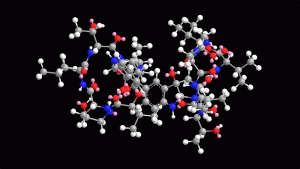
Chemists at MIT have developed a novel way to synthesize himastatin, a natural compound that has shown potential as an antibiotic.

Using their new synthesis, the researchers were able not only to produce himastatin but also to generate variants of the molecule, some of which also showed antimicrobial activity. They also discovered that the compound appears to kill bacteria by disrupting their cell membranes. The researchers now hope to design other molecules that could have even stronger antibiotic activity.

“What we want to do right now is learn the molecular details about how it works, so we can design structural motifs that could better support that mechanism of action. A lot of our effort right now is to learn more about the physicochemical properties of this molecule and how it interacts with the membrane,” says Mohammad Movassaghi, an MIT professor of chemistry and one of the senior authors of the study.

Brad Pentelute, an MIT professor of chemistry, is also a senior author of the study, which appears today in Science. MIT graduate student Kyan D’Angelo is the lead author of the study, and graduate student Carly Schissel is also an author.

Mimicking nature

Himastatin, which is produced by a species of soil bacteria, was first discovered in the 1990s. In animal studies, it was found to have anticancer activity, but the required doses had toxic side effects. The compound also showed potential antimicrobial activity, but that potential hasn’t been explored in detail, Movassaghi says.

Moving graphic of the himastatin molecular structure
Himastatin, a naturally occurring compound with antibiotic properties, has an unusual homodimeric structure that makes it challenging to synthesize.

Himastatin is a complex molecule that consists of two identical subunits, known as monomers, that join together to form a dimer. The two subunits are hooked together by a bond that connect a six-carbon ring in one of the monomers to the identical ring in the other monomer.

This carbon-carbon bond is critical for the molecule’s antimicrobial activity. In previous efforts to synthesize himastatin, researchers have tried to make that bond first, using two simple subunits, and then added more complex chemical groups onto the monomers.

The MIT team took a different approach, inspired by the way this reaction is performed in bacteria that produce himastatin. Those bacteria have an enzyme that can join the two monomers as the very last step of the synthesis, by turning each of the carbon atoms that need to be joined together into highly reactive radicals.

To mimic that process, the researchers first built complex monomers from amino acid building blocks, helped by a rapid peptide synthesis technology previously developed by Pentelute’s lab.

“By using solid-phase peptide synthesis, we could fast-forward through many synthetic steps and mix-and-match building blocks easily,” D’Angelo says. “That’s just one of the ways that our collaboration with the Pentelute Lab was very helpful.”

The researchers then used a new dimerization strategy developed in the Movassaghi lab to connect two complex molecules together. This new dimerization is based on the oxidation of aniline to form carbon radicals in each molecule. These radicals can react to form the carbon-carbon bond that hooks the two monomers together. Using this approach, the researchers can create dimers that contain different types of subunits, in addition to naturally occurring himastatin dimers.

“The reason we got excited about this type of dimerization is because it allows you to really diversify the structure and access other potential derivatives very quickly,” Movassaghi says.

Membrane disruption

One of the variants that the researchers created has a fluorescent tag, which they used to visualize how himastatin interacts with bacterial cells. Using these fluorescent probes, the researchers found that the drug accumulates in the bacterial cell membranes. This led them to hypothesize that it works by disrupting the cell membrane, which is also a mechanism used by at least one FDA-approved antibiotic, daptomycin.

The researchers also designed several other himastatin variants by swapping in different atoms in specific parts of the molecule, and tested their antimicrobial activity against six bacterial strains. They found that some of these compounds had strong activity, but only if they included one naturally occurring monomer along with one that was different.

“By bringing two complete halves of the molecule together, we could make a himastatin derivative with only a single fluorescent label. Only with this version could we do microscopy studies that offered evidence of himastatin’s localization within bacterial membranes, because symmetric versions with two labels did not have the right activity,” D’Angelo says.

Andrew Myers, a professor of chemistry at Harvard University, says that the new synthesis features “fascinating new chemical innovations.”

“This approach permits oxidative dimerization of fully synthetic monomer subunits to prepare the antibiotic himastatin, in a manner related to its biosynthesis,” says Myers, who was not involved in the research. “By synthesizing a number of analogs, important structure-activity relationships were revealed, as well as evidence that the natural product functions at the level of the bacterial envelope.”

The researchers now plan to design more variants that they hope might have more potent antibiotic activity.

“We’ve already identified positions that we can derivatize that could potentially either retain or enhance the activity. What’s really exciting to us is that a significant number of the derivatives that we accessed through this design process retain their antimicrobial activity,” Movassaghi says.

The research was funded by the National Institutes of Health, the Natural Sciences and Engineering Research Council of Canada, and a National Science Foundation graduate research fellowship.

Protein structure offers clues to drug-resistance mechanism

MIT chemists have discovered the structure of a protein that can pump toxic molecules out of bacterial cells. Proteins similar to this one, which is found in E. coli, are believed to help bacteria become resistant to multiple antibiotics.

Using nuclear magnetic resonance (NMR) spectroscopy, the researchers were able to determine how the structure of this protein changes as a drug-like molecule moves through it. Knowledge of this detailed structure may make it possible to design drugs that could block these transport proteins and help resensitize drug-resistant bacteria to existing antibiotics, says Mei Hong, an MIT professor of chemistry.

“Knowing the structure of the drug-binding pocket of this protein, one might try to design competitors to these substrates, so that you could block the binding site and prevent the protein from removing antibiotics from the cell,” says Hong, who is the senior author of the paper.

MIT graduate student Alexander Shcherbakov is the lead author of the study, which appears today in Nature Communications. The research team also includes MIT graduate student Aurelio Dregni and two researchers from the University of Wisconsin at Madison: graduate student Peyton Spreacker and professor of biochemistry Katherine Henzler-Wildman.

Drug-resistance transporters

Pumping drugs out through their cell membranes is one of many strategies that bacteria can use to evade antibiotics. For several years, Henzler-Wildman’s group at the University of Wisconsin has been studying a membrane-bound protein called EmrE, which can transport many different toxic molecules, including herbicides and antimicrobial compounds.

EmrE belongs to a family of proteins called the small multidrug resistance (SMR) transporters. Although EmrE is not directly involved in resistance to antibiotics, other members of the family have been found in drug-resistant forms of Mycobacterium tuberculosis and Acinetobacter baumanii.

“The SMR transporters have high sequence conservation across key regions of the protein. EmrE is by far the best-studied member of the family, both in vitro and in vivo, which makes it an ideal model system to investigate the structure that supports SMR activity,” Henzler-Wildman says.

A few years ago, Hong’s lab developed a technique that allows researchers to use NMR to measure the distances between fluorine probes and hydrogen atoms in proteins. This makes it possible to determine the structure of a protein as it binds to a molecule that contains fluorine.

After Hong gave a talk about the new technique at a conference, Henzler-Wildman suggested that they team up to study EmrE. Her lab has spent many years studying how EmrE transports a drug-like molecule, or ligand, across the phospholipid membrane. This ligand, known as F4-TPP+, is a tetrahedral molecule with four fluorine atoms attached to it, one at each corner.

Using this ligand with Hong’s new NMR technique, the researchers set out to determine an atomic-resolution structure of EmrE. It was already known that each EmrE molecule contains four transmembrane helices that are roughly parallel. Two EmrE molecules assemble into a dimer, so that eight transmembrane helices form inner walls that interact with the ligand as it moves through the channel. Previous studies have revealed the overall topology of the helices, but not of the protein side chains that extend into the channel interior, which are like arms that grab the ligand and help guide it through the channel.

EmrE transports toxic molecules from the inside of a bacterial cell, which is at neutral pH, to the outside, which is acidic. This change in pH across the membrane affects the structure of EmrE. In a 2021 paper, Hong and Henzler-Wildman discovered the structure of the protein as it binds to F4-TPP+ in an acidic environment. In the new Nature Communications study, they analyzed the structure at a neutral pH, allowing them to determine how the structure of the protein changes as the pH changes.

A complete structure

At neutral pH, the researchers found in this study, the four helices that make up the channel are relatively parallel to one another, creating an opening that the ligand can easily enter. As the pH drops, moving toward the outside of the membrane, the helices begin to tilt so that the channel is more open toward the outside of the cell. This helps to push the ligand out of the channel. At the same time, several rings found in the protein side chains shift their orientation in a way that also helps to guide the ligand out of the channel.

The acidic end of the channel is also more welcoming to protons, which enter the channel and help it to open further, allowing the ligand to exit more easily.

“This paper really completes the story,” Hong says. “One structure is not enough. You need two, to figure out how a transporter can actually open to both sides of the membrane, because it’s supposed to pump the ligand or the antibiotic compound from inside the bacteria out of the bacteria.”

The EmrE channel is believed to transport many different toxic compounds, so Hong and her colleagues now plan to study how other molecules travel through the channel.

The research was funded by the National Institutes of Health and the MIT School of Science Camplan Fund.

Seven from MIT named 2022 Sloan Research Fellows

Seven members of the MIT faculty are among 118 early-career researchers recently named recipients of the 2022 Sloan Research Fellowships by the Alfred P. Sloan Foundation. Representing the departments of Chemistry, Economics, Electrical Engineering and Computer ScienceMathematics, and Physics, the honorees will each receive a two-year, $75,000 fellowship to advance their research.

Including this year’s recipients, a total of 309 MIT faculty have received Sloan Research Fellowships since the first fellowships were awarded in 1955.

“Today’s Sloan Research Fellows represent the scientific leaders of tomorrow,” says Adam F. Falk, president of the Alfred P. Sloan Foundation. “As formidable young scholars, they are already shaping the research agenda within their respective fields — and their trailblazing won’t end here.”

2022 Sloan Fellow Netta Engelhardt, the Biedenharn Career Development Assistant Professor of Physics, is a researcher in the Center for Theoretical Physics. She researches the dynamics of black holes in quantum gravity, and uses holography to study the interplay between gravity and quantum information. Her primary focus is on the black hole information paradox — that is, black holes seemed to be destroying information that, according to quantum physics, cannot be destroyed. She also studies the thermodynamic behavior of black holes and the validity of so-called cosmic censorship conjecture, which hypothesizes that singularities that result from gravitational collapse are always hidden behind event horizons.

Manya Ghobadi is a TIBCO Career Development Assistant Professor in the Department of Electrical Engineering and Computer Science and an investigator in the Computer Science and Artificial Intelligence Laboratory. A computer systems researcher with a networking focus, she has worked on a broad set of topics; many of the technologies she has helped develop are part of real-world systems. Her research interests include reconfigurable networks, networks for machine learning, data center networks, high-performance cloud infrastructure, network optimization, hardware-software co-design, optical networks.

Phillip Isola, the Bonnie and Marty (1964) Tenenbaum Career Development Assistant Professor in the Department of Electrical Engineering and Computer Science and an investigator in the Computer Science and Artificial Intelligence Laboratory. He explores why we represent the world the way we do, and how we can replicate these abilities in machines through computer vision, machine learning, and artificial intelligence. His group’s current research topics include representation learning, generative modeling, and multiagent systems — as well as the applications and misuses of these systems.

Simon Jäger is the Silverman Family Career Development Assistant Professor of Economics in the School of Humanities, Arts, and Social Sciences. His research focuses on labor markets and studies the origins and consequences of inequality. He works on topics such as competition in the labor market, unions and other forms of worker representation, unemployment, and the role of psychological factors in the labor market. One line of his work has studied the causal effects of giving workers the right to participate in their firm’s decision-making and electing employee board representatives on outcomes such as productivity and wages. Some of his recent work sheds light on how workers’ misperceptions about wages they could earn elsewhere give rise to firms’ market power to set lower wages and sustain a low-wage sector in the labor market. Methodologically, his research combines experimental and quasi-experimental methods with large, administrative data sets, for example from Germany, Finland, or Argentina.

Assistant professor of physics Long Ju’s research focuses on understanding light-matter interactions in novel quantum materials, especially atomically thin materials and van der Waals hetero-structures of them. His lab creates devices and applies electric and magnetic fields to achieve external control of material properties, such as controlling the stacking order and electrically tuning the band structure and charge doping. By including electron correlations and topology, he seeks to design and engineer more exotic electrical and optical properties of these two-dimensional quantum materials. His research team also develops advanced experimental tools for the study of quantum materials. One example is a custom-built near-field infrared (IR) nanoscope and spectroscope that can characterize diverse materials at the nanoscale by exploring their interactions with light.

Assistant professor of mathematics Lisa Sauermann‘s main research interests are extremal and probabilistic combinatorics, and her research also connects to probability theory, number theory, and theoretical computer science. With a collaborator, she proved an inverse theorem for the quadratic Littlewood-Offord problem. A favorite problem of hers is the Erdös-Ginzburg-Ziv problem, which asks, for some given numbers m and n, how large one needs to make a subset of an n-dimensional integer grid to make sure that one can always find m points whose average is again an integer grid point. In 2021, she received the European Prize in Combinatorics for her “profound contribution to combinatorics,” and, in particular, for her results on the growth rate of algebraically defined graph classes, for the solution of a conjecture of Erdös, Faudree, Rousseau, and Schelp, and for the solution of the edge-statistics conjecture.

Daniel Suess, the Class of 1948 Career Development Professor in the Department of Chemistry, uses molecular chemistry to explain global biogeochemical cycles. In the fields of inorganic and biological chemistry, Suess and his lab look into understanding complex and challenging reactions and clustering of particular chemical elements and their catalysts. Most notably, these reactions include those that are essential to solar fuels. Suess’s efforts to investigate both biological and synthetic systems have broad aims of both improving human health and positively impacting the environment.

3 Questions: Kuheli Dutt reflects on diversity in science

In summer 2021, the MIT School of Science welcomed Kuheli Dutt, one of the six assistant deans for diversity, equity, and inclusion (DEI) at the Institute. Dutt came to MIT from Columbia University’s Lamont-Doherty Earth Observatory, where she led Lamont’s DEI efforts and initiatives since 2008. At Columbia, she also co-chaired the university’s Senate Commission on the Status of Women and served on its Life Task Force on Inclusion and Belonging.

As with many higher education institutions that focus on geosciences research — a predominantly white and male-dominated field — Columbia’s leadership at Lamont stated its goal of becoming a leader in diversity and inclusion. In 2016, Dutt’s research paper on “Gender differences in recommendation letters” was the first such published study in the geosciences. In 2020, Dutt’s research paper on “Race and racism in the geosciences” was Nature Geoscience’s top-most accessed paper that year, with more than 66,000 views.

Now, Dutt brings her years of experience to bear at MIT and talks about the importance of the work ahead. With the recent launch of the “MIT School of Science DEI Action Items,” authored by Dutt, Dean Nergis Mavalvala, and associate deans Jacqueline Lees and Rebecca Saxe, Dutt talks about why the best scientific research is — by necessity — the most diverse, accessible, and inclusive; what to watch out for; and where MIT has excelled and can improve.

Q: What is the importance of diversity, equity, and inclusion efforts in the sciences and what are the challenges?

A: There are two pieces with regard to the importance of DEI in the sciences: a research-based imperative to increase diversity, access, and belonging; and a moral imperative as a national leader in STEM research.

For the first piece, research shows that diversity promotes better science. For example, a study of 2.5 million scientific papers found that papers with more diverse authors tended to get published in higher-impact journals and had more citations. For the second piece, as an institution of higher learning, we owe it to ourselves to ensure access to opportunities and resources for traditionally underrepresented groups.

Broadly speaking, there are three primary challenges to DEI work. One is the area of role models and representation. Research shows that a sense of belonging — what we often call “inclusion” — is one of the most important factors determining whether someone chooses to stay on in a field. When the leadership and faculty are predominantly a certain demographic, say white, male, heterosexual, able-bodied, it sends a message about who belongs in those spaces.

Another challenge area is culture and climate. People from underrepresented groups typically face more negative experiences than others, including in the workplace. This includes women, people of color, LGBTQ+ people, people with disabilities, and others.

Additionally, as we try to return to a “new normal” following the pandemic, the lessons of the past year are crucial — women and communities of color have been disproportionately impacted. Besides this, following the murders of George Floyd, Breonna Taylor, and others, we saw the rise of racial justice dialogues and movements across the country in solidarity with the Black Lives Matter movement. The pandemic also saw a surge of hate crimes against Asian Americans and Pacific Islanders. The past year-and-a-half has posed challenges, along with an urgency to address those challenges, in a way that many of us haven’t seen in recent times.

Even as we talk about racial justice, we need to acknowledge that different groups face different challenges, be they Black/African-American, Hispanic/Latinx, Native American/Indigenous, or Asian American/Pacific Islander. For example, a 2019 PNAS study found that among racial minorities, Black people are most likely to be victims of police violence and Asian Americans the least likely. On the other hand, while there is a positive stereotype around Asian Americans in STEM, they are the least likely racial/ethnic group to be appointed to top leadership positions and often get excluded from STEM DEI conversations because they are not considered “underrepresented minorities.” The point being that each community faces its own set of challenges and there is no one-size-fits-all solution. I have used race here as an example, but DEI is so much more than just race/ethnicity. My own research is on implicit bias, which shows up in various spaces in various forms.

And the final challenge area is what I call access and opportunity. Talented people come from all backgrounds but not everyone has access to opportunities and resources. What we often call merit is the outcome of people having access to opportunities and resources that enable them to fulfill their potential. And this access and opportunity is significantly limited for certain groups. We need to find ways to promote such access for traditionally underrepresented groups. Some excellent examples are our outreach and bridge programs, including the Bernard S. and Sophie G. Gould MIT Summer Research Program.

Q: What policies or programs did you work on at Lamont that were particularly effective helping to meet its DEI goals?

A: When my position was created in 2008, it was uncommon to have a designated institutional DEI officer, and that, too, with a seat at the leadership table. So, kudos to Lamont for taking this step so early on.

At Lamont, we adopted a multi-pronged approach, spanning numerous initiatives and sustaining them over time. What was particularly effective was the combination of the following: integrating DEI aspects into academic affairs (faculty searches, appointments, promotions, salary equity) and work-environment issues; and my position being part of the Lamont leadership, providing advice to the director, and having a seat on the Executive Committee, Lamont’s primary leadership body. Additionally, given that DEI work is relational, engaging people across the board was key.

Q: What has inspired you about working at MIT and where could we grow?

A: I would like to bring the above elements to my work here at MIT. I’m excited to work with such wonderful people here. Dean Mavalvala is an inspiration and was part of the reason I took this job, along with the opportunity I saw in advancing DEI at the School of Science. Already, it’s encouraging to see some of the important DEI work our departments, labs, and centers (DLCs) are doing.

We recently launched the School of Science DEI Action Items, outlining the vision of the dean’s office for an overarching framework that supports, aligns, and coordinates the DEI activities of the DLCs and the school at large with the MIT DEI Strategic Action Plan. Different DLCs have different needs and priorities, so it can sometimes be tricky to create a unifying structure that works for all, but with concerted efforts sustained over time I feel optimistic that we can get there.

I’ve been excited to learn about MIT’s Summer Research Program program, offered in the departments of Biology, Brain and Cognitive Sciences, and Chemistry. We can create similar programs across the school. Another potential area of growth is investing in bridge programs that provide preparation for students who want to pursue doctoral programs but who need additional preparation. Obviously, these will take time to grow, and the School of Science dean’s office would play a role in supporting these efforts.

At the end of the day, DEI enriches our science and our community. This is not the work of a moment or even a semester. It requires systemic change, a multi-pronged approach, which needs to be nurtured and sustained over several years. I am excited about what we can do here at the School of Science.

Why are comet heads green — but not their tails?

In a global collaboration, a team of researchers recently proved a 90-year-old theory on why comets’ heads, but never the tails, are green.

The scientific explanation, published in PNAS on Dec. 21, has to do with the way the molecule dicarbon (C2) gets blown apart by sunlight. The other part of the story lies in an accidental discovery and a love of spectroscopic perturbations, passed from a recently retired professor to another generation of scientists.

When molecules misbehave

As a graduate student at MIT in the lab of Robert W. Field, Jun Jiang PhD ’17 was studying the molecule acetylene by exciting it with a high-power frequency-tunable UV laser. As the acetylene blew apart, one of the resulting molecules, C2, emitted light from several highly excited states.

One of these high-energy states, the C1Πg state of C2, showed an irregular vibrational energy level structure and was strongly perturbed by another mysterious electronic state. In other words, Jiang noticed that the carbon-carbon bond in the dicarbon C state vibrates in a highly unusual manner not readily explained, in some ways like a child throwing a tantrum for no apparent reason.

Introductory classes in quantum mechanics teach a model system of how molecules are supposed to act or react in various situations. “Perturbations are deviations that are so large, spectroscopists often give up and label the observed spectra of the molecule as ‘strongly perturbed,’” says Jiang, now a researcher at Lawrence Livermore National Laboratory and a co-author of the paper.

According to Field, even physicist Gerhard Herzberg, who all but created the study of small molecule spectroscopy and originated the proposal of why comet’s tails are never green, would usually set perturbations aside “for future study” in his research.

“I started my career dealing with Herzberg’s garbage,” says Field, professor of chemistry post-tenure at MIT who also co-authored the paper. Field’s interest in the “bad behavior” of molecules began over 40 years ago with deviations in carbon monoxide. “When molecules misbehave, it can lead to great insight.”

The valence-hole concept

The perturbations in the C state of C2 led researchers to more than what was previously known about the molecule’s electronic structure, a concept invented by quantum chemists to describe the complex, many-body interactions among the electrons and nuclei in the molecule.

“At MIT, we discovered that the source of these systematic perturbations in C2 is a new phenomenon that we call ‘valence-hole electron configurations,’” says Field.

Despite the simplicity of its chemical composition, dicarbon possesses a surprisingly intricate electronic structure, which manifests strident anomalies in energy level patterns. These signs of “spectroscopic perturbations” are far more numerous and complex than those found in other simple, textbook-featured diatomic molecules, such as CO, N2, and O2.

“The perturbations caused by these special, unexpectedly stable valence-hole configurations profoundly affect the photodissociation and predissociation properties of C2, which, as we show in our PNAS paper, determine how long C2 molecules survive on a comet before being destroyed by ultraviolet radiation in sunlight,” says Field. “Perturbations, predissociation, and photodissociation are three spectroscopic arcanae that explain the mystery of the color difference between the head and tail of a strikingly visible comet.”

These insights were crucial to the solution of an almost-century-old puzzle that Professor Timothy W. Schmidt of the University of New South Wales and lead author of the paper was investigating on the other side of the world. Arriving at similar conclusions about the excited C state of C2, Schmidt reached out to Field, leading to the first time in history scientists observed the diagnostic details of this chemical interaction, theorized by Herzberg in the 1930s.

Putting Humpty together again

After seven years in the Field research group, Jiang has learned to embrace a curiosity-guided approach to research. “Bob always challenged us to look beyond the conventional expectations about how a molecule should behave. There can be beautiful stories to learn,” says Jiang.

The stories from this discovery reach even further than C2. Studies have shown the importance of the valence-hole state in dinitrogen, but the high energy of this state in N2 makes a more complete spectroscopic investigation difficult. As Jiang’s accidental discovery determined that spectra for the valence-hole states of dicarbon are more easily obtained than for other related molecules, C2 can serve as a model for understanding the disruptive impact of valence-hole states in general.

“Perturbations break the regular Herzbergian pattern, and theory based on the valence-hole concept puts the broken pieces back together,” says Jiang, whose current work compares the idea to achieving what was impossible in the Humpty Dumpty nursery rhyme.

Perhaps children’s tales have more in common with chemical breakthroughs than we may think. If unexpected deviations lead to deeper understanding of a subject’s nature, we might say that misbehavior is simply misunderstood behavior. Molecules, like children, “act out” for reasons not readily obvious. But once we identify the cause, the pieces fit together to tell a more complete story.

As Field says, “Nature leaves a breadcrumb trail of insights through perturbations.” We can reap those insights if we follow where curiosity leads.

School of Science announces 2022 Infinite Expansion Awards

The MIT School of Science has announced eight postdocs and research scientists as recipients of the 2022 Infinite Expansion Award.

The award, formerly known as the Infinite Kilometer Award, was created in 2012 to highlight extraordinary members of the MIT science community. The awardees are nominated not only for their research, but for going above and beyond in mentoring junior colleagues, participating in educational programs, and contributing to their departments, labs, and research centers, the school, and the Institute.

The 2022 School of Science Infinite Expansion winners are:

  • Héctor de Jesús-Cortés, a postdoc in the Picower Institute for Learning and Memory, nominated by professor and Department of Brain and Cognitive Sciences (BCS) head Michale Fee, professor and McGovern Institute for Brain Research Director Robert Desimone, professor and Picower Institute Director Li-Huei Tsai, professor and associate BCS head Laura Schulz, associate professor and associate BCS head Joshua McDermott, and professor and BCS Postdoc Officer Mark Bear for his “awe-inspiring commitment of time and energy to research, outreach, education, mentorship, and community;”
  • Harold Erbin, a postdoc in the Laboratory for Nuclear Science’s Institute for Artificial Intelligence and Fundamental Interactions (IAIFI), nominated by professor and IAIFI Director Jesse Thaler, associate professor and IAIFI Deputy Director Mike Williams, and associate professor and IAIFI Early Career and Equity Committee Chair Tracy Slatyer for “provid[ing] exemplary service on the IAIFI Early Career and Equity Committee” and being “actively involved in many other IAIFI community building efforts;”
  • Megan Hill, a postdoc in the Department of Chemistry, nominated by Professor Jeremiah Johnson for being an “outstanding scientist” who has “also made exceptional contributions to our community through her mentorship activities and participation in Women in Chemistry;”
  • Kevin Kuns, a postdoc in the Kavli Institute for Astrophysics and Space Research, nominated by Associate Professor Matthew Evans for “consistently go[ing] beyond expectations;”
  • Xingcheng Lin, a postdoc in the Department of Chemistry, nominated by Associate Professor Bin Zhang for being “very talented, extremely hardworking, and genuinely enthusiastic about science;”
  • Alexandra Pike, a postdoc in the Department of Biology, nominated by Professor Stephen Bell for “not only excel[ing] in the laboratory” but also being “an exemplary citizen in the biology department, contributing to teaching, community, and to improving diversity, equity, and inclusion in the department;”
  • Nora Shipp, a postdoc with the Kavli Institute for Astrophysics and Space Research, nominated by Assistant Professor Lina Necib for being “independent, efficient, with great leadership qualities” with “impeccable” research; and
  • Jakob Voigts, a research scientist in the McGovern Institute for Brain Research, nominated by Associate Professor Mark Harnett and his laboratory for “contribut[ing] to the growth and development of the lab and its members in numerous and irreplaceable ways.”

Winners are honored with a monetary award and will be celebrated with family, friends, and nominators at a later date, along with recipients of the Infinite Mile Award.