School of Science announces 2020 Infinite Mile Awards

The MIT School of Science has announced the 2020 winners of the Infinite Mile Award. Selected from a pool of staff members nominated by their colleagues for going above and beyond in their roles within the MIT community, these employees represent some of the most dedicated members to the Institute.

The 2020 Infinite Mile Award winners in the School of Science are:

Margaret Cabral, an administrative assistant in the Department of Biology, nominated by Helene Kelsey;

Rachel Donahue, the director of strategic scientific development for the Department of Brain and Cognitive Sciences and the Quest for Intelligence, nominated by professors Jim DiCarlo and Nick Roy;

Slava Gerovitch, a lecturer in the Department of Mathematics, nominated by professors Pavel Etingof, David Jerison, JuLee Kim, and Ankur Moitra;

Taylor Johns, a technical associate in the Picower Institute for Learning and Memory, nominated by Professor Mriganka Sur and Grayson Sipe;

Megan Jordan, the academic administrator in the Department of Earth, Atmospheric and Planetary Sciences, nominated by professors J. Taylor Perron, Andrew Babbin, Richard Binzel, Timothy Grove, and Paul O’Gorman, and by Karen Fosher;

Renée LeBlanc, the senior financial officer in the Picower Institute for Learning and Memory, nominated by Professor Li-Huei Tsai, Professor J. Troy Littleton, William Lawson, Lauren Anderson, Arlene Heywood-Dortch, Katherine Olson, Abby Reynolds, and Arek Hamalian;

Aidan MacDonagh, a technical instructor in the Department of Physics, nominated by Peter Dourmashkin, Professor Deepto Chakrabarty, Professor Robert Redwine, Professor Joseph Formaggio, and Michelle Tomasik;

Avi Shporer, a research scientist in the MIT Kavli Institute for Astrophysics and Space Research, nominated by George Ricker, Maximilian Günther, and Tansu Daylan;

Rebecca Teixeira Drake, a senior administrative assistant in the Department of Chemistry, nominated by Professor Troy Van Voorhis and Jennifer Weisman; and

Emily Wensberg, an administrative assistant in the Department of Chemistry, nominated by Professor Troy Van Voorhis and Richard Wilk.

They will be joining the previously-announced 2020 Infinite Kilometer Award winners from the School of Science at a celebratory reception in their honor to be held later this spring, in addition to receiving a monetary award.

How plants protect themselves from sun damage

For plants, sunlight can be a double-edged sword. They need it to drive photosynthesis, the process that allows them to store solar energy as sugar molecules, but too much sun can dehydrate and damage their leaves.

A primary strategy that plants use to protect themselves from this kind of photodamage is to dissipate the extra light as heat. However, there has been much debate over the past several decades over how plants actually achieve this.

“During photosynthesis, light-harvesting complexes play two seemingly contradictory roles. They absorb energy to drive water-splitting and photosynthesis, but at the same time, when there’s too much energy, they have to also be able to get rid of it,” says Gabriela Schlau-Cohen, the Thomas D. and Virginia W. Cabot Career Development Assistant Professor of Chemistry at MIT.

In a new study, Schlau-Cohen and colleagues at MIT, the University of Pavia, and the University of Verona directly observed, for the first time, one of the possible mechanisms that have been proposed for how plants dissipate energy. The researchers used a highly sensitive type of spectroscopy to determine that excess energy is transferred from chlorophyll, the pigment that gives leaves their green color, to other pigments called carotenoids, which can then release the energy as heat.

“This is the first direct observation of chlorophyll-to-carotenoid energy transfer in the light-harvesting complex of green plants,” says Schlau-Cohen, who is the senior author of the study. “That’s the simplest proposal, but no one’s been able to find this photophysical pathway until now.”

MIT graduate student Minjung Son is the lead author of the study, which appears today in Nature Communications. Other authors are Samuel Gordon ’18, Alberta Pinnola of the University of Pavia, in Italy, and Roberto Bassi of the University of Verona.

Excess energy

When sunlight strikes a plant, specialized proteins known as light-harvesting complexes absorb light energy in the form of photons, with the help of pigments such as chlorophyll. These photons drive the production of sugar molecules, which store the energy for later use.

Much previous research has shown that plants are able to quickly adapt to changes in sunlight intensity. In very sunny conditions, they convert only about 30 percent of the available sunlight into sugar, while the rest is released as heat. If this excess energy is allowed to remain in the plant cells, it creates harmful molecules called free radicals that can damage proteins and other important cellular molecules.

“Plants can respond to fast changes in solar intensity by getting rid of extra energy, but what that photophysical pathway is has been debated for decades,” Schlau-Cohen says.

The simplest hypothesis for how plants get rid of these extra photons is that once the light-harvesting complex absorbs them, chlorophylls pass them to nearby molecules called carotenoids. Carotenoids, which include lycopene and beta-carotene, are very good at getting rid of excess energy through rapid vibration. They are also skillful scavengers of free radicals, which helps to prevent damage to cells.

A similar type of energy transfer has been observed in bacterial proteins that are related to chlorophyll, but until now, it had not been seen in plants. One reason why it has been hard to observe this phenomenon is that it occurs on a very fast time scale (femtoseconds, or quadrillionths of a second). Another obstacle is that the energy transfer spans a broad range of energy levels. Until recently, existing methods for observing this process could only measure a small swath of the spectrum of visible light.

In 2017, Schlau-Cohen’s lab developed a modification to a femtosecond spectroscopic technique that allows them to look at a broader range of energy levels, spanning red to blue light. This meant that they could monitor energy transfer between chlorophylls, which absorb red light, and carotenoids, which absorb blue and green light.

In this study, the researchers used this technique to show that photons move from an excited state, which is spread over multiple chlorophyll molecules within a light-harvesting complex, to nearby carotenoid molecules within the complex.

“By broadening the spectral bandwidth, we could look at the connection between the blue and the red ranges, allowing us to map out the changes in energy level. You can see energy moving from one excited state to another,” Schlau-Cohen says.

Once the carotenoids accept the excess energy, they release most of it as heat, preventing light-induced damage to the cells.

Boosting crop yields

The researchers performed their experiments in two different environments — one in which the proteins were in a detergent solution, and one in which they were embedded in a special type of self-assembling membrane called a nanodisc. They found that the energy transfer occurred more rapidly in the nanodisc, suggesting that environmental conditions affect the rate of energy dissipation.

It remains a mystery exactly how excess sunlight triggers this mechanism within plant cells. Schlau-Cohen’s lab is now exploring whether the organization of chlorophylls and carotenoids within the chloroplast membrane play a role in activating the photoprotection system.

A better understanding of plants’ natural photoprotection system could help scientists develop new ways to improve crop yields, Schlau-Cohen says. A 2016 paper from University of Illinois researchers showed that by overproducing all of the proteins involved in photoprotection, crop yields could be boosted by 15 to 20 percent. That paper also suggested that production could be further increased to a theoretical maximum of about 30 percent.

“If we understand the mechanism, instead of just upregulating everything and getting 15 to  20 percent, we could really optimize the system and get to that theoretical maximum of 30 percent,” Schlau-Cohen says.

The research was funded by the U.S. Department of Energy.

QS World University Rankings rates MIT No. 1 in 12 subjects for 2020

MIT has been honored with 12 No. 1 subject rankings in the QS World University Rankings for 2020.

The Institute received a No. 1 ranking in the following QS subject areas: Architecture/Built Environment; Chemistry; Computer Science and Information Systems; Chemical Engineering; Civil and Structural Engineering; Electrical and Electronic Engineering; Mechanical, Aeronautical and Manufacturing Engineering; Linguistics; Materials Science; Mathematics; Physics and Astronomy; and Statistics and Operational Research.

MIT also placed second in five subject areas: Accounting and Finance; Biological Sciences; Earth and Marine Sciences; Economics and Econometrics; and Environmental Sciences.

Quacquarelli Symonds Limited subject rankings, published annually, are designed to help prospective students find the leading schools in their field of interest. Rankings are based on research quality and accomplishments, academic reputation, and graduate employment.

MIT has been ranked as the No. 1 university in the world by QS World University Rankings for eight straight years.

Answering “Why?”

Everyone knows a kid who constantly asks, “Why?” “Why is the sky blue?” “Why do people have teeth?” “Why are hurricanes given names?” According to Benjamin McDonald, he was that kid. “I kept asking ‘Why?’ to the point of exasperation on the part of my parents,” he says. Because McDonald always wanted to get to the root of things, each answer was met with another “why” question. “I saw science as a clear mechanism for trying to answer some of those questions,” he explains.

Currently, McDonald is a postdoc and the self-described “regular old organic chemist learning new tricks and new questions” in Professor Tim Swager’s lab. The Swager lab uses concepts from basic chemistry to create new applications such as materials that react to different chemicals. This has led McDonald to flip the question from “Why?” to “Why not?” He’s still interested in why substances behave as they do, but he has also begun tinkering with these substances. Specifically, he’s modifying polymers to give them new applications.

The language of chemistry

For as long as McDonald can remember, he always knew he wanted to be a chemist. He took a short detour during his first year at the University of North Carolina at Asheville after a disappointing general chemistry class. “I was like ‘I’m going to be a biologist,’” McDonald remembers. He hedged his bets, choosing to double major in biology and chemistry. “And then I took organic chemistry my sophomore year and something just clicked,” McDonald says.

Organic chemistry introduced McDonald to what he calls the hieroglyphic language of molecules. The two-dimensional sketch of a molecule is the hieroglyphic, and reading it allows you to picture the molecule in three dimensions in your head. “We can then understand some of the properties of the molecule, such as the collagen in your skin, based on its structure and how that relates to how our body works and even how the universe works.” He dropped biology, graduating with a bachelor’s degree in chemistry in 2012.

For McDonald, organic chemistry offered the perfect level of detail to understand questions like how different types of life processes work — without getting tied down by big-picture complexities such as appearance, behavior, and systematic taxonomy. “I was addicted to it,” he says. McDonald got involved with organic chemistry research, moving systematically from undergraduate research to a doctoral program at Northwestern University.

“My PhD was in total synthesis and reaction development,” McDonald says. This is a field that harkens back to the 1960s, explains McDonald, when the magic-bullet concept developed by Nobel laureate Paul Ehrlich was in full force. Ehrlich believed that molecules could be developed to specifically target a germ while leaving the rest of the body unscathed. “Total synthesis is the art and science of making these small organic molecules, and reaction development is figuring out how to make a specific chemical bond,” McDonald says.

“I was trained in that, which a lot of times sets you up to be a chemist in a pharmaceutical company, which wasn’t that appealing,” McDonald says. Becoming a postdoc in the Swager lab allowed him to find an application for that training outside of the focused approach of the pharmaceuticals industry, he says. “Tim [Swager] is particularly unique because he knows a lot of organic chemistry, but he also knows polymer chemistry, material science, even some electrical engineering,” says McDonald. “As he says, he knows enough about many things to be dangerous.”

Swager, the John D. MacArthur Professor of Chemistry, also makes sure his lab members represent a number of scientific fields. “I strive to bring in a mix of all different types of people,” he says. To this mix, McDonald brings the pure synthetic chemistry. “It takes a lot of skill to make complicated molecules, do multi-step reactions, and to do these fast,” Swager explains. The molecules McDonald is synthesizing require dozens of steps in a row and the yield goes down with each step added. “You need really good chemistry to get any material out, and Ben brings that skill.”

Coming to Swager’s lab was, according to McDonald, a paradigm shift: “to go from being exquisitely focused on one specific space, to seeing someone who is able to use it simply as a tool towards more interesting applications.”

These applications are wide-ranging, from responsive polymers on the surface of materials that can create uniforms that protect against chemical warfare to polymers that can act as functional surfactants, changing the surface tension of droplets in an emulsion. McDonald is one of the polymer chemists in the lab, but these projects are collaborative, involving work with chemists with other specialties, as well as engineers. “Our group is very interdisciplinary, and that is also great training for modern science,” he says. “No one has the one skill set to rule them all.”

Bringing in voices

The same way no scientist can master every skill set, no single person can represent every perspective or human experience, which is why McDonald is concerned with increasing representation in chemistry. “For me, diversity in research is necessary to keep fresh ideas and questions in science,” says McDonald. And when it comes to technological progress, diversity guarantees that as many of society’s stakeholders are involved in the process. “This is important for an equitable society, but also for an  informed and engaged one.”

During his PhD, McDonald was involved in a number of initiatives focused on diversity and inclusion, particularly through the graduate-student-led NU BonD (Northwestern University’s Building on Diversity). “It’s still going on, and it’s an effort to make chemistry more reflective of the general population and bring in more voices.” NU BondD organized workshops, seminar series, and monthly social events that promoted diversity and focused on how microaggressions and implicit bias can impact scientific research.

At MIT, McDonald has focused his efforts on the question of “How?” — How do people get to MIT? “I noticed that a lot of people at MIT always do summer research rotations here,” he says, which allows future graduate students to start building connections at MIT while still in college. “If we want to make the community more balanced, an obvious answer is to have programs that get people who are not the majority in the door,” he adds.

Last year, Swager nominated McDonald for the MLK Visiting Professors and Scholars Program, which enhances and recognizes the contributions of scholars in the community, and in October 2019 McDonald was announced as one of the six MLK Visiting Scholars for 2019-20. “Ben is an outstanding scholar and he’s doing a lot for diversity at MIT,” says Swager.

Recently, McDonald has started talking with the MIT Chemistry Alliance for Diversity and Inclusion (CADI) to create a program that gets more underrepresented groups in the summer research rotations. Similar programs exist in other departments at MIT; the MIT Summer Research Program, for instance, brings underrepresented minorities and underserved students to MIT for nine weeks of research on campus in fields including biology and brain and cognitive science. “I think this is the simplest way to affect bottom-up change,” says McDonald.

A chemist investigates how proteins assume their shape

When proteins are first made in our cells, they often exist as floppy chains until specialized cellular machinery helps them fold into the right shapes. Only after achieving this correct structure can most proteins perform their biological functions.

Many diseases, including genetic disorders like cystic fibrosis and brittle bone disease, and neurodegenerative diseases like Alzheimer’s, are linked to defects in this protein folding process. Matt Shoulders, a recently tenured associate professor in the Department of Chemistry, is trying to understand how protein folding happens in human cells and how it goes wrong, in hopes of finding ways to prevent diseases linked to protein misfolding.

“In the human cell, there are tens of thousands of proteins. The vast majority of proteins must eventually attain some well-defined three-dimensional structure to carry out their functions,” Shoulders says. “Protein misfolding and protein aggregation happen a lot, even in healthy cells. My research group’s interest is in how cells get proteins folded into a functional conformation, in the right place and at the right time, so they can stay healthy.”

In his lab at MIT, Shoulders uses a variety of techniques to study the “proteostasis network,” which comprises about a thousand components that cooperate to enable cells to maintain proteins in the right conformations.

“Proteostasis is exceedingly important. If it breaks down, you get disease,” he says. “There’s this whole system in cells that helps client proteins get to the shapes they need to get to, and if folding fails the system responds to try and address the problem. If it can’t be solved, the network actively works to dispose of misfolded or aggregated client proteins.”

Building new structures

Growing up in the Appalachian Mountains, Shoulders was homeschooled by his mother, along with his five siblings. The family lived on a small farm near Blacksburg, Virginia, where his father was an accounting professor at Virginia Tech. Shoulders credits his grandfather, a chemistry professor at Ohio Northern University and Alice Lloyd College, with kindling his interest in chemistry.

“My family had a policy that the kids helped clean up the kitchen after dinner. I hated doing it,” he recalls. “Fortunately for me, there was one exception: If we had company, and if you were in an adult conversation with the company, you could get out of cleaning the kitchen. So I spent many hours, starting at the age of 5 or 6, talking about chemistry with my grandfather after dinner.”

Before starting college at nearby Virginia Tech, Shoulders spent a couple of years working as a carpenter.

“That’s when I discovered that I really liked building things,” he says. “When I went to college I was thinking about fields to get into, and I realized chemistry was an opportunity to merge those two things that I had begun to find very exciting — building things but also thinking at the molecular level. A big part of what chemists do is make things that have never been made before, by connecting atoms in different ways.”

As an undergraduate, Shoulders worked in the lab of chemistry professor Felicia Etzkorn, devising ways to synthesize complex new molecules, including stable peptides that mimic protein functions. In graduate school at the University of Wisconsin, he worked with Professor Ronald Raines, who is now on the faculty at MIT. At Wisconsin, Shoulders began to study protein biophysics, with a focus on the physical and chemical factors that control which structure a given protein adopts and how stable the structure is.

For his graduate studies, Shoulders analyzed how proteins fold while in a solution in a test tube. Once he finished his PhD, he decided to delve into how proteins fold in their natural environment: living cells.

“Experiments in test tubes are a great way to get some insight but, ultimately, we want to know how the biological system works,” Shoulders says. To that end, he went to the Scripps Research Institute to do a postdoc with professors Jeffery Kelly and Luke Wiseman, who study diseases caused by protein misfolding.

Neurodegenerative diseases like Alzheimer’s and Parkinson’s diseases are perhaps the best known protein misfolding disorders, but there are thousands of others, most of which affect smaller numbers of people. Kelly, Wiseman, and many others, including the late MIT biology professor Susan Lindquist, have shown that protein misfolding is linked to cellular signaling pathways involved in stress responses.

“When protein folding goes awry, these signaling pathways recognize it and try to fix the problem. If they succeed, then all is well, but if they fail, that almost always leads to disease,” Shoulders says.

Disrupted protein folding

Since joining the MIT faculty in 2012, Shoulders and his students have developed a number of chemical and genetic techniques for first perturbing different aspects of the proteostasis network and then observing how protein folding is affected.

In one major effort, Shoulders’ lab is exploring how cells fold collagen. Collagen, an important component of connective tissue, is the most abundant protein in the human body and, at more than 4,000 amino acids, is also quite large. There are as many as 50 different diseases linked to collagen misfolding, and most have no effective treatments, Shoulders says.

Another major area of interest is the evolution of proteins, especially viral proteins. Shoulders and his group have shown that flu viruses’ rapid evolution depends in part on their ability to hijack some components of the proteostasis network of the host cells they infect. Without this help, flu viruses can’t adapt nearly as rapidly.

In the long term, Shoulders hopes that his research will help to identify possible new ways to treat diseases that arise from aberrant protein folding. In theory, restoring the function of a single protein involved in folding could help with a variety of diseases linked to misfolding.

“You might not need one drug for each disease — you might be able to develop one drug that treats many different diseases,” he says. “It’s a little speculative right now. We still need to learn much more about the basics of proteostasis network function, but there is a lot of promise.”

Chemists unveil the structure of an influenza B protein

A team of MIT chemists has discovered the structure of a key influenza protein, a finding that could help researchers design drugs that block the protein and prevent the virus from spreading.

The protein, known as BM2, is a proton channel that controls acidity within the virus, helping it to release its genetic material inside infected cells.

“If you can block this proton channel, you have a way to inhibit influenza infection,” says Mei Hong, an MIT professor of chemistry and senior author of the study. “Having the atomic-resolution structure for this protein is exactly what medicinal chemists and pharmaceutical scientists need to start designing small molecules that can block it.”

MIT graduate student Venkata Mandala is the lead author of the paper, which appears today in Nature Structural and Molecular Biology. Other authors include graduate students Alexander Loftis and Alexander Shcherbakov and associate professor of chemistry Bradley Pentelute.

Atomic-scale resolution

There are three classes of influenza virus — A, B, and C — and each of them produces a different version of the M2 protein. M2 is an ion channel that carries protons through the virus’s outer membrane, known as the lipid envelope. These protons usually flow into the virus, making the interior more acidic. This acidity helps the virus to merge its lipid envelope with the membrane of a cellular compartment called an endosome, allowing it to release its DNA into the infected cell.

Until now, most structural studies of the M2 protein have focused on the version of M2 found in influenza A, which is usually the most common form, especially earlier in the flu season. In this study, the researchers focused on the version of M2 found in influenza B viruses, which usually dominate in March and April. However, in contrast to previous patterns of seasonal flu infections, this winter, influenza B has been unusually dominant, accounting for 67 percent of all flu cases reported to the U.S. Centers for Disease Control since last September.

The A and B versions of M2 vary significantly in their amino acid sequences, so Hong and her colleagues set out to study what structural differences these proteins might have, and how those differences influence their functions. One key difference is that the BM2 channel can allow protons to flow in either direction, whereas the AM2 channel only allows protons to flow into the viral envelope.

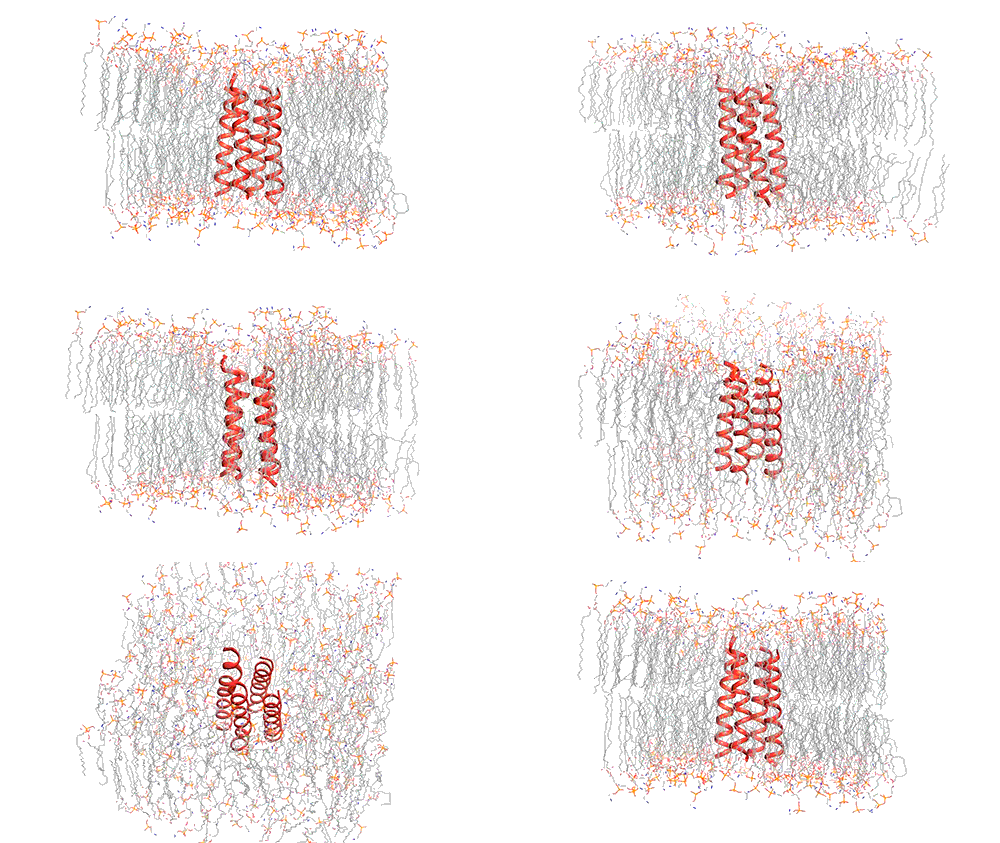
To investigate the structure of BM2, the researchers embedded it into a lipid bilayer, similar to a cell membrane, and then used nuclear magnetic resonance (NMR) spectroscopy to analyze the structure with atomic-scale resolution. Very few ion channels have been studied at such high resolution because of the difficulty of studying proteins embedded within membranes. However, Hong has previously developed several NMR techniques that allow her to obtain accurate structural information from membrane-embedded proteins, including their orientation and the distances between atoms of the protein.

This model depicts an M2 protein channel embedded in the viral envelope of an influenza B virus. Credit: Venkata Shiva Mandala

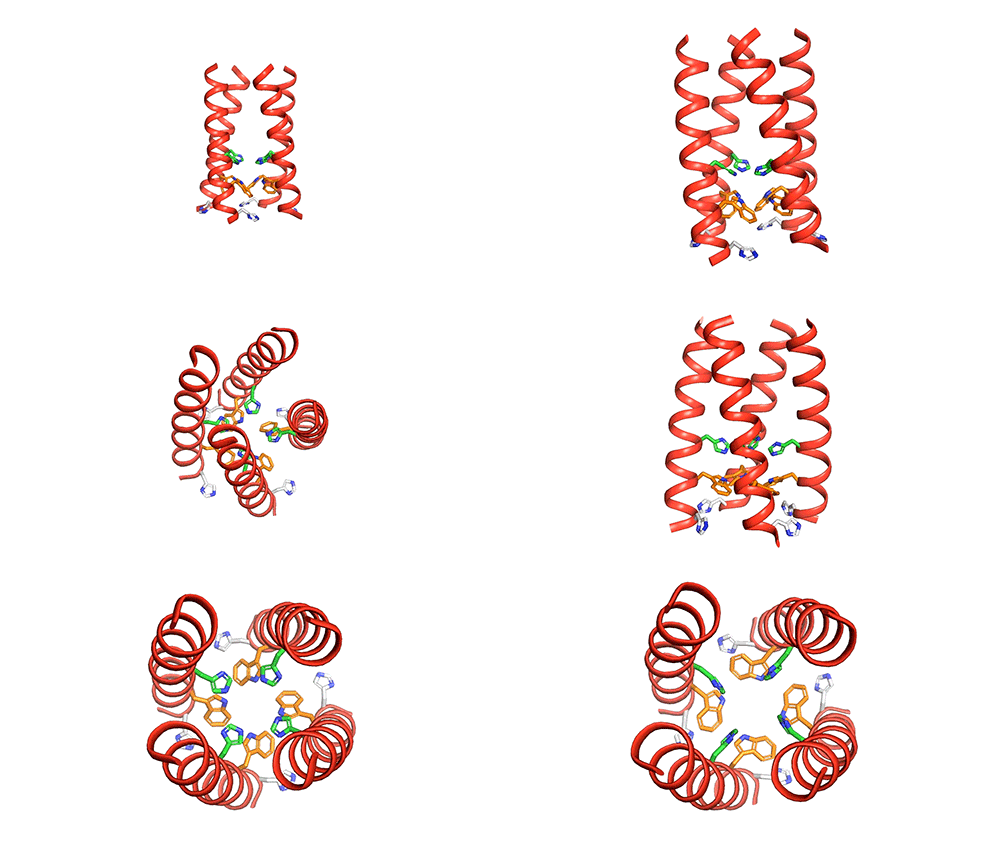
The M2 channel is made of four helices that run parallel to each other through the membrane, and Hong found that the alignment of these helices changes slightly depending on the pH of the environment outside the viral envelope. When the pH is high, the helices are tilted by about 14 degrees, and the channel is closed. When the pH goes down, the helices increase their tilt to about 20 degrees, opening up like a pair of scissors. This scissoring motion creates more space between the helices and allows more water to get into the channel.

MIT chemists created this model of how the four helical proteins that make up the BM2 channel tilt when the channel is open. Credit: Venkata Shiva Mandala

Previous studies have found that as water flows into the M2 channel, the amino acid histidine grabs protons from the water in the top half of the channel and passes them to water molecules in the lower half of the channel, which then deliver the excess protons into the virion.

Unlike the AM2 channel, the BM2 channel has an extra histidine at the virion-facing end of the channel, which the MIT team believes to explain why protons can flow in either direction through the channel. More study is needed to determine what kind of advantage this may provide for influenza B viruses, the researchers say.

Blocking the channel

Now that chemists know the structure of both the open and closed states of the BM2 channel at atomic resolution, they can try to come up with ways to block it. There is precedent for this type of drug development: Amantadine and rimantadine, both used to treat influenza A, work by wedging themselves into the AM2 channel pore and cutting off the flow of protons. However, these drugs do not affect the BM2 channel.

Hong’s research group is now investigating another one of BM2’s functions, which is generating curvature in lipid membranes in order to allow progeny viruses to be released from cells. Preliminary studies suggest that a portion of the protein that sticks out from the membrane forms a structure called a beta sheet that plays a role in inducing the membrane to curve inward.

The research was funded by the National Institutes of Health.

Singing for joy and service

Swarna Jeewajee grew up loving music — she sings in the shower and blasts music that transports her to a happy state. But until this past year, she never felt confident singing outside her bedroom.

Now, the senior chemistry and biology major spends her Saturdays singing around the greater Boston area, at hospitals, homes for the elderly, and rehabilitation centers, with the a cappella group she co-founded, Singing For Service.

Jeewajee says she would not have been able to sing in front of people without the newfound confidence that came after she had transformative ear surgery in the spring of 2018.

Jeewajee grew up in Mauritius, a small island off the east coast of Madagascar, where she loved the water and going swimming. When she was around 8 years old, she developed chronic ear infections as a result of a cholesteatoma, which caused abnormal skin growth in her middle ear.

It took five years and three surgeries for the doctors in Mauritius to diagnose what had happened to Jeewajee’s ear. She spent some of her formative years at the hospital instead of leading a normal childhood and swimming at the beach.

By the time Jeewajee was properly diagnosed and treated, she was told her hearing could not be salvaged, and she had to wear a hearing aid.

“I sort of just accepted that this was my reality,” she says. “People used to ask me what the hearing aid was like — it was like hearing from headphones. It felt unnatural. But it wasn’t super hard to get used to it. I had to adapt to it.”

Eventually, the hearing aid became a part of Jeewajee, and she thought everything was fine. During her first year at MIT, she joined Concourse, a first-year learning community which offers smaller classes to fulfill MIT’s General Institute Requirements, but during her sophomore year, she enrolled in larger lecture classes. She found that she wasn’t able to hear as well, and it was a problem.

“When I was in high school, I didn’t look at my hearing disability as a disadvantage. But coming here and being in bigger lectures, I had to acknowledge that I was missing out on information,” Jeewajee says.

Over the winter break of her sophomore year, her mother, who had been living in the U.S. while Jeewajee was raised by her grandmother in Mauritius, convinced Jeewajee to see a specialist at Massachusetts Eye and Ear Hospital. That’s when Jeewajee encountered her role model, Felipe Santos, a surgeon who specializes in her hearing disorder.

Jeewajee had sought Santos’ help to find a higher-performing hearing aid, but instead he recommended a titanium implant to restore her hearing via a minimally invasive surgery. Now, Jeewajee does not require a hearing aid at all, and she can hear equally well from both ears.

“The surgery helped me with everything. I used to not be able to balance, and now I am better at that. I had no idea that my hearing affected that,” she says.

These changes, she says, are little things. But it’s the little things that made a large impact.

“I gained a lot more confidence after the surgery. In class, I was more comfortable raising my hand. Overall, I felt like I was living better,” she says.

This feeling is what brought Jeewajee to audition for the a cappella group. She never had any formal training in singing, but in January, during MIT’s Independent Activities Period, her friend mentioned that she wanted to start an a cappella group and convinced Jeewajee to help her launch Singing For Service.

Jeewajee describes Singing For Service as her “fun activity” at MIT, where she can just let loose. She is a soprano singer, and the group of nine to 12 students practices for about three hours a week before their weekly performances. They prepare three songs for each show; a typical lineup is a Disney melody, Josh Groban’s “You Raise Me Up,” and a mashup from the movie “The Greatest Showman.”

Her favorite part is when they take song requests from the audience. For example, Singing For Service recently went to a home for patients with multiple sclerosis, who requested songs from the Beatles and “Bohemian Rhapsody.” After the performance, the group mingles with the audience, which is one of Jeewajee’s favorite parts of the day.

She loves talking with patients and the elderly. Because Jeewajee was a patient for so many years growing up, she now wants to help people who are going through that type of experience. That is why she is going into the medical field and strives to earn an MD-PhD.

“When I was younger, I kind of always was at the doctor’s office. Doctors want to help you and give you a treatment and make you feel better. This aspect of medicine has always fascinated me, how someone is literally dedicating their time to helping you. They don’t know you, they’re not family, but they’re here for you. And I want to be there for someone as well,” she says.

Jeewajee says that because she grew up with a medical condition that was poorly understood, she wants to devote her career to search for answers to tough medical problems. Perhaps not surprisingly, she has gravitated toward cancer research.

She discovered her passion for this field after her first year at MIT, when she spent the summer conducting research in a cancer hospital in Lyon, through MISTI-France. There, she experienced an “epiphany” as she watched scientists and physicians come together to fight cancer, and was inspired to do the same.

She cites the hospital’s motto, “Chercher et soigner jusqu’à la guérison,” which means “Research and treat until the cure,” as an expression of what she will aspire to as a physician-scientist.

Last summer, while working at The Rockefeller University investigating mechanisms of resistance to cancer therapy, she developed a deeper appreciation for how individual patients can respond differently to a particular treatment, which is part of what makes cancer so hard to treat. Upon her return at MIT, she joined the Hemann lab at the Koch Institute for Integrative Cancer Research, where she conducts research on near-haploid leukemia, a subtype of blood cancer. Her ultimate goal is to find a vulnerability that may be exploited to develop new treatments for these patients.

The Koch Institute has become her second home on MIT’s campus. She enjoys the company of her labmates, who she says are good mentors and equally passionate about science. The walls of the lab are adorned with science-related memes and cartoons, and amusing photos of the team’s scientific adventures.

Jeewajee says her work at the Koch Institute has reaffirmed her motivation to pursue a career combining science and medicine.

“I want to be working on something that is challenging so that I can truly make a difference. Even if I am working with patients for whom we may or may not have the right treatment, I want to have the capacity to be there for them and help them understand and navigate the situation, like doctors did for me growing up,” Jeewajee says.

Putting a finger on the switch of chronic parasite infection

Toxoplasma gondii (T. gondii) is a parasite that chronically infects up to a quarter of the world’s population, causing toxoplasmosis, a disease that can be dangerous, or even deadly, for the immunocompromised and for developing fetuses. One reason that T. gondii is so pervasive is that the parasites are tenacious occupants once they have infected a host. They can transition from an acute infection stage into a quiescent life cycle stage and effectively barricade themselves inside of their host’s cells. In this protected state, they become impossible to eliminate, leading to long-term infection.

Researchers used to think that a combination of genes were involved in triggering the parasite’s transition into its chronic stage, due to the complexity of the process and because a gene essential for differentiation had not been identified. However, new research from Sebastian Lourido, Whitehead Institute member and assistant professor of biology at MIT, and MIT graduate student Benjamin Waldman has identified a sole gene whose protein product is the master regulator, which is both necessary and sufficient for the parasites to make the switch. Their findings, which appeared online in the journal Cell on Jan. 16, illuminate an important aspect of the parasite’s biology and provide researchers with the tools to control whether and when T. gondii transitions, or undergoes differentiation. These tools may prove valuable for treating toxoplasmosis, since preventing the parasites from assuming their chronic form keeps them susceptible to both treatment and elimination by the immune system.

T. gondii spreads when a potential host, which can be any warm-blooded animal, ingests infected tissue from another animal — in the case of humans, by eating undercooked meat or unwashed vegetables — or when the parasite’s progeny are shed by an infected cat, T. gondii’s target host for sexual reproduction. When T. gondii parasites first invade the body, they are in a quickly replicating part of their life cycle, called the tachyzoite stage. Tachyzoites invade a cell, isolate themselves by forming a sealed compartment from the cell’s membrane, and then replicate inside of it until the cell explodes, at which point they move on to another cell to repeat the process. Although the tachyzoite stage is when the parasites do the most damage, it’s also when they are easily targetable by the immune system and medical therapies.

In order for the parasites to make their stay more permanent, they must differentiate into bradyzoites, a slow-growing stage, during which they are less susceptible to drugs and have too little effect on the body to trigger the immune system. Bradyzoites construct an extra-thick wall to isolate their compartment in the host cell and encyst themselves inside of it. This reservoir of parasites remains dormant and undetectable until, under favorable conditions, they can spring back into action, attacking their host or spreading to new ones.

Although the common theory was that multiple genes collectively orchestrate the transition from tachyzoite to bradyzoite, Lourido and Waldman suspected that there was instead a single master regulator.

“Differentiation is not something a parasite wants to do halfway, which could leave them vulnerable,” Waldman says. “Multiple genes means more chances for things to go wrong, so you would want a master regulator to ensure that differentiation happens cleanly.”

To investigate this hypothesis, Waldman used CRISPR-based screens to knock out T. gondii genes, and then tested to see if the parasite could still differentiate from tachyzoite to bradyzoite. Waldman monitored whether the parasites were differentiating by developing a strain of T. gondii that fluoresces in its bradyzoite stage. The researchers also performed a first-of-its-kind single-cell RNA sequencing of T. gondii in collaboration with members of Alex Shalek’s lab in the MIT Department of Chemistry. This sequencing allowed the researchers to profile the genes’ activity at each stage in unprecedented detail, shedding light on changes in gene expression during the parasite’s cell-cycle progression and differentiation.

The experiments identified one gene, which the researchers named Bradyzoite-Formation Deficient 1 (BFD1), as the only gene both sufficient and necessary to prevent the transition from tachyzoite to bradyzoite: the master regulator. Not only was T. gondii unable to make the transition without the BFD1 protein, but Waldman found that artificially increasing its production induced the parasites to become bradyzoites, even without the usual stress triggers required to cue the switch. This means that the researchers can now control Toxoplasma differentiation in the lab.

These findings may inform research into potential therapies for toxoplasmosis, or even a vaccine.

Toxoplasma that can’t differentiate is a good candidate for a live vaccine, because the immune system can eliminate an acute infection very effectively,” Lourido says.

The researchers’ findings also have implications for food production. T. gondii and other cyst-forming parasites that use BFD1 can infect livestock. Further research into the gene could inform the development of vaccines for farm animals as well as humans.

“Chronic infection is a huge hurdle to curing many parasitic diseases,” Lourido says. “We need to study and figure out how to manipulate the transition from the acute to chronic stages in order to eradicate these diseases.”

This study was supported by an NIH Director’s Early Independence Award, a grant from the Mathers Foundation, the Searle Scholars Program, the Beckman Young Investigator Program, a Sloan Fellowship in Chemistry, the National Institutes of Health, and the Bill and Melinda Gates Foundation.

Chemistry bonds “quirky” researchers in hard-working Surendranath lab

When Sneaky the Lizard received his PhD in chemistry from MIT, an enthusiastic team of researchers in the lab of Yogesh “Yogi” Surendranath was there to celebrate. Although Sneaky is just a fictional, photoshopped character, he’s an important part of the lab culture, and his “graduation” was akin to a family milestone.

“Sneaky the Lizard graduated in 2018, despite never showing up to work,” says Surendranath, the Paul M. Cook Career Development Associate Professor of Chemistry, while proudly showing off a lab photo with Sneaky up-front and center. “My group is so weird, but I love them so much.”

The Surendranath lab is a tight-knit group that enjoys a lot of inside jokes — about mangoes and coconuts, as well as imaginary lizards. But it’s also about groundbreaking work in electrochemistry that is opening up new paths to a low-carbon future.

Those who work in the lab say the two are related.

“At the end of the day, we work on really, really hard problems, and in order to work in that environment and stay sane, you need a culture that’s supportive and makes it fun and exciting and interesting,” says Surendranath, who this summer received a Presidential Early Career Award for Scientists and Engineers, the highest honor the U.S. government gives to outstanding scientists and engineers beginning independent careers.

“We’re one community wherever we are, and we all take pleasure in solving these problems at the electrochemical interfaces,” says postdoc Marcel Schreier. “This allows us to be a little bit ahead sometimes. We ask more questions and try and try and try to answer them.”

All of the work in the Surendranath lab centers on using electricity to rearrange chemical bonds — fundamental scientific research with a host of possible applications. A key focus is finding ways to make carbon dioxide (CO2), a major greenhouse gas, useful — research central to addressing climate change. Surendranath, who serves as the associate director of the Carbon Capture, Utilization, and Storage Center, one of the Low-Carbon Energy Centers run by the MIT Energy Initiative (MITEI), says, “Our whole group works on the grand challenges MITEI undertakes on the low-carbon future of energy.”

A wealth of applications

Already, the Surendranath group has made major advances in the design of catalysts for converting CO2 into carbon monoxide — work that holds promise for one day using renewable energy to turn CO2 emissions into high-quality fuels. The lab has also developed a new graphite-based catalyst that could potentially replace expensive and rare metals in fuel cells.

“Our work is so fundamental, there isn’t a specific application we’re targeting. Batteries, fuel cells, any electrochemical transduction technology is going to have an interfacial question that we’re hoping to address,” says postdoc Michael Pegis.

Interestingly, the 18 members of the lab tackle many different kinds of questions within the broad spectrum of electrochemical research. While Pegis works on how electric fields influence the rate of bond-breaking and bond-forming reactions in oxygen reduction reactions — work that could improve fuel cells, for example — Jonathan “Jo” Melville, a PhD candidate and Tata Fellow, is researching nitrogen fixation for fertilizers in an effort to find a less energy-intensive way to produce food.

“Nitrogen is key for feeding billions around the world,” Melville says, noting that without nitrogen-rich fertilizers, there would not be enough arable land on earth to feed the population. Since the current system of production uses fossil fuels, generating roughly 2 percent of anthropogenic CO2 emissions, Melville is hoping to develop a sustainable alternative process. “I went into chemistry because I really care about solving the energy crisis,” he says.

Schreier’s work takes on the challenge of reaching a low-carbon future from another angle. He focuses on the catalytic capabilities of copper in the hope of finding new ways to store energy chemically — work broadly applicable to the challenge of improving the storage of energy generated by such intermittent sources as solar and wind.

PhD candidate Soyoung Kim, meanwhile, works to make useful chemicals from natural gas using metal-ion catalysts driven by electricity — a method she says could make it possible to sustain the reaction with energy from renewable sources.

For lab members — including specialists in inorganic chemistry, physical chemistry, chemical engineering, and electrochemistry — the wide variety of work taking place in the lab expands the opportunities for useful collaboration. “There’s so much knowledge in so many fields, I’ve been able to learn about new things — like computational chemistry from a postdoc who sits behind me,” Pegis says.

Surendranath deliberately fosters this synergy through regular team meetings as well as off-site activities such as hiking trips and retreats. “I think of science as a gift economy,” he says — with each researcher giving the gift of time and skills to other lab members in full expectation that similar gifts will be returned.

“We help each other all the time, informally,” Schreier says. “If someone has a problem, they will start drawing on the white board, and everyone will chime in and offer solutions.”

This esprit de corps carries through to everyday lab chores. There is no lab manager in the Surendranath lab; responsibilities are shared by the team, with individuals taking on such jobs as overseeing safety procedures, caring for particular instruments, ordering solvents, and organizing cleanups. Recently, the group worked in shifts to bar-code 35,000 chemicals. “In some cases, a lab manager can be useful, but it can be good to get together to make sure the lab is a cleaner and safer place,” Pegis says.

“We have lab tasks,” Schreier explains. “This works quite smoothly.”

Lab members also make their own hours and work out disputes among themselves. “I give my students enormous freedom,” says Surendranath, who was recently awarded the Nobel Laureate Signature Award for Graduate Education in Chemistry from the American Chemical Society, together with his graduate student Anna Wuttig PhD ’18. (Wuttig is now a postdoc at the University of California at Berkeley.) “All I care about is that they care about the science and do great work,” says Surendranath.

Mangoes, kites, and coconuts

With so much independent thinking, it’s perhaps not surprising that the word “quirky” comes up a lot when members are asked about the lab.

“Yogi is very supportive and approachable as a boss, while super-energetic and engaging when it comes to discussing science. That has attracted many hard-working and sometimes quirky people to the lab,” Kim says.

“It’s definitely a very quirky group of people,” Pegis agrees.

Indeed, the description applies even to Surendranath himself, who is crazy for mangoes, fascinated by tumbleweeds, and passionate about kite-flying. Perhaps that’s why he built a team that supports each member — quirks and all.

Schreier tells a story to illustrate. The lab was on a hike together in the White Mountains and running behind schedule because Surendranath needed to bring a coconut with him — a lab tradition with somewhat obscure origins — and he had had trouble finding one. So, once the team reached the peak, everyone was eager to head back — except Schreier. He had spotted a radio tower (a passion of his) and could not resist dashing off for a closer look, delaying everyone.

When he got back, “the whole group, with Yogi in the center, was waiting for me very patiently. It seemed to them the most normal thing that I would need to check out this transmitting tower,” he says. The experience really warmed Schreier’s heart and is one reason the team is so special to him. “It’s the way the group works. Everyone’s interests are taken seriously.”

Melville agrees, saying this depth of support has made it easier for him to cope with the pressures of grad school and noting that it all comes from the top. “Yogi sets the gold standard for proactive and ethical mentorship,” he says. “We love him.”

The feeling is mutual. “I love my people,” Surendranath says. “It is a true joy to interact with enthusiastic, like-minded, passionate people every day and engage with them on really stimulating problems … I think the culture day-to-day is more rewarding than the science, because you have an impact on people’s lives: how they mature.”

Building a platform to image membrane proteins

All cells have a lipid membrane that encircles their internal components — forming a protective barrier to control what gets in and what stays out. The proteins embedded in these membranes are essential for life; they help facilitate nutrient transport, energy conversion and storage, and cellular communication. They are also important in human disease, and represent around 60 percent of approved drug targets. In order to study these membrane proteins outside the complexity of the cell, researchers must use detergent to strip away the membrane and extract them. However, determining the best detergent for each protein can involve extensive trial and error. And, removing a protein from its natural environment risks destabilizing the folded structure and disrupting function.

In a study published on Dec. 9 in Cell Chemical Biology, scientists from MIT devised a rapid and generalizable way to extract, purify, and label membrane proteins for imaging without any detergent at all — bringing along a portion of the surrounding membrane to protect the protein and simulate its natural environment. Their approach combines well-established chemical and biochemical techniques in a new way, efficiently isolating the protein so it can be fluorescently labeled and examined under a microscope.

“I always joke that it’s not very lifelike to study proteins in soap,” says senior author Barbara Imperiali, a professor of biology and chemistry. “We’ve created a workflow that allows membrane proteins to be imaged while maintaining their native identities and interactions. Hopefully now fewer people will shy away from studying membrane proteins, given their importance in many physiological processes.”

As a member of the Imperiali lab, former postdoc and lead author Jean-Marie Swiecicki investigated membrane proteins from the foodborne pathogen Campylobacter jejuni. In this study, Swiecicki focused on PglC and PglA, two membrane proteins that play a role in enabling the bacteria to infect human cells. His experiments required labeling PglC and PglA with fluorescent tags in order to track them. However, he wasn’t satisfied with existing methods to do so.

In some cases, the fluorescent tags that must be incorporated into the protein in order to visualize it are too large to be placed at defined positions. In other cases, these tags don’t shine brightly enough, or interfere with the structure and function of the protein.

To avoid such issues, Swiecicki decided to use a method known as “unnatural amino-acid mutagenesis.” Amino acids are the units that compose the protein, and unnatural amino-acid mutagenesis involves adding a new amino acid containing an engineered chemical group within the protein sequence. This chemical group can then be labeled with a brightly glowing tag.

Swiecicki inserted the genetic code for the C. jejuni membrane proteins into a different bacterium, Escherichia coli. Inside E. coli, he could incorporate the unnatural amino acid, which could be chemically modified to add the fluorescent label.

When it came time to remove the proteins from the membrane, he substituted a different substance for the detergent: a polymer of styrene-maleic acid (SMA). Unlike detergent, SMA wraps the extracted protein and a small segment of the associated membrane in a protective shell, preserving its native environment. Imperiali explains, “It’s like a scarf protecting your neck from the cold.”

Swiecicki could then monitor the glowing proteins under a microscope to verify his technique was selective enough to isolate individual membrane proteins. The entire process, he says, takes just a few days, and is generally much faster and more reliable than detergent-based extraction methods, which can take months and require the expertise of highly-trained biochemists to optimize.

“I wouldn’t say it’s a magic bullet that’s going to work for every single protein,” he says. “But it’s a highly efficient tool that could make it easier to study many different kinds of membrane proteins.” Eventually, he says, it may even help facilitate high throughput drug screens.

“As someone who works on membrane protein complexes, I can attest to the great need for better methods to study them,” says Suzanne Walker, a professor of microbiology at Harvard Medical School who was not involved in the study. She hopes to extend the approach outlined in the paper to the protein complexes she investigates in her own lab. “I appreciated the extensive detail included in the text about how to apply the strategy successfully,” she adds.

The next steps will be testing the technique on mammalian proteins, and isolating multiple proteins at once in the SMA shell to observe their interactions. And, of course, every new technique deserves a name. “We’re still working on a catchy acronym,” Imperiali says. “Any ideas?”

This research was funded by the Jane Coffin Childs Memorial Fund for Medical Research, Philippe Foundation, and National Institutes of Health.