Nine from MIT named 2023 Sloan Research Fellows

Nine members of the MIT faculty are among 126 early-career researchers honored across seven fields with 2023 Sloan Research Fellowships by the Alfred P. Sloan Foundation. Representing the departments of Aeronautics and Astronautics, Chemistry, Economics, Electrical Engineering and Computer Science, Materials Science and Engineering, Mathematics, and Physics, the honorees will each receive a two-year, $75,000 fellowship to advance their research.

Including this year’s recipients, a total of 318 MIT faculty have received Sloan Research Fellowships since the first fellowships were awarded in 1955.

Luca Carlone is the Leonardo Career Development Associate Professor in the Department of Aeronautics and Astronautics and a principal investigator in the MIT Laboratory for Information and Decision Systems (LIDS). He is the director of the MIT SPARK Labwhich works at the cutting edge of robotics and autonomous systems research. Carlone researches human-level perception and world understanding on mobile robotics platforms (drones, self-driving vehicles, ground robots) operating in the real world. His research includes nonlinear estimation and probabilistic inference, numerical and distributed optimization, and geometric computer vision applied to sensing, perception, and decision-making in single and multi-robot systems. Carlone was recently selected to the editorial board of the International Journal of Robotics as a senior editor and named an associate fellow class of 2023 in the American Institute of Aeronautics and Astronautics.

Rafael Gómez-Bombarelli is the Jeffrey Cheah Career Development Chair in Engineering in the Department of Materials Science and Engineering and an investigator in the MIT-IBM Watson AI Lab. His research pairs computational design with machine learning to accelerate the discovery of new materials. Using theoretical and experimental data, Gómez-Bombarelli and his research lab colleagues relate the composition and structure of molecules and solids to their performance and identify candidates for practical applications. They have used the approach to design new forms of zeolites, for example — a class of porous minerals used in industrial applications — for specific, climate-change-focused applications, such as cleaning up exhaust from vehicles. Other applications include therapeutic peptides, electrolytes for batteries, inorganic oxides for sustainable catalysis, carbon-capture materials, and sustainable polymers.

Jeremy Hahn ’13 is the Rockwell International Career Development Assistant Professor of Mathematics. His research is in algebraic topology and homotopy theory. With collaborators, he has done work in equivariant chromatic homotopy theory, the classification of high-dimensional manifolds, and the redshift conjectures in algebraic K-theory. He hopes to better understand the behavior of new invariants of ring spectra, such as syntomic and prismatic cohomology.

Song Han, an electrical engineeering and computer science (EECS) associate professor, proposed the “Deep Compression” technique that’s widely used for efficient artificial intelligence computing, and “Efficient Inference Engine” that first brought weight sparsity to modern AI chips, which influenced NVIDIA’s Ampere GPU. He introduced the TinyML research that brings deep learning to internet-of-things devices, enabling learning on the edge. His work on hardware-aware neural architecture search (once-for-all network) enables users to design, optimize, shrink, and deploy AI models to resource-constrained hardware devices. Han received best paper awards at ICLR and FPGA, faculty awards from Amazon, SONY, Facebook, NVIDIA, and Samsung, NSF CAREER Award, “35 Innovators Under 35” by MIT Technology Review, and “AIs 10 to Watch: The Future of AI” award by IEEE.

Erin Kara is the Class of 1958 Career Development Assistant Professor of Physics and a member of the MIT Kavli Institute for Astrophysics and Space Research. An observational astrophysicist who is working to understand the physics behind how black holes grow and affect their environments, she also works to develop new and future space missions. Kara is a NASA participating scientist of the XRISM Observatory, to launch later this year, and is the deputy principal investigator of the AXIS Probe Mission Concept.

Jonathan Ragan-Kelley SM ’07, PhD’14 is the Esther and Harold E. Edgerton Assistant Professor in EECS. He is affiliated with the Computer Science and Artificial Intelligence Laboratory (CSAIL), where his research focuses on computer graphics, compilers, domain-specific languages, and high-performance systems. While completing his PhD at MIT in 2014 under the supervision of professors Frédo Durand and Saman Amarasingh, Ragan-Kelley was instrumental in developing the language and compiler Halide, “a language for fast, portable computation on images and tensors” that has become the “industry standard for computational photography and image processing.” Fast and efficient, Halide was created to make writing high-performance image processing code on modern machines more seamless. His earlier work on the language Lightspeed has been an instrumental tool in producing films, and for those efforts he was a finalist for a technical Academy Award.

Ronald Fernando Garcia Ruiz, an assistant professor in physics, focuses on the development of laser spectroscopy techniques to investigate the properties of subatomic particles using atoms and molecules made up of short-lived radioactive nuclei. His experimental work provides unique information about the fundamental forces of nature, the properties of nuclear matter at the limits of existence, and the search for new physics beyond the Standard Model of particle physics.​

Tobias Saltz, the Castle Krob Career Development Assistant Professor of Economics, works in the field of empirical industrial organization. His main research interests are decentralized markets, platforms, and intermediaries. A recent area of focus of his research agenda are transportation markets. In a separate line of research, he studies the economic and regulatory implications of the emerging abundance of consumer data and advances in artificial intelligence that are enabled by these data.

Alison Wendlandt, the Green Career Development Assistant Professor of Chemistry, focuses on the development of selective, catalytic reactions using the tools of organic and organometallic synthesis and physical organic chemistry. Mechanistic study plays a central role in the development of these new transformations. Her projects involve the design of new catalysts and catalytic transformations, the identification of important applications for selective catalytic processes, and the elucidation of new mechanistic principles to expand powerful existing catalytic reaction manifolds.

“Sloan Research Fellows are shining examples of innovative and impactful research,” says Adam F. Falk, president of the Alfred P. Sloan Foundation. “We are thrilled to support their groundbreaking work and we look forward to following their continued success.”

Many young researchers awarded the prestigious Sloan Research Fellowship have gone on to become prominent figures in science: 56 fellows have received a Nobel Prize in their respective field, 17 have won the Fields Medal in mathematics, and 22 have won the John Bates Clark Medal in economics, including every winner since 2007.
Researchers map brain cell changes in Alzheimer’s disease

The following press release was issued today by the Broad Institute of MIT and Harvard.

A common sign of Alzheimer’s disease is the excessive buildup of two types of protein in the brain: tangles of tau proteins that accumulate inside cells, and amyloid-β proteins that form plaques outside the cells. Researchers don’t know how these protein deposits are related to the other major hallmark of the disease: the death of neurons in the brain.

A study by scientists at the Broad Institute of MIT and Harvard published today in Nature Neuroscience hints at some answers to this question. The team used a new method they developed to reveal how brain cells located near these proteins change as the disease progresses in a mouse model of Alzheimer’s. The technique, called STARmap PLUS, is the first to simultaneously map gene expression of individual cells and their location, as well as the spatial distribution of specific proteins in intact tissue samples.

The researchers used their approach to study brain tissue from the Alzheimer’s mouse model at two different stages of the disease and at high spatial resolution. In the earlier stage, they observed a central core of amyloid plaque surrounded by a type of immune cell in the brain called microglia, which are known to play a role in Alzheimer’s. The microglia that were closer to the plaques showed genetic signatures that have been linked to neurodegeneration.

The scientists also found outer shells of two other types of brain cells that emerged later in the disease. This core-shell structure and differences in gene expression of cells surrounding the proteins give scientists a clearer picture of how cells respond to the protein deposits in the brain — insights that could one day help scientists evaluate existing Alzheimer’s treatments and develop new ones.

“From these kinds of studies, you can infer what’s going on in a far more detailed way than you could if you just looked at cells from dispersed tissue samples, that don’t have their spatial context anymore,” said Morgan Sheng, co-senior author of the study, a core institute member and co-director Stanley Center for Psychiatric Research at the Broad, and a professor of neuroscience at MIT. “This is a new dimension of transcriptomics, and I think it’s going to be really impactful.”

The study builds on a previous version of the technique called STARmap, developed by Xiao Wang, who is a co-senior author on the study, a core institute member and Merkin Fellow at the Broad, and a professor of chemistry at MIT.

“This is an exciting improvement on STARmap because we can now co-map the entire transcriptome together with proteins in the same tissue slices, and many diseases involve changes in protein localization and post-transcriptional modifications,” said Wang.

The project is also a collaboration with Genentech scientists and was led by co-first authors from the Stanley Center: Hu Zeng, a postdoctoral fellow; Jiahao Huang, a graduate student; and Haowen Zhou, a visiting researcher.

Making a map

To analyze tissue samples using STARmap PLUS, Wang’s team used molecular probes to detect specific mRNAs and amplify them as DNA sequences. They also used antibodies to label and identify specific proteins. They then chemically treated the tissue to anchor the DNA and proteins in their native positions within a gel. Finally, they used in situ sequencing and imaging to create a three-dimensional map of the tagged proteins as well as the expression of more than 2,700 genes.

The scientists found that processes such as the brain’s inflammatory response and the differentiation of glial cells such as the microglia were connected to disease progression. Though other researchers had previously observed a core-shell structure around plaque, the new gene expression data revealed that the microglia were more “activated” to trigger an inflammatory response closer to the plaque. The scientists say that this implies that the microglia likely activate near plaques, possibly recruiting other cells to form the outer shells surrounding the plaques, rather than activating far away and then moving closer. Understanding when, where, and how microglia activate could be an important part of deciphering their role in the disease.

Wang says that a key advantage of STARmap PLUS is that it collects both protein and gene expression information from a single sample, making it easier to align and compare different kinds of data at high resolution. It can also detect features smaller than cells, which helps distinguish individual cells even when they are densely crowded together in the brain. STARmap PLUS is also scalable and could be adapted to map other proteins or even the entire transcriptome.

Beyond Alzheimer’s

The researchers say that a crucial next step will be to use the approach to study Alzheimer’s progression in human brain tissue samples. This will help determine the extent to which cellular changes that occur in mouse models represent processes in Alzheimer’s patients.

In animal models, scientists could also use the approach to answer questions about new treatment strategies. For example, if antibodies are able to reach and clear plaques, do the nearby microglia return to their unactivated states and move away from the plaques? Does eliminating plaque or inactivating microglia prevent nearby neurodegeneration?

STARmap PLUS could also help researchers understand other diseases, such as cancer, to learn more, for example, about how immune cells attack tumors. The method could also contribute to studies on schizophrenia and other brain disorders.

“There are mouse models of psychiatry, where we know from other studies that there are many different things happening in different parts of the brain,” Sheng said. “It’ll be just gorgeous to be able to see it all in one swoop.”

This work was supported in part by the Searle Scholars Foundation, the Stanley Center for Psychiatric Research, and the Merkin Institute.

Targeting cancer with a multidrug nanoparticle

Treating cancer with combinations of drugs can be more effective than using a single drug. However, figuring out the optimal combination of drugs, and making sure that all of the drugs reach the right place, can be challenging.

To help address those challenges, MIT chemists have designed a bottlebrush-shaped nanoparticle that can be loaded with multiple drugs, in ratios that can be easily controlled. Using these particles, the researchers were able to calculate and then deliver the optimal ratio of three cancer drugs used to treat multiple myeloma.

“There’s a lot of interest in finding synergistic combination therapies for cancer, meaning that they leverage some underlying mechanism of the cancer cell that allows them to kill more effectively, but oftentimes we don’t know what that right ratio will be,” says Jeremiah Johnson, an MIT professor of chemistry and one of the senior authors of the study.

In a study of mice, the researchers showed that nanoparticles carrying three drugs in the synergistic ratio they identified shrank tumors much more than when the three drugs were given at the same ratio but untethered to a particle. This nanoparticle platform could potentially be deployed to deliver drug combinations against a variety of cancers, the researchers say.

Irene Ghobrial, a professor of medicine at Harvard Medical School and Dana-Farber Cancer Institute, and P. Peter Ghoroghchian, president of Ceptur Therapeutics and a former MIT Koch Institute Clinical Investigator, are also senior authors of the paper, which appears today in Nature Nanotechnology. Alexandre Detappe, an assistant professor at the Strasbourg Europe Cancer Institute, and Hung Nguyen PhD ’19 are the paper’s lead authors.

Controlled ratio

Using nanoparticles to deliver cancer drugs allows the drugs to accumulate at the tumor site and reduces toxic side effects because the particles protect the drugs from being released prematurely. However, only a handful of nanoparticle drug formulations have received FDA approval to treat cancer, and only one of these particles carries more than one drug.

For several years, Johnson’s lab has been working on polymer nanoparticles designed to carry multiple drugs. In the new study, the research team focused on a bottlebrush-shaped particle. To make the particles, drug molecules are inactivated by binding to polymer building blocks and then mixed together in a specific ratio for polymerization. This forms chains that extend from a central backbone, giving the molecule a bottlebrush-like structure with inactivated drugs — prodrugs — along the bottlebrush backbone. Cleavage of the linker that holds the drug to the backbone release the active agent.

“If we want to make a bottlebrush that has two drugs or three drugs or any number of drugs in it, we simply need to synthesize those different drug conjugated monomers, mix them together, and polymerize them. The resulting bottlebrushes have exactly the same size and shape as the bottlebrush that only has one drug, but now they have a distribution of two, three, or however many drugs you want within them,” Johnson says.

In this study, the researchers first tested particles carrying just one drug: bortezomib, which is used to treat multiple myeloma, a cancer that affects a type of B cells known as plasma cells. Bortezomib is a proteasome inhibitor, a type of drug that prevents cancer cells from breaking down the excess proteins they produce. Accumulation of these proteins eventually causes the tumor cells to die.

When bortezomib is given on its own, the drug tends accumulate in red blood cells, which have high proteasome concentrations. However, when the researchers gave their bottlebrush prodrug version of the drug to mice, they found that the particles accumulated primarily in plasma cells because the bottlebrush structure protects the drug from being released right away, allowing it to circulate long enough to reach its target.

Synergistic combinations

Using the bottlebrush particles, the researchers were also able to analyze many different drug combinations to evaluate which were the most effective.

Currently, researchers test potential drug combinations by exposing cancer cells in a lab dish to different concentrations of multiple drugs, but those results often don’t translate to patients because each drug is distributed and absorbed differently inside the human body.

“If you inject three drugs into the body, the likelihood that the correct ratio of those drugs will arrive at the cancer cell at the same time can be very low. The drugs have different properties that cause them to go to different places, and that hinders the translation of these identified synergistic drug ratios quite immensely,” Johnson says.

However, delivering all three drugs together in one particle could potentially overcome that obstacle and make it easier to deliver synergistic ratios. Because of the ease of creating bottlebrush particles with varying concentrations of drugs, the researchers were able to compare particles carrying different ratios of bortezomib and two other drugs used to treat multiple myeloma: an immunostimulatory drug called pomalidomide, and dexamethasone, an anti-inflammatory drug.

Exposing these particles to cancer cells in a lab dish revealed combinations that were synergistic, but these combinations were different from the synergistic ratios that had been identified using drugs not bound to the bottlebrush.

“What that tells us is that whenever you are trying to develop a synergistic drug combination that you ultimately plan to administer in a nanoparticle, you should measure synergy in the context of the nanoparticle,” Johnson says. “If you measure it for the drugs alone, and then try to make a nanoparticle with that ratio, you can’t guarantee it will be as effective.”

New combinations

In tests in two mouse models of multiple myeloma, the researchers found that three-drug bottlebrushes with a synergistic ratio significantly inhibited tumor growth compared to the free drugs given at the same ratio and to mixtures of three different single-drug bottlebrushes. They also discovered that their bortezomib-only bottlebrushes were very effective at slowing tumor growth when given in higher doses. Although it is approved for blood cancers such as multiple myeloma, bortezomib has never been approved for solid tumors due to its limited therapeutic window and bioavailability.

“We were happy to see that the bortezomib bottlebrush prodrug on its own was an excellent drug, displaying improved efficacy and safety compared to bortezomib, and that has led us to pursue trying to bring this molecule to the clinic as a next-generation proteasome inhibitor,” Johnson says. “It has completely different properties than bortezomib and gives you the ability to have a wider therapeutic index to treat cancers that bortezomib has not been used in before.”

Johnson, Nguyen, and Yivan Jiang PhD ’19 have founded a company called Window Therapeutics, which is working on further developing these particles for testing in clinical trials. The company also hopes to explore other drug combinations that could be used against other types of cancer.

Johnson’s lab is also working on using these particles to deliver therapeutic antibodies along with drugs, as well as combining them with larger particles that could deliver messenger RNA along with drug molecules. “The versatility of this platform gives us endless opportunities to create new combinations,” he says.

The research was funded, in part, by the U.S. National Institutes of Health, the Leukemia and Lymphoma Society, the U.S. National Science Foundation, and the Koch Institute Support (core) Grant from the National Cancer Institute.

Brandon Ogbunu is a radical collaborator

Learning has always come naturally to Brandon Ogbunu. When he was a child growing up in Manhattan, his mother, a teacher, instilled in him an appreciation for school, the sciences, and curiosity. At work, she taught mathematics, social studies, and special education. At home, she taught her son to embrace art, literature, and sports in addition to science, laying the groundwork for a well-rounded approach to learning that would inform the rest of his career.

Ogbunu grew up during the AIDS epidemic. Witnessing the devastating effects of the virus kindled an interest in disease. Although he describes himself as “a bit of an underachiever” in high school, he found his identity as a scholar during his time at Howard University. He majored in chemistry due to its reputation as the “central science” and voraciously read books on math, economics, and history to gain a more nuanced understanding of the topic. Toward the end of his undergraduate program, Ogbunu learned more about the intersection between inequality and public health and began to consider how forces like poverty can drive the spread of diseases like HIV, tuberculosis, and malaria.

After graduating from Howard in 2002, he traveled to Kenya on a Fulbright fellowship. There, while studying the chemical ecology of malaria, he became captivated by evolution. “I fell in love with it as kind of a governing viewpoint on how the natural world works,” he says.

When he returned to the United States, Ogbunu studied medicine at Yale University, but found himself somewhat overwhelmed with career options. There were many ways to approach the problem of disease, but would he do so as a physician? An evolutionary biologist? A computer scientist? An economist? After his time in Kenya, he knew that whatever path he took, evolutionary reasoning — an approach to research that focuses on the practical applications of evolutionary theory — would have to be at the center of it.

It was then that Ogbunu took an interest in Professor Paul Turner’s virology lab. Turner, a professor in the Yale Department of Ecology and Evolutionary Biology, had just published a paper that addressed virus evolution through the lens of game theory. “I was like, this is exactly the kind of lab I want to be in,” Ogbunu recalls.

Ogbunu completed his PhD in microbiology in 2010. His dissertation revolved around a concept called “evolvability” — the capacity of organisms to evolve — in the context of infectious disease.

From there, Ogbunu decided to cultivate his interest in data science with a postdoctoral fellowship at the Broad Institute of MIT and Harvard and Harvard University, where he studied population genetics under the supervision of Daniel Hartl.

It was during this postdoctoral training that Ogbunu first encountered professor of chemistry Matthew Shoulders, who at the time was a junior faculty member at MIT. The two scientists instantly hit it off. “We each gave each other a new language to describe the problems we were thinking about,” Ogbunu says of their shared interest in protein evolution. “We could have a conversation with the person across the aisle. And I found that to be a model for the way that I collaborate in general.”

After completing his postdoc training, Ogbunu taught for two years at Brown University, and in 2020, he joined the Yale faculty as an assistant professor in the Department of Ecology and Evolutionary Biology.

Ogbunu’s current research takes place at the intersection of evolutionary biology, genetics, and epidemiology. His lab uses experimental evolution, mathematical modeling, and computational biology to investigate disease across scales: from the biophysics of proteins involved in drug resistance, to the social determinants driving epidemics at the population level.

Ogbunu decided to apply for the Martin Luther King Jr. (MLK) Visiting Scholars and Professors program because, during his time at the Broad Institute, he grew to admire the interdisciplinary culture of MIT. “I believe in disciplines, and I believe in expertise,” Ogbunu explains, “but I don’t believe that you need to be relegated to any kind of singular domain. You should be able to think broadly.” He also appreciated MIT’s focus on the practical applications of scholarship. “Whatever it is you’re making,” he says, “be it literature, or poetry, or biomolecules — everybody likes to make things.”

Creative intersections

At MIT, Ogbunu is working in the Department of Chemistry alongside Shoulders, whose lab focuses on understanding the mechanisms of protein folding and evolution. “I really try to maximize connection time,” Ogbunu says of his day-to-day work at MIT. He spends his time collaborating with graduate students and postdocs in the Shoulders Laboratory, writing manuscripts and developing proposals with Shoulders himself, and attending meetings and seminars in various departments across campus.

Ogbunu is also embracing his artistic side through collaborations with fellow MLK Visiting Scholars. “The MLK Fellows are the most impressive people I’ve ever been around,” he says. “The opportunity to be in a cohort with them is really truly an honor.”

With Wasalu Jaco, widely known by his stage name Lupe Fiasco, Ogbunu has been exploring the relationship between rap and evolution and between music and data science. Ogbunu also hopes to collaborate with Eunice Ferreira, with whom he shares a passion for theater arts. In fact, Ogbunu was recently appointed to the board of the Catalyst Collaborative, a collaboration between MIT and Central Square Theater. He considers this appointment to be one of the great honors of his career.

“I like cutting-edge, provocative, and progressive ideas in a number of realms,” Ogbunu says of his love for the arts. “I love creative intersections between science and society. And I love creative, cool people who are trying to make the world a better place.”

Ogbunu’s preferred creative outlet is writing. He has written for a number of publications, including Scientific American, Undark, and the Boston Review, and currently serves as an Ideas contributor at WIRED magazine. Ogbunu views science writing as part of the “scientific instrument,” and he uses it as an avenue to explore new ideas. Much of his work also deals with issues of diversity, discrimination, and accessibility in science.

“I’m interested in influencing who gets to become a scientist,” he says. “That’s a very deep and important part of my identity.” Ogbunu’s mother, whom he identifies as his greatest inspiration, was extremely gifted, but it was difficult for a woman of her generation to pursue a career in science. Ogbunu wants to do his best to ensure that the opportunities that were unavailable to her are available to others. “Even in 2022 and beyond, there will be people who don’t have access and don’t have opportunity,” he says. “I think their lack of access is a great shame for everyone.”

In the future, Ogbunu would like to add “mechanistic depth” to his research by thinking about disease evolution on a more molecular level. He also plans to continue embracing his multidisciplinary approach to learning. “I want to lean into my multiplicity and no longer hide from it, and no longer apologize for it,” he says. “I want to work in all these disciplines, but via radical collaboration. That’s the thing that I pride myself on: the art of collaboration.”

MIT’s departments, labs, and centers celebrate the holidays

Amid final exams and year-end research crunches, this is also the time of year when many in the MIT community take time to have some fun and express gratitude for the people that make their work possible. Each year across the Institute, community members gather for holiday parties and socializing in a more relaxed environment than the lab or classroom.

Across MIT’s five schools and the Schwarzman College of Computing, most departments, labs, and centers have festivities of some sort, from gatherings of Sloanies to holiday parties in the School of Humanities, Arts, and Social Science. Below we’ve highlighted just a few of the more unique traditions that some groups have to mark the end of a busy semester.

Department of Architecture

Ahead of the semester’s final review, the Department of Architecture surprised its first-year graduate students with a hands-on challenge to reconsider the design of a gingerbread house, providing everyone with sweet-smelling houses and the tools to deconstruct them.

“We’re giving them some opportunities to destress,” Associate Professor William O’Brien Jr. said, noting the department did something similar with a pumpkin carving contest in October. “Being somewhere new during the semester, things can get stressful.”

The challenge made for a chaotic scene in room 7-432 as teaching assistants, fellows, instructors, and students got their hands dirty — and sticky — in the quest to create a more inclusive gingerbread structure.

“It’s awesome to have a non-hierarchical social setting, whereas ordinarily students are presenting and we’re giving feedback,” O’Brien Jr. said.

The students agreed.

“It’s spectacularly fun,” said graduate student Mateo Fernandez, who is new to the United States and had never seen a gingerbread house before. “It’s a nice relief from everything we’re usually doing. It also helps us get to know each other outside of the serious academic environment, and helps us learn to work together.”

Department of Chemical Engineering

For as long as anyone can remember, the chemical engineering department’s holiday party has begun with elaborate skits by students, faculty, and sometimes staff, that humorously depict faculty members, courses, and current events.

Institute Professor and department head Paula Hammond describes them as “drama ensembles of sorts, sometimes with multiple acts — and many inside jokes.”

“We use the skits as a chance to lampoon ourselves,” says Hammond, who participated as a student in the department in the 1980s. “Faculty gets lampooned more than anyone, but that’s the spirit of the whole thing.”

Over the years the skits have moved more to video format, but the one constant is a depiction of faculty, often by students with fitting outfits and spot-on impressions. Hammond says the student skits are always better than the faculty skits.

“Students who spend an entire semester watching a faculty member know exactly how they write erratically on the chalkboard, or ramble off into stories from the old days, or get overexcited about an integral,” Hammond says.

Hammond says faculty members consider it an honor to be roasted by students, and remembers one faculty member upset after not getting riffed on enough in the annual tradition. She also says it’s a great way for students to tell their stories and build empathy.

“It’s fun to laugh and wink at faculty members and share the student perspective,” Hammond says. “What makes you laugh is the everyday, unusual little things about all of us that make us human. It acknowledges that the faculty aren’t superpowers. They’re regular people with their own little flaws. That’s comforting.”

Department of Earth, Atmospheric, and Planetary Sciences

In another longstanding tradition, each year the Department of Earth, Atmospheric, and Planetary Science has a party in early December where faculty, staff, and students get together and create their own ornaments to hang on a department tree. This year’s event doubled as an ice cream social.

Members of the department admire the tree for a week, and everybody votes on their favorite ornament at the ensuing holiday party. The three top winners get a prize.

“It brings everyone together,” says administrative assistant Madelyn Musick, who bought paint, glitter, and other festive decorations for this year’s event. “It gives everyone a break from their research to do something fun that’s relaxing but that also encourages creativity.”

Surendranath Lab

Researchers in the lab of associate professor of chemistry Yogesh Surendranath are used to mixing ingredients and catalyzing reactions. But around the holidays, they direct their talents to a more tasty kind of chemical processing.

Each year, graduate students and postdocs gather to make cookies and other baked goods for the staff members that make their work possible.

The holidays also happen to be the time when first-year graduate students join the lab, so it doubles as a fun way to get to know their fellow researchers outside of the lab setting.

“We spend a lot of time here. It’s not just a normal 9-5 job, and so it’s always nice to have a good relationship outside of work,” graduate student Bryan Yuk-Wah Tang says. “It’s something I really appreciate about our lab.”

This year, the event took place at a student’s house and culminated in a holiday party where the students distributed the goods along with cards expressing thanks.

“It’s a good opportunity to thank everybody who works hard and goes out of their way to support us,” Tang says. “A lot of staff members at MIT go above and beyond. It’s great to have this community, and we love to show our appreciation for that.”

Professor Laurie Boyer’s Lab

Laurie Boyer, a professor of biology and biological engineering, took her lab group — graduate students, research staff, and undergraduates — to a new minigolf venue in the Seaport District to mark the end of the semester. The group also got dinner together and explored an outdoor market nearby. Highlights included several improbable hole-in-ones (no one in the group considered themselves minigolf experts before the outing) and some much-needed hot chocolate at the outdoor market.

“I think it builds community,” says Catherine Della Santina, a PhD student in Boyer’s lab. “We see each other every day, but we mostly talk about science. Instead, we talked about stuff like the summer camps we went to growing up, which you might not mention when you’re inoculating cells or doing protocol prep. You get to know people better.”

Della Santina also said the outing provided a year-end refresher.

“It gets people excited to come back after the break,” she says.

Using light to manipulate neuron excitability

Nearly 20 years ago, scientists developed ways to stimulate or silence neurons by shining light on them. This technique, known as optogenetics, allows researchers to discover the functions of specific neurons and how they communicate with other neurons to form circuits.

Building on that technique, MIT and Harvard University researchers have now devised a way to achieve longer-term changes in neuron activity. With their new strategy, they can use light exposure to change the electrical capacitance of the neurons’ membranes, which alters their excitability (how strongly or weakly they respond to electrical and physiological signals).

Changes in neuron excitability have been linked to many processes in the brain, including learning and aging, and have also been observed in some brain disorders, including Alzheimer’s disease.

“This new tool is designed to tune neuron excitability up and down in a light-controllable and long-term manner, which will enable scientists to directly establish the causality between the excitability of various neuron types and animal behaviors,” says Xiao Wang, the Thomas D. and Virginia Cabot Assistant Professor of Chemistry at MIT, and a member of the Broad Institute of MIT and Harvard. “Future application of our approach in disease models will tell whether fine-tuning neuron excitability could help reset abnormal brain circuits to normal.”

Wang and Jia Liu, an assistant professor at Harvard School of Engineering and Applied Sciences, are the senior authors of the paper, which appears today in Science Advances.

Chanan Sessler, an MIT graduate student in the Department of Chemistry; Yiming Zhou, a postdoc at the Broad Institute; and Wenbo Wang, a graduate student at Harvard, are the lead authors of the paper.

Membrane manipulation

Optogenetics is a tool scientists use to manipulate neuron activity, by engineering them to express light-sensitive ion channels. When those engineered neurons are exposed to light, changes in the flow of ions through the channels suppresses or boosts neuron activity.

“By using light, you can either open or close these ion channels, and that in turn will excite or silence the neurons. That allows for a fast response in real time, but it means that if you want to control these neurons, you have to be constantly illuminating them,” Sessler says.

The MIT and Harvard team set out to modify the technique so that they could generate longer-lasting changes in excitability, rather than transient activation or suppression of activity. To do that, they focused on altering the capacitance of the cell membrane, which is a key determinant of the membrane’s ability to conduct electricity.

When the capacitance of the cell membrane is increased, neurons become less excitable — that is, less likely to fire an action potential in response to input from other cells. When the capacitance is decreased, neurons become more excitable.

“The excitability of neurons is governed by two membrane properties: conductivity and capacitance. While many studies have focused on membrane conductivity executed by ion channels, naturally occurring myelination processes suggest that modulating membrane capacitance is another effective way of tuning neuron excitability during brain development, learning, and aging. So, we wondered if we could tune neuron excitability by changing membrane capacitance,” Liu says.

While a postdoc at Stanford University, Liu and his colleagues showed that they could alter neurons’ excitability by inducing them to assemble either conductive or insulating polymers in their membranes. In that study, published in 2020, Liu used an enzyme called peroxidase to assemble the polymers. However, that approach did not allow for precise control over where the polymers accumulated. It also posed some risk because the reaction requires hydrogen peroxide, which can damage cells.

To overcome those limitations, Liu’s lab at Harvard teamed up with Wang’s MIT lab to try a new approach. Instead of using peroxidase, the researchers made use of a genetically engineered light-sensitive protein that can catalyze the formation of polymers.

Working with neurons grown in a lab dish, the researchers engineered the cells to express this light-sensitive protein, known as miniSOG. When activated by blue wavelengths of light, miniSOG produces highly reactive molecules called reactive oxygen species. At the same time, the researchers expose the cells to building blocks of either a conducting polymer, known as PANI, or an insulating polymer, known as PDAB.

After several minutes of light exposure, the reactive oxygen species spur those building blocks to assemble into either PDAB or PANI.

Using a technique known as whole cell patch clamp, the researchers found that neurons with conducting PANI polymers became less excitable, while neurons with insulating PDAB polymers became more excitable. They also found that longer light exposures produced larger shifts in excitability.

“The advantage of optogenetic polymerization is the precise temporal control over polymerization reaction, which allows the predictable stepwise fine-tuning of membrane properties,” Zhou says.

Long-lasting changes

The researchers showed that the changes in excitability lasted for up to three days, which is as long as they could keep the neurons alive in their lab dish. They are now working on adapting this technique so that it could be used in slices of brain tissue and then, they hope, in the brains of animals such as mice or the worm C. elegans.

Such animal studies could help to shed light on how changes in neuron excitability affect disorders such as multiple sclerosis and Alzheimer’s disease, the researchers say.

“If we have a certain neuron population that we know has higher or lower excitability in a specific disease, then we can potentially modulate that population by transducing mice with one of these photosensitizing proteins that’s only expressed in that neuron type, and then see if that has the desired effect on behavior,” Wenbo Wang says. “In the near future, we’re using it more as a model to investigate those diseases, but you could imagine potential therapeutic applications.”

The research was funded by the Searle Scholars Program, the Stanley Center for Psychiatric Research at the Broad Institute, the Air Force Office of Scientific Research Young Investigator Program, the National Science Foundation through the Harvard University Materials Research Science and Engineering Center, and the Harvard Dean’s Competitive Fund for Promising Scholarship.

New faculty join the School of Science in 2022

This fall, the MIT School of Science welcomes seven new faculty to the departments of Biology; Chemistry; Earth, Atmospheric and Planetary Studies (EAPS); Mathematics; and Physics.

Wanying Kang researches large-scale atmospheric and oceanic dynamics, and their effects on the climate of Earth and other planetary bodies. She hopes to bridge multiple geoscience fields by applying tools from climate science on Earth to planetary science questions. Currently, Kang is looking into the atmospheric circulation on superhot lava worlds and the ocean circulation on icy moons, given the potential to observe them in more detail in the near future.

Kang earned an undergraduate degree in physics from Peking University and a PhD in applied math from Harvard University. She first joined the Department of Earth, Atmospheric and Planetary Sciences as a distinguished postdoc through the Houghton-Lorenz Fellowship. Now, Kang has been appointed an assistant professor in climate science in EAPS.

Sarah Millholland explores the demographics and diversity of extrasolar planetary systems. Using orbital dynamics and theory, she investigates how gravitational interactions like tides, resonances, and spin dynamics influence the formation and evolution of planetary systems and shape observable exoplanet properties.

Millholland obtained bachelor’s degrees in physics and applied mathematics from the University of Saint Thomas in 2015. She spent her first year of graduate school at the University of California at Santa Cruz before transferring to Yale University, earning her PhD in astronomy from Yale in 2020. She then moved to Princeton University, where she was a NASA Sagan Postdoctoral Fellow from 2020-22. Millholland joins MIT as an assistant professor in the Department of Physics and a member of the Kavli Institute for Astrophysics and Space Research.

Sam Peng PhD ’14 aims to develop novel probes and microscopy techniques to visualize the dynamics of individual molecules in living cells, which will improve the understanding of molecular mechanisms underlying human diseases. Peng’s group will focus on studying molecular dynamics, protein-protein interactions, and cellular heterogeneity involved in neurobiology and cancer biology. Their long-term goal is to translate these mechanistic insights into drug discovery.

Peng received his bachelor’s degree in chemistry from the University of California at Berkeley, and his PhD from MIT in physical chemistry. Most recently, he completed postdoctoral research at Stanford University. He returns to MIT as an assistant professor in the Department of Chemistry and a core member of the Broad Institute of MIT and Harvard.

Julien Tailleur is a physicist focusing on the emerging properties of active materials, which encompass systems made of large assemblies of units able to exert propelling forces on their environment. From molecular motors to cells and animal groups, active systems are found at all scales in nature. Most recently, Tailleur combined the development of theoretical frameworks to describe active systems with their applications to the study of microbiological systems.

Tailleur completed his undergraduate studies in mathematics at Université Pierre et Marie Curie (UPMC) and in physics at Université d’Orsay. He earned his PhD in physics in 2007 from UPMC. After becoming an Engineering and Physical Sciences Research Council postdoc at the University of Edinburgh, Tailleur joined French National Centre for Scientific Research (CNRS) and Université Paris Diderot in 2011, then becoming a CNRS Director of Research in 2018. Tailleur joins the Department of Physics as an associate professor.

Richard Teague works to understand the earliest stages of planetary systems, specifically, where, when, and how they can form. A major component of his research is the development of new techniques to detect examples of planets while they are still embedded in their parental protoplanetary disks, a period of the planet’s growth phase which is currently hidden from view. Teague is also leading the exoALMA collaboration, searching for the youngest exoplanets with one of the largest telescopes in the world, the Atacama Large (sub-) Milimeter Array (ALMA).

Teague earned a master’s degree from the University of Edinburgh and a PhD from the Max-Planck-Institute for Astronomy. Previously, he was a Submillimeter Array fellow at the Harvard-Smithsonian Center for Astrophysics and a postdoc at the University of Michigan and the Max-Planck-Institute for Astronomy. Teague joins MIT as an assistant professor in the Department of Earth, Atmospheric and Planetary Sciences.

Research interests of Martin Wainwright PhD ’02 include high-dimensional statistics, statistical machine learning, information theory, and optimization theory. One focus is algorithms and Markov random fields, a class of probabilistic model based on graphs used to capture dependencies in multivariate data: for example, image models, data compression, and computational biology. He also studies the effect of decentralization and communication constraints in statistical inference problems. A final area of interest is methodology and theory for high-dimensional inference problems.

Wainwright received a bachelor’s degree in mathematics from University of Waterloo followed by a PhD in electrical engineering and computer science (EECS) from MIT. Most recently, he was the Chancellor’s Professor at the University of California at Berkeley with a joint appointment between the departments of Statistics and EECS. Wainwright returns to MIT as a professor of mathematics and electrical engineering and computer science.

Immune cells communicate across scales in time and space, forming circuits that control their destructive capacity. Harikesh Wong employs a variety of quantitative approaches, including advanced fluorescence microscopy and computational modeling, to study these circuits within intact tissue environments. Ultimately, he seeks to understand how imbalanced immune cell communication — due to genetic or environmental variation — results in detrimental outcomes, including chronic infection, autoimmunity, and the formation of tumors.

Wong received a bachelor’s degree from McMaster University followed by a PhD in cell biology from the University of Toronto. Next, he pursued a postdoc at the National Institutes of Health in immunology and systems biology. Wong joins MIT as an assistant professor in the Department of Biology and a core member of the Ragon Institute of MGH, MIT and Harvard.

Three from MIT named 2023 Rhodes Scholars

Jack Cook, Matthew Kearney, and Jupneet Singh have been selected for the 2023 cohort of the prestigious Rhodes Scholarship program. They will begin fully funded postgraduate studies at Oxford University in the U.K. next fall. Each year, Rhodes awards 32 scholarships to U.S. citizens plus additional scholarships for citizens from non-U.S. constituencies.

The students were supported by Associate Dean Kim Benard and the Distinguished Fellowships team in Career Advising and Professional Development, and received additional mentorship from the Presidential Committee on Distinguished Fellowships.

“Our students have worked incredibly hard throughout this process,” says Professor Tamar Schapiro, who co-chairs the committee along with Professor Will Broadhead. “They have been challenged to think deeply about what they want to do and about who they want to be. They have learned to communicate their values and goals in powerful ways. And they have developed confidence presenting themselves to others. We are thrilled that so many of them were recognized this year, as finalists and as winners.”

Jack Cook ’22

Jack Cook is a MEng student from New York City who recently graduated with a major in computer science and a minor in brain and cognitive sciences. At Oxford, he plans to pursue an MSc in the social science of the internet and an MSc in evidence-based social intervention and policy evaluation. In the future, he plans to apply his technical skills toward solving problems involving misinformation.

As an undergraduate at MIT, Jack was lead author on “There’s Always a Bigger Fish,” a research paper from Mengjia Yan’s lab that demonstrates how machine learning can be weaponized to extract sensitive information from applications such as a web browser. His work on this project won him MIT’s 2022 Robert M. Fano UROP Award. For his master’s thesis, in partnership with Lahey Hospital, Jack is building a digital cognitive assessment for diagnosing patients with neurodegenerative diseases.

Jack also leads natural language processing initiatives at The New York Times R&D, where he built a system that answers questions from readers about breaking news in real time. As a high school student, he was on the founding team of Mixer, a startup focusing on low-latency live-streaming that was acquired by Microsoft in 2016.

Jack was also director of HackMIT, MIT’s premier annual 1,000-person hackathon, for two years. For HackMIT’s first virtual event in September 2020, he led the development of a 3D virtual platform on which hackers could “walk around” and interact with each other while participating remotely.

Matthew Kearney

Matt Kearney from Austin, Texas, is a senior majoring in both electrical engineering and computer science and philosophy. At Oxford, he will pursue a DPhil in computer science and a DPhil in philosophy. His goal is to redesign AI technologies and practices to both address their harms and reimagine them as tools for solutions to pressing societal issues such as climate change and economic inequality.

At MIT, Kearney has researched theoretical quantum computing with the Quanta Research Group, computer vision for 3D scene understanding with the Computer Science and Artificial Intelligence Laboratory (CSAIL), probabilistic climate downscaling with the Human Systems Lab, and explainability methods for natural language models with CSAIL. He also interned with Argo AI, an autonomous vehicle company, and Google X, the moonshot factory of Google.

Kearney ran on the MIT Cross Country and Track and Field teams and served as a captain for three years. He also co-founded a project in 2020 with the goal of focusing individual efforts on the most effective solutions to climate change. He and his co-founder were awarded the PKG Fellowship and the IDEAS Fellowship to support this work. Additionally, as part of his studies in the humanities, he was selected as an MIT Burchard Scholar.

In his spare time, Kearney loves spontaneously singing, cooking elaborate meals, and absolutely anything in the outdoors.

Jupneet Singh

Jupneet Singh is a senior from Somis, California, majoring in chemistry with a flex in biomedical engineering and minoring in history. As a Rhodes Scholar at Oxford, she intends to study for an MSc in evidence-based social intervention and policy evaluation. Following Rhodes, she plans to attend medical school and then complete residency as an active-duty Air Force Captain.

Singh’s career goals include serving as a trauma surgeon in the Air Force, and then entering the United States Public Health Commissioned Corps to advocate for the representation of minorities and culturally adaptive practices in health care. She currently holds leadership positions in Air Force ROTC, MIT Mock Trial, and Project Sunshine MIT, and is also involved with the PKG Center. She conducts research in the Shalek Lab studying fatty liver disease, and she has also worked in the Nolan Lab on natural products research.

This past summer, Singh worked in de-addiction centers in India and had an abstract accepted to the American College of Surgeons Southern California Conference. She has worked in California at the Ventura County Family Justice Center and Ventura County Medical Center Trauma Center and published a paper as first author in The American Surgeon. Singh founded a program, Pathways to Promise, to support the health of children in Ventura affected by domestic violence, and has received four fellowships to support it.

MIT engineers develop a low-cost terahertz camera

Terahertz radiation, whose wavelengths lie between those of microwaves and visible light, can penetrate many nonmetallic materials and detect signatures of certain molecules. These handy qualities could lend themselves to a wide array of applications, including airport security scanning, industrial quality control, astrophysical observations, nondestructive characterization of materials, and wireless communications with higher bandwidth than current cellphone bands.

However, designing devices to detect and make images from terahertz waves has been challenging, and most existing terahertz devices are expensive, slow, bulky, and require vacuum systems and extremely low temperatures.

Now, researchers at MIT, the University of Minnesota, and Samsung have developed a new kind of camera that can detect terahertz pulses rapidly, with high sensitivity, and at room temperature and pressure. What’s more, it can simultaneously capture information about the orientation, or “polarization,” of the waves in real-time, which existing devices cannot. This information can be used to characterize materials that have asymmetrical molecules or to determine the surface topography of materials.

The new system uses particles called quantum dots, which, it has recently been found, can emit visible light when stimulated by terahertz waves. The visible light can then be recorded by a device that is similar to a standard electronic camera’s detector and can even be seen with the naked eye. The device is described in a paper published today in the journal Nature Nanotechnology, by MIT doctoral student Jiaojian Shi, professor of chemistry Keith Nelson, and 12 others.

The team produced two different devices that can operate at room temperature: One uses the quantum dot’s ability to convert terahertz pulses to visible light, enabling the device to produce images of materials; the other produces images showing the polarization state of the terahertz waves.

The new “camera” consists of several layers, made with standard manufacturing techniques like those used for microchips. An array of nanoscale parallel lines of gold, separated by narrow slits, lies on the substrate; above that is a layer of the light-emitting quantum dot material; and above that is a CMOS chip used to form an image. The polarization detector, called a polarimeter, uses a similar structure, but with nanoscale ring-shaped slits, which allows it to detect the polarization of the incoming beams.

The photons of terahertz radiation have extremely low energy, Nelson explains, which makes them hard to detect. “So, what this device is doing is converting that little tiny photon energy into something visible that’s easy to detect with a regular camera,” he says. In the team’s experiments, the device was able to detect terahertz pulses at low intensity levels that surpassed the capability of today’s large and expensive systems.

The researchers demonstrated the capabilities of the detector by taking terahertz-illuminated pictures of some of the structures used in their devices, such as the nano-spaced gold lines and the ring-shaped slits used for the polarized detector, proving the sensitivity and resolution of the system.

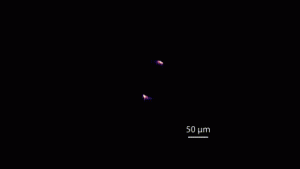
Gif is mainly black. At the corner, a ruler measures 50 μms. As if tracing a circle’s outline, white and purple flares appear and disappear.
A CMOS camera was used to capture the rotation of a terahertz beam.


Developing a practical terahertz camera requires a component that produces terahertz waves to illuminate a subject, and another that detects them. On the latter point, current terahertz detectors are either very slow, because they rely on detecting heat generated by the waves striking a material, and heat propagates slowly, or they use photodetectors that are relatively fast, but have very low sensitivity. In addition, until now, most approaches have required a whole array of terahertz detectors, each producing one pixel of the image. “Each one is quite expensive,” Shi says, so “once they start to make a camera, the cost of the detectors starts to scale up really, really quickly.”

While the researchers say they have cracked the terahertz pulse detection problem with their new work, the lack of good sources remains — and is being worked on by many research groups around the world. The terahertz source used in the new study is a large and cumbersome array of lasers and optical devices that cannot easily be scaled to practical applications, Nelson says, but new sources based microelectronic techniques are well under development.

“I think that’s really the rate-limiting step: Can you make the [terahertz] signals in a facile way that isn’t expensive?” he says. “But there’s no question that’s coming.”

Sang-Hyun Oh, a co-author of the paper and a McKnight Professor of Electrical and Computer Engineering at the University of Minnesota, adds that while present versions of terahertz cameras cost tens of thousands of dollars, the inexpensive nature of CMOS cameras used for this system makes it “a big step forward toward building a practical terahertz camera.” The potential for commercialization led Samsung, which makes CMOS camera chips and quantum dot devices, to collaborate on this research.

Traditional detectors for such wavelengths operate at liquid helium temperatures (-452 degrees Fahrenheit), Nelson says, which is necessary to pick out the extremely low energy of the terahertz photons from background noise. The fact that this new device can detect and produce images of these wavelengths with a conventional visible-light camera at room temperature has been unexpected to those working in the terahertz field. “People are like, ‘What?’ It’s kind of unheard of, and people get very surprised,” says Oh.

There are many avenues for further improving the sensitivity of the new camera, the researchers say, including further miniaturization of the components and ways of protecting the quantum dots. Even at the present detection levels, the device could have some potential applications, they say.

In terms of commercialization potential for the new device, Nelson says that quantum dots are now inexpensive and readily available, currently being used in consumer products such as television screens. The actual fabrication of the camera devices is more complex, he says, but is also based on existing microelectronics technology. In fact, unlike existing terahertz detectors, the entire terahertz camera chip can be manufactured using today’s standard microchip production systems, meaning that ultimately mass production of the devices should be possible and relatively inexpensive.

Already, even though the camera system is still far from commercialization, researchers at MIT have been using the new lab device when they need a quick way to detect terahertz radiation. “We don’t own one of those expensive cameras,” Nelson says, “but we have lots of these little devices. People will just stick one of these in the beam and look by eye at the visible light emission so they know when the terahertz beam is on. … People found it really handy.”

While terahertz waves could in principle be used to detect some astrophysical phenomena, those sources would be extremely weak and the new device is not able to capture such weak signals, Nelson says, although the team is working on improving its sensitivity. “The next generation lies in making everything smaller, so it will be much more sensitive,” he says.

The research team included Daehan Yoo at the University of Minnesota; Ferran Vidal-Codina, Ngoc-Cuong Nguyen, Hendrik Utzat, Jinchi Han, Vladimir Bulović, Moungi Bawendi, and Jaime Peraire at MIT; Chan-Wook Baik and Kyung-Sang Cho at Samsung Advanced Institute of Technology; and Aaron Lindenberg at Stanford University. The work was supported by the U.S. Army Research Office through the MIT Institute for Soldier Nanotechnologies, the Samsung Global Research Outreach Program, and the Center for Energy Efficient Research Science.

Methane research takes on new urgency at MIT

One of the most notable climate change provisions in the 2022 Inflation Reduction Act is the first U.S. federal tax on a greenhouse gas (GHG). That the fee targets methane (CH4), rather than carbon dioxide (CO2), emissions is indicative of the urgency the scientific community has placed on reducing this short-lived but powerful gas. Methane persists in the air about 12 years — compared to more than 1,000 years for CO2 — yet it immediately causes about 120 times more warming upon release. The gas is responsible for at least a quarter of today’s gross warming.

“Methane has a disproportionate effect on near-term warming,” says Desiree Plata, the director of MIT Methane Network. “CH4 does more damage than CO2 no matter how long you run the clock. By removing methane, we could potentially avoid critical climate tipping points.”

Because GHGs have a runaway effect on climate, reductions made now will have a far greater impact than the same reductions made in the future. Cutting methane emissions will slow the thawing of permafrost, which could otherwise lead to massive methane releases, as well as reduce increasing emissions from wetlands.

“The goal of MIT Methane Network is to reduce methane emissions by 45 percent by 2030, which would save up to 0.5 degree C of warming by 2100,” says Plata, an associate professor of civil and environmental engineering at MIT and director of the Plata Lab. “When you consider that governments are trying for a 1.5-degree reduction of all GHGs by 2100, this is a big deal.”

Under normal concentrations, methane, like CO2, poses no health risks. Yet methane assists in the creation of high levels of ozone. In the lower atmosphere, ozone is a key component of air pollution, which leads to “higher rates of asthma and increased emergency room visits,” says Plata.

Methane-related projects at the Plata Lab include a filter made of zeolite — the same clay-like material used in cat litter — designed to convert methane into CO2 at dairy farms and coal mines. At first glance, the technology would appear to be a bit of a hard sell, since it converts one GHG into another. Yet the zeolite filter’s low carbon and dollar costs, combined with the disproportionate warming impact of methane, make it a potential game-changer.

The sense of urgency about methane has been amplified by recent studies that show humans are generating far more methane emissions than previously estimated, and that the rates are rising rapidly. Exactly how much methane is in the air is uncertain. Current methods for measuring atmospheric methane, such as ground, drone, and satellite sensors, “are not readily abundant and do not always agree with each other,” says Plata.

The Plata Lab is collaborating with Tim Swager in the MIT Department of Chemistry to develop low-cost methane sensors. “We are developing chemiresisitive sensors that cost about a dollar that you could place near energy infrastructure to back-calculate where leaks are coming from,” says Plata.

The researchers are working on improving the accuracy of the sensors using machine learning techniques and are planning to integrate internet-of-things technology to transmit alerts. Plata and Swager are not alone in focusing on data collection: the Inflation Reduction Act adds significant funding for methane sensor research.

Other research at the Plata Lab includes the development of nanomaterials and heterogeneous catalysis techniques for environmental applications. The lab also explores mitigation solutions for industrial waste, particularly those related to the energy transition. Plata is the co-founder of an lithium-ion battery recycling startup called Nth Cycle.

On a more fundamental level, the Plata Lab is exploring how to develop products with environmental and social sustainability in mind. “Our overarching mission is to change the way that we invent materials and processes so that environmental objectives are incorporated along with traditional performance and cost metrics,” says Plata. “It is important to do that rigorous assessment early in the design process.”

MIT amps up methane research 

The MIT Methane Network brings together 26 researchers from MIT along with representatives of other institutions “that are dedicated to the idea that we can reduce methane levels in our lifetime,” says Plata. The organization supports research such as Plata’s zeolite and sensor projects, as well as designing pipeline-fixing robots, developing methane-based fuels for clean hydrogen, and researching the capture and conversion of methane into liquid chemical precursors for pharmaceuticals and plastics. Other members are researching policies to encourage more sustainable agriculture and land use, as well as methane-related social justice initiatives.

“Methane is an especially difficult problem because it comes from all over the place,” says Plata. A recent Global Carbon Project study estimated that half of methane emissions are caused by humans. This is led by waste and agriculture (28 percent), including cow and sheep belching, rice paddies, and landfills.

Fossil fuels represent 18 percent of the total budget. Of this, about 63 percent is derived from oil and gas production and pipelines, 33 percent from coal mining activities, and 5 percent from industry and transportation. Human-caused biomass burning, primarily from slash-and-burn agriculture, emits about 4 percent of the global total.

The other half of the methane budget includes natural methane emissions from wetlands (20 percent) and other natural sources (30 percent). The latter includes permafrost melting and natural biomass burning, such as forest fires started by lightning.

With increases in global warming and population, the line between anthropogenic and natural causes is getting fuzzier. “Human activities are accelerating natural emissions,” says Plata. “Climate change increases the release of methane from wetlands and permafrost and leads to larger forest and peat fires.”

The calculations can get complicated. For example, wetlands provide benefits from CO2 capture, biological diversity, and sea level rise resiliency that more than compensate for methane releases. Meanwhile, draining swamps for development increases emissions.

Over 100 nations have signed onto the U.N.’s Global Methane Pledge to reduce at least 30 percent of anthropogenic emissions within the next 10 years. The U.N. report estimates that this goal can be achieved using proven technologies and that about 60 percent of these reductions can be accomplished at low cost.

Much of the savings would come from greater efficiencies in fossil fuel extraction, processing, and delivery. The methane fees in the Inflation Reduction Act are primarily focused on encouraging fossil fuel companies to accelerate ongoing efforts to cap old wells, flare off excess emissions, and tighten pipeline connections.

Fossil fuel companies have already made far greater pledges to reduce methane than they have with CO2, which is central to their business. This is due, in part, to the potential savings, as well as in preparation for methane regulations expected from the Environmental Protection Agency in late 2022. The regulations build upon existing EPA oversight of drilling operations, and will likely be exempt from the U.S. Supreme Court’s ruling that limits the federal government’s ability to regulate GHGs.

Zeolite filter targets methane in dairy and coal 

The “low-hanging fruit” of gas stream mitigation addresses most of the 20 percent of total methane emissions in which the gas is released in sufficiently high concentrations for flaring. Plata’s zeolite filter aims to address the thornier challenge of reducing the 80 percent of non-flammable dilute emissions.

Plata found inspiration in decades-old catalysis research for turning methane into methanol. One strategy has been to use an abundant, low-cost aluminosilicate clay called zeolite.

“The methanol creation process is challenging because you need to separate a liquid, and it has very low efficiency,” says Plata. “Yet zeolite can be very efficient at converting methane into CO2, and it is much easier because it does not require liquid separation. Converting methane to CO2 sounds like a bad thing, but there is a major anti-warming benefit. And because methane is much more dilute than CO2, the relative CO2 contribution is minuscule.”

Using zeolite to create methanol requires highly concentrated methane, high temperatures and pressures, and industrial processing conditions. Yet Plata’s process, which dopes the zeolite with copper, operates in the presence of oxygen at much lower temperatures under typical pressures. “We let the methane proceed the way it wants from a thermodynamic perspective from methane to methanol down to CO2,” says Plata.

Researchers around the world are working on other dilute methane removal technologies. Projects include spraying iron salt aerosols into sea air where they react with natural chlorine or bromine radicals, thereby capturing methane. Most of these geoengineering solutions, however, are difficult to measure and would require massive scale to make a difference.

Plata is focusing her zeolite filters on environments where concentrations are high, but not so high as to be flammable. “We are trying to scale zeolite into filters that you could snap onto the side of a cross-ventilation fan in a dairy barn or in a ventilation air shaft in a coal mine,” says Plata. “For every packet of air we bring in, we take a lot of methane out, so we get more bang for our buck.”

The major challenge is creating a filter that can handle high flow rates without getting clogged or falling apart. Dairy barn air handlers can push air at up to 5,000 cubic feet per minute and coal mine handlers can approach 500,000 CFM.

Plata is exploring engineering options including fluidized bed reactors with floating catalyst particles. Another filter solution, based in part on catalytic converters, features “higher-order geometric structures where you have a porous material with a long path length where the gas can interact with the catalyst,” says Plata. “This avoids the challenge with fluidized beds of containing catalyst particles in the reactor. Instead, they are fixed within a structured material.”

Competing technologies for removing methane from mine shafts “operate at temperatures of 1,000 to 1,200 degrees C, requiring a lot of energy and risking explosion,” says Plata. “Our technology avoids safety concerns by operating at 300 to 400 degrees C. It reduces energy use and provides more tractable deployment costs.”

Potentially, energy and dollar costs could be further reduced in coal mines by capturing the heat generated by the conversion process. “In coal mines, you have enrichments above a half-percent methane, but below the 4 percent flammability threshold,” says Plata. “The excess heat from the process could be used to generate electricity using off-the-shelf converters.”

Plata’s dairy barn research is funded by the Gerstner Family Foundation and the coal mining project by the U.S. Department of Energy. “The DOE would like us to spin out the technology for scale-up within three years,” says Plata. “We cannot guarantee we will hit that goal, but we are trying to develop this as quickly as possible. Our society needs to start reducing methane emissions now.”