Cobalt-free batteries could power cars of the future

Many electric vehicles are powered by batteries that contain cobalt — a metal that carries high financial, environmental, and social costs.

MIT researchers have now designed a battery material that could offer a more sustainable way to power electric cars. The new lithium-ion battery includes a cathode based on organic materials, instead of cobalt or nickel (another metal often used in lithium-ion batteries).

In a new study, the researchers showed that this material, which could be produced at much lower cost than cobalt-containing batteries, can conduct electricity at similar rates as cobalt batteries. The new battery also has comparable storage capacity and can be charged up faster than cobalt batteries, the researchers report.

“I think this material could have a big impact because it works really well,” says Mircea Dincă, the W.M. Keck Professor of Energy at MIT. “It is already competitive with incumbent technologies, and it can save a lot of the cost and pain and environmental issues related to mining the metals that currently go into batteries.”

Dincă is the senior author of the study, which appears today in the journal ACS Central Science. Tianyang Chen PhD ’23 and Harish Banda, a former MIT postdoc, are the lead authors of the paper. Other authors include Jiande Wang, an MIT postdoc; Julius Oppenheim, an MIT graduate student; and Alessandro Franceschi, a research fellow at the University of Bologna.

Alternatives to cobalt

Most electric cars are powered by lithium-ion batteries, a type of battery that is recharged when lithium ions flow from a positively charged electrode, called a cathode, to a negatively electrode, called an anode. In most lithium-ion batteries, the cathode contains cobalt, a metal that offers high stability and energy density.

However, cobalt has significant downsides. A scarce metal, its price can fluctuate dramatically, and much of the world’s cobalt deposits are located in politically unstable countries. Cobalt extraction creates hazardous working conditions and generates toxic waste that contaminates land, air, and water surrounding the mines.

“Cobalt batteries can store a lot of energy, and they have all of features that people care about in terms of performance, but they have the issue of not being widely available, and the cost fluctuates broadly with commodity prices. And, as you transition to a much higher proportion of electrified vehicles in the consumer market, it’s certainly going to get more expensive,” Dincă says.

Because of the many drawbacks to cobalt, a great deal of research has gone into trying to develop alternative battery materials. One such material is lithium-iron-phosphate (LFP), which some car manufacturers are beginning to use in electric vehicles. Although still practically useful, LFP has only about half the energy density of cobalt and nickel batteries.

Another appealing option are organic materials, but so far most of these materials have not been able to match the conductivity, storage capacity, and lifetime of cobalt-containing batteries. Because of their low conductivity, such materials typically need to be mixed with binders such as polymers, which help them maintain a conductive network. These binders, which make up at least 50 percent of the overall material, bring down the battery’s storage capacity.

About six years ago, Dincă’s lab began working on a project, funded by Lamborghini, to develop an organic battery that could be used to power electric cars. While working on porous materials that were partly organic and partly inorganic, Dincă and his students realized that a fully organic material they had made appeared that it might be a strong conductor.

This material consists of many layers of TAQ (bis-tetraaminobenzoquinone), an organic small molecule that contains three fused hexagonal rings. These layers can extend outward in every direction, forming a structure similar to graphite. Within the molecules are chemical groups called quinones, which are the electron reservoirs, and amines, which help the material to form strong hydrogen bonds.

Those hydrogen bonds make the material highly stable and also very insoluble. That insolubility is important because it prevents the material from dissolving into the battery electrolyte, as some organic battery materials do, thereby extending its lifetime.

“One of the main methods of degradation for organic materials is that they simply dissolve into the battery electrolyte and cross over to the other side of the battery, essentially creating a short circuit. If you make the material completely insoluble, that process doesn’t happen, so we can go to over 2,000 charge cycles with minimal degradation,” Dincă says.

Strong performance

Tests of this material showed that its conductivity and storage capacity were comparable to that of traditional cobalt-containing batteries. Also, batteries with a TAQ cathode can be charged and discharged faster than existing batteries, which could speed up the charging rate for electric vehicles.

To stabilize the organic material and increase its ability to adhere to the battery’s current collector, which is made of copper or aluminum, the researchers added filler materials such as cellulose and rubber. These fillers make up less than one-tenth of the overall cathode composite, so they don’t significantly reduce the battery’s storage capacity.

These fillers also extend the lifetime of the battery cathode by preventing it from cracking when lithium ions flow into the cathode as the battery charges.

The primary materials needed to manufacture this type of cathode are a quinone precursor and an amine precursor, which are already commercially available and produced in large quantities as commodity chemicals. The researchers estimate that the material cost of assembling these organic batteries could be about one-third to one-half the cost of cobalt batteries.

Lamborghini has licensed the patent on the technology. Dincă’s lab plans to continue developing alternative battery materials and is exploring possible replacement of lithium with sodium or magnesium, which are cheaper and more abundant than lithium.

Study reveals a reaction at the heart of many renewable energy technologies

A key chemical reaction — in which the movement of protons between the surface of an electrode and an electrolyte drives an electric current — is a critical step in many energy technologies, including fuel cells and the electrolyzers used to produce hydrogen gas.

For the first time, MIT chemists have mapped out in detail how these proton-coupled electron transfers happen at an electrode surface. Their results could help researchers design more efficient fuel cells, batteries, or other energy technologies.

“Our advance in this paper was studying and understanding the nature of how these electrons and protons couple at a surface site, which is relevant for catalytic reactions that are important in the context of energy conversion devices or catalytic reactions,” says Yogesh Surendranath, a professor of chemistry and chemical engineering at MIT and the senior author of the study.

Among their findings, the researchers were able to trace exactly how changes in the pH of the electrolyte solution surrounding an electrode affect the rate of proton motion and electron flow within the electrode.

MIT graduate student Noah Lewis is the lead author of the paper, which appears today in Nature Chemistry. Ryan Bisbey, a former MIT postdoc; Karl Westendorff, an MIT graduate student; and Alexander Soudackov, a research scientist at Yale University, are also authors of the paper.

Passing protons

Proton-coupled electron transfer occurs when a molecule, often water or an acid, transfers a proton to another molecule or to an electrode surface, which stimulates the proton acceptor to also take up an electron. This kind of reaction has been harnessed for many energy applications.

“These proton-coupled electron transfer reactions are ubiquitous. They are often key steps in catalytic mechanisms, and are particularly important for energy conversion processes such as hydrogen generation or fuel cell catalysis,” Surendranath says.

In a hydrogen-generating electrolyzer, this approach is used to remove protons from water and add electrons to the protons to form hydrogen gas. In a fuel cell, electricity is generated when protons and electrons are removed from hydrogen gas and added to oxygen to form water.

Proton-coupled electron transfer is common in many other types of chemical reactions, for example, carbon dioxide reduction (the conversion of carbon dioxide into chemical fuels by adding electrons and protons). Scientists have learned a great deal about how these reactions occur when the proton acceptors are molecules, because they can precisely control the structure of each molecule and observe how electrons and protons pass between them. However, when proton-coupled electron transfer occurs at the surface of an electrode, the process is much more difficult to study because electrode surfaces are usually very heterogenous, with many different sites that a proton could potentially bind to.

To overcome that obstacle, the MIT team developed a way to design electrode surfaces that gives them much more precise control over the composition of the electrode surface. Their electrodes consist of sheets of graphene with organic, ring-containing compounds attached to the surface. At the end of each of these organic molecules is a negatively charged oxygen ion that can accept protons from the surrounding solution, which causes an electron to flow from the circuit into the graphitic surface.

“We can create an electrode that doesn’t consist of a wide diversity of sites but is a uniform array of a single type of very well-defined sites that can each bind a proton with the same affinity,” Surendranath says. “Since we have these very well-defined sites, what this allowed us to do was really unravel the kinetics of these processes.”

Using this system, the researchers were able to measure the flow of electrical current to the electrodes, which allowed them to calculate the rate of proton transfer to the oxygen ion at the surface at equilibrium — the state when the rates of proton donation to the surface and proton transfer back to solution from the surface are equal. They found that the pH of the surrounding solution has a significant effect on this rate: The highest rates occurred at the extreme ends of the pH scale — pH 0, the most acidic, and pH 14, the most basic.

To explain these results, researchers developed a model based on two possible reactions that can occur at the electrode. In the first, hydronium ions (H3O+), which are in high concentration in strongly acidic solutions, deliver protons to the surface oxygen ions, generating water. In the second, water delivers protons to the surface oxygen ions, generating hydroxide ions (OH), which are in high concentration in strongly basic solutions.

However, the rate at pH 0 is about four times faster than the rate at pH 14, in part because hydronium gives up protons at a faster rate than water.

A reaction to reconsider

The researchers also discovered, to their surprise, that the two reactions have equal rates not at neutral pH 7, where hydronium and hydroxide concentrations are equal, but at pH 10, where the concentration of hydroxide ions is 1 million times that of hydronium. The model suggests this is because the forward reaction involving proton donation from hydronium or water contributes more to the overall rate than the backward reaction involving proton removal by water or hydroxide.

Existing models of how these reactions occur at electrode surfaces assume that the forward and backward reactions contribute equally to the overall rate, so the new findings suggest that those models may need to be reconsidered, the researchers say.

“That’s the default assumption, that the forward and reverse reactions contribute equally to the reaction rate,” Surendranath says. “Our finding is really eye-opening because it means that the assumption that people are using to analyze everything from fuel cell catalysis to hydrogen evolution may be something we need to revisit.”

The researchers are now using their experimental setup to study how adding different types of ions to the electrolyte solution surrounding the electrode may speed up or slow down the rate of proton-coupled electron flow.

“With our system, we know that our sites are constant and not affecting each other, so we can read out what the change in the solution is doing to the reaction at the surface,” Lewis says.

The research was funded by the U.S. Department of Energy Office of Basic Energy Sciences.

MIT community members elected to the National Academy of Inventors for 2023

The National Academy of Inventors (NAI) recently announced the election of more than 160 individuals to their 2023 class of fellows. Among them are two members of the MIT Koch Institute for Integrative Cancer Research, Professor Daniel G. Anderson and Principal Research Scientist Ana Jaklenec. In addition, 11 MIT alumni were also recognized.

The highest professional distinction accorded solely to academic inventors, election to the NAI recognizes individuals who have created or facilitated outstanding inventions that have made a tangible impact on quality of life, economic development, and the welfare of society.

“Daniel and Ana embody some of the Koch Institute’s core values of interdisciplinary innovation and drive to translate their discoveries into real impact for patients,” says Matthew Vander Heiden, director of the Koch Institute. “Their election to the academy is very well-deserved, and we are honored to count them both among the Koch Institute’s and MIT’s research community.”

Daniel Anderson is the Joseph R. Mares (1924) Professor of Chemical Engineering, and a core member of the Institute for Medical Engineering and Science. He is a leading researcher in the fields of nanotherapeutics and biomaterials. Anderson’s work has led to advances in a range of areas, including medical devices, cell therapy, drug delivery, gene therapy, and material science, and has resulted in the publication of more than 500 papers, patents, and patent applications. He has founded several companies, including Living Proof, Olivo Labs, Crispr Therapeutics (CRSP), Sigilon Therapeutics, Verseau Therapeutics, oRNA, and VasoRx. He is a member of National Academy of Medicine, the Harvard-MIT Division of Health Science and Technology, and is an affiliate of the Broad Institute of MIT and Harvard and the Ragon Institute of MGH, MIT and Harvard.

Ana Jaklenec, a principal research scientist and principal investigator at the Koch Institute, is a leader in the fields of bioengineering and materials science, focused on controlled delivery and stability of therapeutics for global health. She is an inventor of several drug delivery technologies that have the potential to enable equitable access to medical care globally. Her lab is developing new manufacturing techniques for the design of materials at the nano- and micro-scale for self-boosting vaccines, 3D printed on-demand microneedles, heat-stable polymer-based carriers for oral delivery of micronutrients and probiotics, and long-term drug delivery systems for cancer immunotherapy. She has published over 100 manuscripts, patents, and patent applications and has founded three companies: Particles for Humanity, VitaKey, and OmniPulse Biosciences.

The 11 MIT alumni who were elected to the NAI for 2023 include:

  • Michel Barsoum PhD ’85 (Materials Science and Engineering);
  • Eric Burger ’84 (Electrical Engineering and Computer Science);
  • Kevin Kelly SM ’88, PhD ’91 (Mechanical Engineering);
  • Ali Khademhosseini PhD ’05 (Biological Engineering);
  • Joshua Makower ’85 (Mechanical Engineering);
  • Marcela Maus ’97 (Biology);
  • Milos Popovic SM ’02, PhD ’08 (Electrical Engineering and Computer Science);
  • Milica Radisic PhD ’04 (Chemical Engineering);
  • David Reinkensmeyer ’88 (Electrical Engineering);
  • Boris Rubinsky PhD ’81 (Mechanical Engineering); and
  • Paul S. Weiss ’80, SM ’80 (Chemistry).

Since its inception in 2012, the NAI Fellows program has grown to include 1,898 exceptional researchers and innovators, who hold over 63,000 U.S. patents and 13,000 licensed technologies. NAI Fellows are known for the societal and economic impact of their inventions, contributing to major advancements in science and consumer technologies. Their innovations have generated over $3 trillion in revenue and generated 1 million jobs.

“This year’s class of NAI Fellows showcases the caliber of researchers that are found within the innovation ecosystem. Each of these individuals are making significant contributions to both science and society through their work,” says Paul R. Sanberg, president of the NAI. “This new class, in conjunction with our existing fellows, are creating innovations that are driving crucial advancements across a variety of disciplines and are stimulating the global and national economy in immeasurable ways as they move these technologies from lab to marketplace.”

Computational model captures the elusive transition states of chemical reactions

During a chemical reaction, molecules gain energy until they reach what’s known as the transition state — a point of no return from which the reaction must proceed. This state is so fleeting that it’s nearly impossible to observe it experimentally.

The structures of these transition states can be calculated using techniques based on quantum chemistry, but that process is extremely time-consuming. A team of MIT researchers has now developed an alternative approach, based on machine learning, that can calculate these structures much more quickly — within a few seconds.

Their new model could be used to help chemists design new reactions and catalysts to generate useful products like fuels or drugs, or to model naturally occurring chemical reactions such as those that might have helped to drive the evolution of life on Earth.

“Knowing that transition state structure is really important as a starting point for thinking about designing catalysts or understanding how natural systems enact certain transformations,” says Heather Kulik, an associate professor of chemistry and chemical engineering at MIT, and the senior author of the study.

Chenru Duan PhD ’22 is the lead author of a paper describing the work, which appears today in Nature Computational Science. Cornell University graduate student Yuanqi Du and MIT graduate student Haojun Jia are also authors of the paper.

Fleeting transitions

For any given chemical reaction to occur, it must go through a transition state, which takes place when it reaches the energy threshold needed for the reaction to proceed. The probability of any chemical reaction occurring is partly determined by how likely it is that the transition state will form.

“The transition state helps to determine the likelihood of a chemical transformation happening. If we have a lot of something that we don’t want, like carbon dioxide, and we’d like to convert it to a useful fuel like methanol, the transition state and how favorable that is determines how likely we are to get from the reactant to the product,” Kulik says.

Chemists can calculate transition states using a quantum chemistry method known as density functional theory. However, this method requires a huge amount of computing power and can take many hours or even days to calculate just one transition state.

Recently, some researchers have tried to use machine-learning models to discover transition state structures. However, models developed so far require considering two reactants as a single entity in which the reactants maintain the same orientation with respect to each other. Any other possible orientations must be modeled as separate reactions, which adds to the computation time.

“If the reactant molecules are rotated, then in principle, before and after this rotation they can still undergo the same chemical reaction. But in the traditional machine-learning approach, the model will see these as two different reactions. That makes the machine-learning training much harder, as well as less accurate,” Duan says.

The MIT team developed a new computational approach that allowed them to represent two reactants in any arbitrary orientation with respect to each other, using a type of model known as a diffusion model, which can learn which types of processes are most likely to generate a particular outcome. As training data for their model, the researchers used structures of reactants, products, and transition states that had been calculated using quantum computation methods, for 9,000 different chemical reactions.

“Once the model learns the underlying distribution of how these three structures coexist, we can give it new reactants and products, and it will try to generate a transition state structure that pairs with those reactants and products,” Duan says.

The researchers tested their model on about 1,000 reactions that it hadn’t seen before, asking it to generate 40 possible solutions for each transition state. They then used a “confidence model” to predict which states were the most likely to occur. These solutions were accurate to within 0.08 angstroms (one hundred-millionth of a centimeter) when compared to transition state structures generated using quantum techniques. The entire computational process takes just a few seconds for each reaction.

“You can imagine that really scales to thinking about generating thousands of transition states in the time that it would normally take you to generate just a handful with the conventional method,” Kulik says.

Modeling reactions

Although the researchers trained their model primarily on reactions involving compounds with a relatively small number of atoms — up to 23 atoms for the entire system — they found that it could also make accurate predictions for reactions involving larger molecules.

“Even if you look at bigger systems or systems catalyzed by enzymes, you’re getting pretty good coverage of the different types of ways that atoms are most likely to rearrange,” Kulik says.

The researchers now plan to expand their model to incorporate other components such as catalysts, which could help them investigate how much a particular catalyst would speed up a reaction. This could be useful for developing new processes for generating pharmaceuticals, fuels, or other useful compounds, especially when the synthesis involves many chemical steps.

“Traditionally all of these calculations are performed with quantum chemistry, and now we’re able to replace the quantum chemistry part with this fast generative model,” Duan says.

Another potential application for this kind of model is exploring the interactions that might occur between gases found on other planets, or to model the simple reactions that may have occurred during the early evolution of life on Earth, the researchers say.

The new method represents “a significant step forward in predicting chemical reactivity,” says Jan Halborg Jensen, a professor of chemistry at the University of Copenhagen, who was not involved in the research.

“Finding the transition state of a reaction and the associated barrier is the key step in predicting chemical reactivity, but also the one of the hardest tasks to automate,” he says. “This problem is holding back many important fields such as computational catalyst and reaction discovery, and this is the first paper I have seen that could remove this bottleneck.”

The research was funded by the U.S. Office of Naval Research and the National Science Foundation.

Moungi Bawendi honored during Nobel Week in Stockholm

The 2023 Nobel Prize winners received their awards in a grand ceremony yesterday in Stockholm, Sweden. Among those honored was MIT Professor Moungi Bawendi, who shared the 2023 Nobel Prize in Chemistry with Louis Brus and Aleksey Yekimov for their work on quantum dots.

As part of the annual Nobel Week festivities, Bawendi gave a lecture about his research, participated in a Nobel Banquet, and took part in a conversation with Danish European Space Agency astronaut Andreas Mogensen, a current crew member on the International Space Station. To mark the occasion, Morgensen showed off a floating Nobel Prize medal won previously by physicist Niels Bohr.

In his banquet speech, Bawendi stated: “Wondering about how the atomic world evolves into the macroscopic one inevitably leads us through a wonderful new world, the nano-world, which we now call the realm of nanoscience and nanotechnology. Quantum dots, for which we are being honored here today were at the birth of this new realm. They shine brightly on its future and the yet un-imagined possibilities it offers. So tonight, let us raise a toast to the human drive for exploration, and to the future of nanoscience.”

Below are several photos from Bawendi’s week in Stockholm.

Chemists create organic molecules in a rainbow of colors

Chains of fused carbon-containing rings have unique optoelectronic properties that make them useful as semiconductors. These chains, known as acenes, can also be tuned to emit different colors of light, which makes them good candidates for use in organic light-emitting diodes.

The color of light emitted by an acene is determined by its length, but as the molecules become longer, they also become less stable, which has hindered their widespread use in light-emitting applications.

MIT chemists have now come up with a way to make these molecules more stable, allowing them to synthesize acenes of varying lengths. Using their new approach, they were able to build molecules that emit red, orange, yellow, green, or blue light, which could make acenes easier to deploy in a variety of applications.

“This class of molecules, despite their utility, have challenges in terms of their reactivity profile,” says Robert Gilliard, the Novartis Associate Professor of Chemistry at MIT and the senior author of the new study. “What we tried to address in this study first was the stability problem, and second, we wanted to make compounds where you could have a tunable range of light emission.”

MIT research scientist Chun-Lin Deng is the lead author of the paper, which appears today in Nature Chemistry.

Colorful molecules

Acenes consist of benzene molecules — rings made of carbon and hydrogen — fused together in a linear fashion. Because they are rich in sharable electrons and can efficiently transport an electric charge, they have been used as semiconductors and field-effect transistors (transistors that use an electric field to control the flow of current in a semiconductor).

Recent work has shown that acenes in which some of the carbon atoms are replaced, or “doped,” with boron and nitrogen have even more useful electronic properties. However, like traditional acenes, these molecules are unstable when exposed to air or light. Often, acenes have to be synthesized within a sealed container called a glovebox to protect them from air exposure, which can lead them to break down. The longer the acenes are, the more susceptible they are to unwanted reactions initiated by oxygen, water, or light.

To try to make acenes more stable, Gilliard decided to use a ligand that his lab has previously worked with, known as carbodicarbenes. In a study published last year, they used this ligand to stabilize borafluorenium ions, organic compounds that can emit different colors of light in response to temperature changes.

For this study, Gilliard and his co-authors developed a new synthesis that allowed them to add carbodicarbenes to acenes that are also doped with boron and nitrogen. With the addition of the new ligand, the acenes became positively charged, which improved their stability and also gave them unique electronic properties.

Using this approach, the researchers created acenes that produce different colors, depending on their length and the types of chemical groups attached to the carbodicarbene. Until now, most of the boron, nitrogen-doped acenes that had been synthesized could emit only blue light.

“Red emission is very important for wide-ranging applications, including biological applications like imaging,” Gilliard says. “A lot of human tissue emits blue light, so it’s difficult to use blue-fluorescent probes for imaging, which is one of the many reasons why people are looking for red emitters.”

Better stability

Another important feature of these acenes is that they remain stable in both air and water. Boron-containing charged molecules with a low coordination number (meaning the central boron atom has few neighbors) are often highly unstable in water, so the acenes’ stability in water is notable and could make it feasible to use them for imaging and other medical applications.

“One of the reasons why we’re excited about the class of compounds that we’re reporting in this paper is that they can be suspended in water. That opens up a wide range of possibilities,” Gilliard says.

The researchers now plan to try incorporating different types of carbodicarbenes to see if they can create additional acenes with even better stability and quantum efficiency (a measure of how much light is emitted from the material).

“We think it will be possible to make a lot of different derivatives that we haven’t even synthesized yet,” Gilliard says. “There are a lot of optoelectronic properties that can be dialed in that we have yet to explore, and we’re excited about that as well.”

Gilliard also plans to work with Marc Baldo, an MIT professor of electrical engineering, to try incorporating the new acenes into a type of solar cell known as a single-fission-based solar cell. This type of solar cell can produce two electrons from one photon, making the cell much more efficient.

These types of compounds could also be developed for use as light-emitting diodes for television and computer screens, Gilliard says. Organic light-emitting diodes are lighter and more flexible than traditional LEDs, produce brighter images, and consume less power.

“We’re still in the very early stages of developing the specific applications, whether it’s organic semiconductors, light-emitting devices, or singlet-fission-based solar cells, but due to their stability, the device fabrication should be much smoother than typical for these kinds of compounds,” Gilliard says.

“By combining reactive zerovalent carbon and cationic boron species, this creative work with a nontraditional paradigm certainly paves a promising path toward the development of highly air- and photo-stable light-emitting materials and miniature energy harvesting devices,” says Tiow-Gan Ong, deputy director of the Institute of Chemistry at the Academia Sinica in China, who was not involved in the research.

The research was funded by the Arnold and Mabel Beckman Foundation and the National Science Foundation Major Research Instrumentation Program.

Explained: The sugar coating of life

In the narrowest sense, glycobiology is the study of the structure, biology, and evolution of glycans, the carbohydrates and sugar-coated molecules found in every living organism. As a recent symposium at MIT made clear, the field is in the midst of a renaissance that could reshape scientists’ understanding of the building blocks of life.

Originally coined in the 1980s to describe the merging of traditional research in carbohydrate chemistry and biochemistry, glycobiology has come to encompass a much broader and multidisciplinary set of ideas. “Glycoscience” may actually be a more appropriate name for the rapidly growing field, reflecting its broad application not just to biology and chemistry but also to bioengineering, medicine, materials science, and more.

“It’s becoming increasingly clear that these glycans have a very important role to play in health and disease,” says Laura Kiessling, the Novartis Professor of Chemistry. “It may seem daunting initially, but devising new tools and identifying new kinds of interactions requires exactly the sort of creative problem-solving skills that people have at MIT.”

The sugar coat of the body

Glycans include a diverse set of molecules with linear and branched structures that are critical for basic biological functions. With no known exception, all cells in nature are coated with these sugar molecules — from the intricate chains of sugars surrounding most cellular surfaces to the conjugated molecules formed when sugars attach like scaffolding to lipids and proteins. They’re absolutely fundamental to life. For example, Kiessling points out that the most abundant organic molecule on the planet is the carbohydrate cellulose.

“Sperm-egg binding is mediated by an interaction between a protein and a carbohydrate,” she says. “None of us would exist without these interactions.”

Though talking about carbs and sugars might leave some people focused on their diet, glycans are actually among the most important biomolecules out there. They store energy and, in some cases like cellulose, provide the structural framework for multicellular organisms. They mediate communication between cells; influence interactions like that between a host and parasite; and shape immune responses, disease progression, development, and physiology.

“It turns out that some of these structures, which we didn’t even know existed in the body in such abundance until recently, have so many different biological functions,” says Andrew and Erna Viterbi Professor of Biological Engineering Katharina Ribbeck. “With this rapid expansion of knowledge, it feels like we’re just beginning to understand how diverse and important those functions are to biology.”

With a better understanding of how ubiquitous and critical these molecules are, researchers in applied fields like biotechnology and medicine have turned their attention to glycoscience as a tool to pinpoint the drivers of disease.

Many conditions have been linked to defects in how glycans are produced in the body or issues with glycosylation, the process by which carbohydrates attach to proteins and other molecules. That includes certain forms of cancer. Cancer cells have even been shown to cloak themselves in certain glycoproteins to evade an immune response.

On the flip side, glycans may be a repository of potential therapeutics. The blood thinner Heparin, one of the world’s best-selling prescription drugs, for example, is a carbohydrate-based drug.

Glycans and sugar-binding proteins like lectins even help influence the exchange of microbes across mucus layers in the human body, from the brain to the gut. Glycans dangling off mucus interact with microbes, letting good ones in and reducing the virulence of problematic ones by interrupting cell signaling or stopping pathogens from releasing toxins.

New tools to advance old science

Despite how crucial this “sugar coat” is, for a long time, molecular biologists focused on nucleic acids and proteins, paying relatively little attention to the sugars that coated them.

“The tools we have to examine the functions of other molecules are largely absent for glycans,” Kiessling says.

For example, the DNA and RNA sequences of a cell predict what proteins that cell makes, so scientists can track where a protein is and what it’s doing using a genetically-encoded tag. But the structure of glycans isn’t so obviously encoded in a cell’s DNA, and a single protein can be decorated with many different chains of carbohydrates.

In addition, the immense diversity of forms carbohydrates can take, and the fact that they break down quickly in the bloodstream, has made it challenging to synthesize glycans or target them for drug development. So, creative new methods are needed to track them.

It’s a classic chicken-and-egg situation. As scientists better understand the importance of glycans for so many biological processes, it has incentivized them to develop better tools for studying glycans, in turn, producing even more data on just what these molecules can do. In 2022, in fact, the Nobel Prize was awarded to Carolyn Bertozzi at Stanford University, a pioneer in glycobiology, for her work on tracking molecules in cells, which she and others have applied to glycans.

But artificial intelligence could facilitate an evolutionary leap in the field.

“I think glycobiology is, more than almost any other field, ripe and ready for an AI interpretation,” Ribbeck says, explaining how AI might enable scientists to read the “glycan code” in the same way they have with the human genome. That would allow researchers to predict the actual function of a glycan based on data about its structure. From there, they could identify what changes lead to disease or increase disease susceptibility — and, most importantly, come up with ways to repair those defects.

An inter- and trans-disciplinary effort

The increasing interest in computation reflects the inherent interdisciplinarity that has defined glycoscience from the beginning.

Just at MIT, for example, related research is happening across the Institute. Kiessling describes MIT as a “playground for interdisciplinary research,” which has enabled significant advances in the field with applications to biotechnology, cancer research, brain science, immunology, and more.

In the Department of Chemistry, Kiessling is studying carbohydrate-binding proteins, and how their interactions with glycans affect the immune system. She’s also working with Bryan Bryson, an associate professor in the Department of Biological Engineering, and Deborah Hung, a core faculty member at The Broad Institute of MIT and Harvard, using carbohydrate analogs to test differences in strains of tuberculosis in South Africa. Meanwhile, assistant professor of biological engineering Jessica Stark is pioneering approaches to better understand the roles of glycans in the immune system. Tobi Oni, a fellow at the Whitehead Institute for Biomedical Research, is looking to glycans to help detect and target tumors in pancreatic cancer. Barbara Imperiali, the Class of 1922 Professor of Biology and Chemistry, is studying the carbohydrates that envelop the cells of microbes like bacteria, and Professor Matthew Shoulders in the Department of Chemistry is studying the role of glycans in synthesizing and folding proteins.

“We’re at a very exciting and unique position combining disciplines to address and answer entirely new questions relevant for disease and health,” says Ribbeck.”The field in and of itself is not new, but what is new is the contribution that MIT, in particular, could make with a creative combination of science, engineering, and computation.”

Celebrating five years of MIT.nano

There is vast opportunity for nanoscale innovation to transform the world in positive ways — expressed MIT.nano Director Vladimir Bulović as he posed two questions to attendees at the start of the inaugural Nano Summit: “Where are we heading? And what is the next big thing we can develop?”

“The answer to that puts into perspective our main purpose — and that is to change the world,” Bulović, the Fariborz Maseeh Professor of Emerging Technologies, told an audience of more than 325 in-person and 150 virtual participants gathered for an exploration of nano-related research at MIT and a celebration of MIT.nano’s fifth anniversary.

Over a decade ago, MIT embarked on a massive project for the ultra-small — building an advanced facility to support research at the nanoscale. Construction of MIT.nano in the heart of MIT’s campus, a process compared to assembling a ship in a bottle, began in 2015, and the facility launched in October 2018.

Fast forward five years: MIT.nano now contains nearly 170 tools and instruments serving more than 1,200 trained researchers. These individuals come from over 300 principal investigator labs, representing more than 50 MIT departments, labs, and centers. The facility also serves external users from industry, other academic institutions, and over 130 startup and multinational companies.

A cross section of these faculty and researchers joined industry partners and MIT community members to kick off the first Nano Summit, which is expected to become an annual flagship event for MIT.nano and its industry consortium. Held on Oct. 24, the inaugural conference was co-hosted by the MIT Industrial Liaison Program.

Six topical sessions highlighted recent developments in quantum science and engineering, materials, advanced electronics, energy, biology, and immersive data technology. The Nano Summit also featured startup ventures and an art exhibition.

Watch the videos here.

Seeing and manipulating at the nanoscale — and beyond

“We need to develop new ways of building the next generation of materials,” said Frances Ross, the TDK Professor in Materials Science and Engineering (DMSE). “We need to use electron microscopy to help us understand not only what the structure is after it’s built, but how it came to be. I think the next few years in this piece of the nano realm are going to be really amazing.”

Speakers in the session “The Next Materials Revolution,” chaired by MIT.nano co-director for Characterization.nano and associate professor in DMSE James LeBeau, highlighted areas in which cutting-edge microscopy provides insights into the behavior of functional materials at the nanoscale, from anti-ferroelectrics to thin-film photovoltaics and 2D materials. They shared images and videos collected using the instruments in MIT.nano’s characterization suites, which were specifically designed and constructed to minimize mechanical-vibrational and electro-magnetic interference.

Later, in the “Biology and Human Health” session chaired by Boris Magasanik Professor of Biology Thomas Schwartz, biologists echoed the materials scientists, stressing the importance of the ultra-quiet, low-vibration environment in Characterization.nano to obtain high-resolution images of biological structures.

“Why is MIT.nano important for us?” asked Schwartz. “An important element of biology is to understand the structure of biology macromolecules. We want to get to an atomic resolution of these structures. CryoEM (cryo-electron microscopy) is an excellent method for this. In order to enable the resolution revolution, we had to get these instruments to MIT. For that, MIT.nano was fantastic.”

Seychelle Vos, the Robert A. Swanson (1969) Career Development Professor of Life Sciences, shared CryoEM images from her lab’s work, followed by biology Associate Professor Joey Davis who spoke about image processing. When asked about the next stage for CryoEM, Davis said he’s most excited about in-situ tomography, noting that there are new instruments being designed that will improve the current labor-intensive process.

To chart the future of energy, chemistry associate professor Yogi Surendranath is also using MIT.nano to see what is happening at the nanoscale in his research to use renewable electricity to change carbon dioxide into fuel.

“MIT.nano has played an immense role, not only in facilitating our ability to make nanostructures, but also to understand nanostructures through advanced imaging capabilities,” said Surendranath. “I see a lot of the future of MIT.nano around the question of how nanostructures evolve and change under the conditions that are relevant to their function. The tools at MIT.nano can help us sort that out.”

Tech transfer and quantum computing

The “Advanced Electronics” session chaired by Jesús del Alamo, the Donner Professor of Science in the Department of Electrical Engineering and Computer Science (EECS), brought together industry partners and MIT faculty for a panel discussion on the future of semiconductors and microelectronics. “Excellence in innovation is not enough, we also need to be excellent in transferring these to the marketplace,” said del Alamo. On this point, panelists spoke about strengthening the industry-university connection, as well as the importance of collaborative research environments and of access to advanced facilities, such as MIT.nano, for these environments to thrive.

The session came on the heels of a startup exhibit in which eleven START.nano companies presented their technologies in health, energy, climate, and virtual reality, among other topics. START.nano, MIT.nano’s hard-tech accelerator, provides participants use of MIT.nano’s facilities at a discounted rate and access to MIT’s startup ecosystem. The program aims to ease hard-tech startups’ transition from the lab to the marketplace, surviving common “valleys of death” as they move from idea to prototype to scaling up.

When asked about the state of quantum computing in the “Quantum Science and Engineering” session, physics professor Aram Harrow related his response to these startup challenges. “There are quite a few valleys to cross — there are the technical valleys, and then also the commercial valleys.” He spoke about scaling superconducting qubits and qubits made of suspended trapped ions, and the need for more scalable architectures, which we have the ingredients for, he said, but putting everything together is quite challenging.

Throughout the session, William Oliver, professor of physics and the Henry Ellis Warren (1894) Professor of Electrical Engineering and Computer Science, asked the panelists how MIT.nano can address challenges in assembly and scalability in quantum science.

“To harness the power of students to innovate, you really need to allow them to get their hands dirty, try new things, try all their crazy ideas, before this goes into a foundry-level process,” responded Kevin O’Brien, associate professor in EECS. “That’s what my group has been working on at MIT.nano, building these superconducting quantum processors using the state-of-the art fabrication techniques in MIT.nano.”

Connecting the digital to the physical

In his reflections on the semiconductor industry, Douglas Carlson, senior vice president for technology at MACOM, stressed connecting the digital world to real-world application. Later, in the “Immersive Data Technology” session, MIT.nano associate director Brian Anthony explained how, at the MIT.nano Immersion Lab, researchers are doing just that.

“We think about and facilitate work that has the human immersed between hardware, data, and experience,” said Anthony, principal research scientist in mechanical engineering. He spoke about using the capabilities of the Immersion Lab to apply immersive technologies to different areas — health, sports, performance, manufacturing, and education, among others. Speakers in this session gave specific examples in hardware, pediatric health, and opera.

Anthony connected this third pillar of MIT.nano to the fab and characterization facilities, highlighting how the Immersion Lab supports work conducted in other parts of the building. The Immersion Lab’s strength, he said, is taking novel work being developed inside MIT.nano and bringing it up to the human scale to think about applications and uses.

Artworks that are scientifically inspired

The Nano Summit closed with a reception at MIT.nano where guests could explore the facility and gaze through the cleanroom windows, where users were actively conducting research. Attendees were encouraged to visit an exhibition on MIT.nano’s first- and second-floor galleries featuring work by students from the MIT Program in Art, Culture, and Technology (ACT) who were invited to utilize MIT.nano’s tool sets and environments as inspiration for art.

In his closing remarks, Bulović reflected on the community of people who keep MIT.nano running and who are using the tools to advance their research. “Today we are celebrating the facility and all the work that has been done over the last five years to bring it to where it is today. It is there to function not just as a space, but as an essential part of MIT’s mission in research, innovation, and education. I hope that all of us here today take away a deep appreciation and admiration for those who are leading the journey into the nano age.”

Targeting a coronavirus ion channel could yield new Covid-19 drugs

The genome of the SARS-CoV-2 virus encodes 29 proteins, one of which is an ion channel called E. This channel, which transports protons and calcium ions, induces infected cells to launch an inflammatory response that damages tissues and contributes to the symptoms of Covid-19.

MIT chemists have now discovered the structure of the “open” state of this channel, which allows ions to flow through. This structure, combined with the “closed” state structure that was reported by the same lab in 2020, could help scientists figure out what triggers the channel to open and close. These structures could also guide researchers in developing antiviral drugs that block the channel and help prevent inflammation.

“The E channel is an antiviral drug target. If you can stop the channel from sending calcium into the cytoplasm, then you have a way to reduce the cytotoxic effects of the virus,” says Mei Hong, an MIT professor of chemistry and the senior author of the study.

MIT postdoc Joao Medeiros-Silva is the lead author of the study, which appears today in Science Advances. MIT postdocs Aurelio Dregni and Pu Duan and graduate student Noah Somberg are also authors of the paper.

Open and closed

Hong has extensive experience in studying the structures of proteins that are embedded in cell membranes, so when the Covid-19 pandemic began in 2020, she turned her attention to the coronavirus E channel.

When SARS-CoV-2 infects cells, the E channel embeds itself inside the membrane that surrounds a cellular organelle called the ER-Golgi intermediate compartment (ERGIC). The ERGIC interior has a high concentration of protons and calcium ions, which the E channel transports out of ERGIC and into the cell cytoplasm. That influx of protons and calcium leads to the formation of multiprotein complexes called inflammasomes, which induce inflammation.

To study membrane-embedded proteins such as ion channels, Hong has developed techniques that use nuclear magnetic resonance (NMR) spectroscopy to reveal the atomic-level structures of those proteins. In previous work, her lab used these techniques to discover the structure of an influenza protein known as the M2 proton channel, which, like the coronavirus E protein, consists of a bundle of several helical proteins.

Early in the pandemic, Hong’s lab used NMR to analyze the structure of the coronavirus E channel at neutral pH. The resulting structure, reported in 2020, consisted of five helices tightly bundled together in what appeared to be the closed state of the channel.

“By 2020, we had matured all the NMR technologies to solve the structure of this kind of alpha-helical bundles in the membrane, so we were able to solve the closed E structure in about six months,” Hong says.

Once they established the closed structure, the researchers set out to determine the structure of the open state of the channel. To induce the channel to take the open conformation, the researchers exposed it to a more acidic environment, along with higher calcium ion levels. They found that under these conditions, the top opening of the channel (the part that would extend into the ERGIC) became wider and coated with water molecules. That coating of water makes the channel more inviting for ions to enter.

That pore opening also contains amino acids with hydrophilic side chains that dangle from the channel and help to attract positively charged ions.

The researchers also found that while the closed channel has a very narrow opening at the top and a broader opening at the bottom, the open state is the opposite: broader at the top and narrower at the bottom. The opening at the bottom also contains hydrophilic amino acids that help draw ions through a narrow “hydrophobic gate” in the middle of the channel, allowing the ions to eventually exit into the cytoplasm.

Near the hydrophobic gate, the researchers also discovered a tight “belt,” which consists of three copies of phenylalanine, an amino acid with an aromatic side chain. Depending on how these phenylalanines are arranged, the side chains can either extend into the channel to block it or swing open to allow ions to pass through.

“We think the side chain conformation of these three regularly spaced phenylalanine residues plays an important role in regulating the closed and open state,” Hong says.

Viral targeting

Previous research has shown that when SARS-CoV-2 viruses are mutated so that they don’t produce the E channel, the viruses generate much less inflammation and cause less damage to host cells.

Working with collaborators at the University of California at San Francisco, Hong is now developing molecules that could bind to the E channel and prevent ions from traveling through it, in hopes of generating antiviral drugs that would reduce the inflammation produced by SARS-CoV-2.

Her lab is also planning to investigate how mutations in subsequent variants of SARS-CoV-2 might affect the structure and function of the E channel. In the Omicron variant, one of the hydrophilic, or polar, amino acids found in the pore opening is mutated to a hydrophobic amino acid called isoleucine.

“The E variant in Omicron is something we want to study next,” Hong says. “We can make a mutant and see how disruption of that polar network changes the structural and dynamical aspect of this protein.”

The research was funded by the National Institutes of Health and the MIT School of Science Sloan Fund.

Photos: Moungi Bawendi’s first day as a Nobel laureate

Today, MIT Professor Moungi Bawendi won a share of the 2023 Nobel Prize in Chemistry, for his role in developing quantum dots — nanoscale particles that can emit exceedingly bright light. Bawendi, a professor of chemistry who has been on the MIT faculty since 1990, told MIT News this morning that he felt “surprise and shock” upon receiving the call from the Nobel committee from his home in Cambridge, Massachusetts, adding, “It was such an honor to wake up to.”

The following images provide a brief snapshot of his first day as a Nobel laureate.

Early this morning, Bawendi received a phone call from Nobel Prize officials in Sweden, letting him know that he had won a share of this year’s chemistry prize. Hear some of his first reactions via a Nobel Prize phone interview.

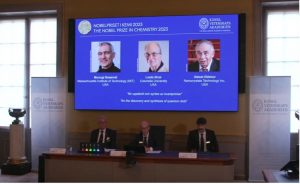
Three people seated at a table in conference room, with the Nobel Prize in Chemistry winners projected on screen behind them


Bawendi took his first questions from the media during a 5:45 a.m. (ET) press conference hosted by the Royal Swedish Academy of Sciences in Stockholm to announce this year’s winners. Watch the full press conference.

Moungi Bawendi smiles while talking on his cell phone. A framed print of a large clock is in the background.

He quickly began to receive texts and calls from family, friends, colleagues, and more.

Moungi Bawendi sits on a sofa in his living room, looking at laptop in front of him on a coffee table and speaking into a cell phone. Family members are in the background; a large camera on a tripod is in the foreground.

Media crews soon arrived at his home in Cambridge, where his wife, Rachel Zimmerman; stepdaughter, Julie Teller; and very good dog Phoebe were celebrating with him.

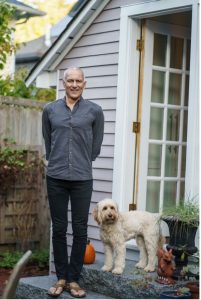
Moungi Bawendi, casually dressed, stands on the steps outside his home. His dog Phoebe poses next to him, proud of her human.

The Nobel laureate joined Phoebe for official MIT portrait photos.

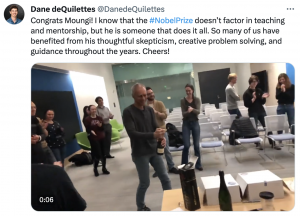
X post from Dane DeQuilettes with a video still of Moungi Bawendi popping champagne with more than a dozen others indoors. Text: Congrats Moungi! I know that the #NobelPrize doesn’t factor in teaching and mentorship, but he is someone that does it all. So many of us have benefited from his thoughtful skepticism, creative problem solving, and guidance throughout the years. Cheers!

Bawendi arrived at the MIT campus shortly before he was scheduled to teach, and was greeted with applause and festive food and drinks from his colleagues and students.

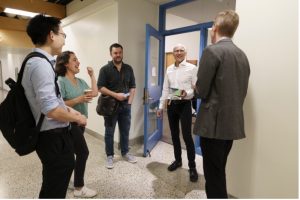
Moungi Bawendi talks and laughs with three faculty members outside a classroom.

Following a sartorial update, Bawendi prepared to teach his 9 a.m. class, greeting more colleagues and students in the Department of Chemistry.

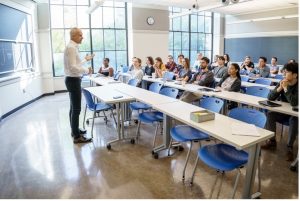
Moungi Bawendi stands at the front of a classroom facing several rows of MIT students.

Bawendi ended up scrapping plans for his class, 5.73 (Introduction to Quantum Mechanics), switching from a normal lesson to a brief history of his work on quantum dot science. The class “went very well, except I didn’t talk about what I was supposed to talk about,” he joked afterward, at an MIT press conference.

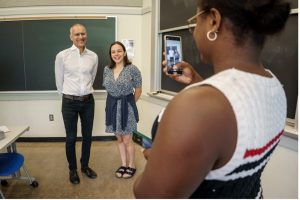
Moungi Bawendi poses with an MIT student. Another student in the foreground, with her back to the camera, holds out her phone to take the photo.

After class, the professor of chemistry made time to take photos with students.

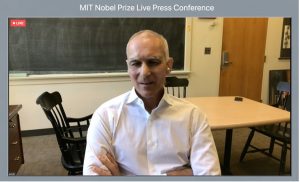
A screenshot of Moungi Bawendi speaking in the online press conference. He is seated, with a table and chalkboard behind him. At the top of the screen is the title “MIT Nobel Prize Live Press Conference.”

An MIT press conference, hosted by the Institute Office of Communications and President Sally Kornbluth, was held at 10:30 a.m. ET. Watch the full press conference video.

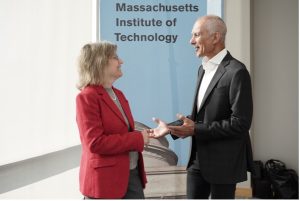
Sally Kornbluth and Moungi Bawendi stand facing each other in front of sign that says "Massachusetts Institute of Technology"

After lunch, Bawendi met in person with President Kornbluth.

Moungi Bawendi is surrounded by colleagues as they toast his achievement.

In the late afternoon, toasts were made at a celebration for Bawendi organized by the Department of Chemistry.