Chemists discover structure of glucagon fibrils

Patients with type 1 diabetes have to regularly inject themselves with insulin, a hormone that helps their cells absorb glucose from the bloodstream. Another hormone called glucagon, which has the opposite effect, is given to diabetic patients to revive them if they become unconscious due to severe hypoglycemia.

The form of glucagon given to patients is powdered and has to be dissolved in liquid immediately before being injected, because if stored as a liquid, the protein tends to form clumps, also called amyloid fibrils. A new study from MIT reveals the structure of these glucagon fibrils and suggests possible strategies for altering the amino acid sequence so that the protein is less likely to become clumped.

“Insulin in solution is stable for many weeks, and the goal is to achieve the same solution stability with glucagon,” says Mei Hong, an MIT professor of chemistry and one of the senior authors of the study. “Peptide fibrillization is a problem that the pharmaceutical industry has been working for many years to solve.”

Using nuclear magnetic resonance (NMR) spectroscopy, the researchers found that the structure of glucagon fibrils is unlike any other amyloid fibrils whose structures are known.

Yongchao Su, an associate principal scientist at Merck and Co., is also a senior author of the study, which appears in the XX issue of Nature Structural and Molecular Biology. MIT graduate student Martin Gelenter is the lead author of the paper.

Fibril formation

Amyloid fibrils form when proteins fold into a shape that allows them to clump together. These proteins are often associated with disease. For example, the amyloid beta protein forms plaques associated with Alzheimer’s disease, and alpha synuclein forms Lewy bodies in the neurons of Parkinson’s disease patients.

Hong has previously studied the structures of other amyloid peptides, including one that binds to metals such as zinc. After giving a talk on her research at Merck, she teamed up with scientists there to figure out the structure of the fibrillized form of glucagon.

Inside the human body, glucagon exists as an “alpha helix” that binds tightly with a receptor found on liver cells, setting off a cascade of reactions that releases glucose into the bloodstream. However, when glucagon is dissolved in a solution at high concentrations, it begins transforming into a fibril within hours, which is why it has to be stored as a powder and mixed with liquid just before injecting it.

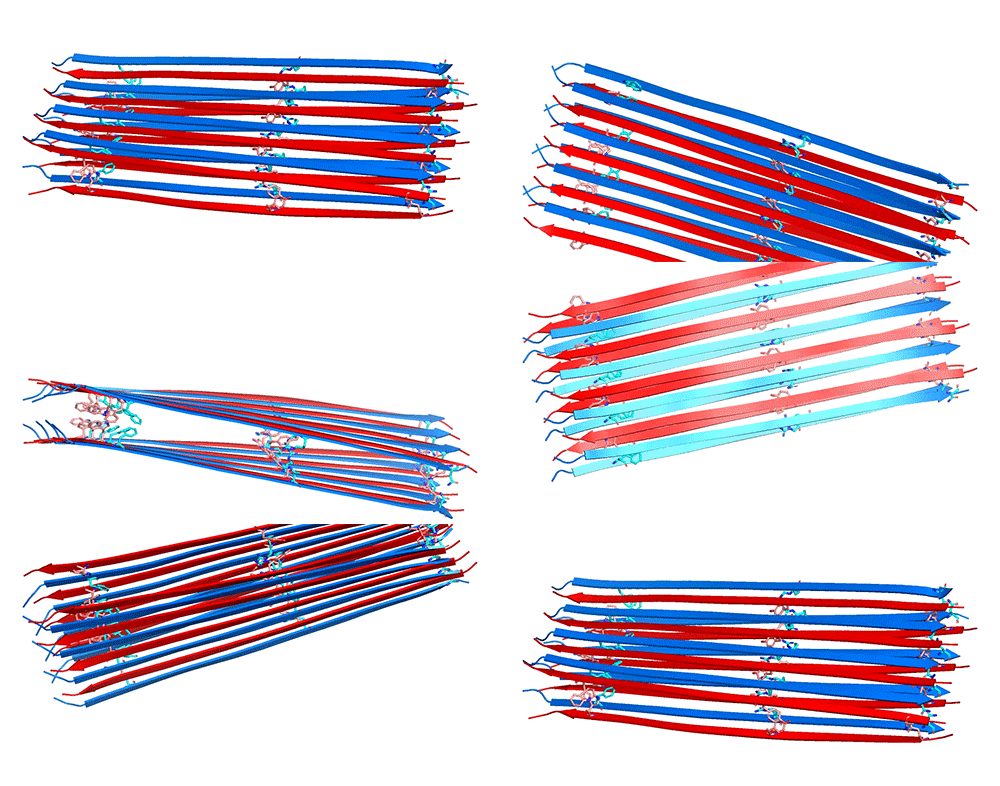
The MIT team used NMR, a technique that analyzes the magnetic properties of atomic nuclei to reveal the structures of the molecules containing those nuclei, to determine the structure of the glucagon fibrils. They found that the glucagon fibril consists of many layers of flat sheets known as beta sheets stacked on top of one another. Each sheet is made up of rows of identical peptides. However, the researchers discovered that, unlike any other amyloid fibril whose structure is known, the peptides run antiparallel to each other. That is, each strand runs in the opposite direction from the two on either side of it.

“All thermodynamically stable amyloid fibrils known so far are parallel packed beta sheets,” Hong says. “A stable antiparallel beta strand amyloid structure has never been seen before.”

In addition, the researchers found that the glucagon beta strand has no disordered segments. Each of the tens of thousands of peptide strands that make up the fibril is held tight in the antiparallel beta sheet conformation. This allows each peptide to form a 10-nanometer-long beta strand.

“This is an extremely stable strand, and is the longest beta strand known so far among any proteins,” Hong says.

Stable structure

One major reason that glucagon fibrils are so stable is that side chains extending from the amino acids making up the glucagon peptides interact strongly with side chains of the peptides above and below them, creating very secure attachment points, also called steric zippers, that help to maintain the overall structure.

While all previously studied amyloid fibrils have a fixed set of residues that form the steric zippers, in glucagon fibrils, even-numbered residues from one strand and odd-numbered residues from the neighboring strand alternately form the steric zipper interface between two beta sheet layers. This conformational duality is another novel feature of the glucagon fibril structure.

“We can see from this structure why the fibril is so stable, and why it’s so hard to prevent it from forming,” Hong says. “To block it, you really have to change the identity of the amino acid residues. I’m now working with a colleague here to come up with ways to modify the sequence and break those stabilizing interactions, so that the peptide won’t self-assemble to form this fibril.”

Such alternative peptide sequences could remain shelf-stable for a longer period of time in solution, eliminating the need to mix glucagon with liquid before using it.

“Considering the crucial physiological role of glucagon, it is encouraging that new structural data on this polypeptide hormone continue to be collected,” says Kurt Wuthrich, a professor of biophysics at ETH Zurich, who was not involved in the research. “Although the structural data reported here characterize an ‘unwanted’ form of glucagon, the authors point out that it promises to provide novel leads for engineering glucagon analogs which would have improved physico-chemical properties for its administration as a drug, specifically a reduced tendency to form amyloid fibers.”

The research was funded by Merck Sharp and Dohme Corp., a subsidiary of Merck and Co., and the National Institutes of Health.

QS ranks MIT the world’s No. 1 university for 2019-20

MIT has again been named the world’s top university by the QS World University Rankings, which were announced today. This is the eighth year in a row MIT has received this distinction.

The full 2019-20 rankings — published by Quacquarelli Symonds, an organization specializing in education and study abroad — can be found at topuniversities.com. The QS rankings were based on academic reputation, employer reputation, citations per faculty, student-to-faculty ratio, proportion of international faculty, and proportion of international students. MIT earned a perfect overall score of 100.

MIT was also ranked the world’s top university in 11 of 48 disciplines ranked by QS, as announced in February of this year.

MIT received a No. 1 ranking in the following QS subject areas: Chemistry; Computer Science and Information Systems; Chemical Engineering; Civil and Structural Engineering; Electrical and Electronic Engineering; Mechanical, Aeronautical and Manufacturing Engineering; Linguistics; Materials Science; Mathematics; Physics and Astronomy; and Statistics and Operational Research.

MIT also placed second in six subject areas: Accounting and Finance; Architecture/Built Environment; Biological Sciences; Earth and Marine Sciences; Economics and Econometrics; and Environmental Sciences.

From one MSRP generation to the next

On June 5, 20 students from the 2019 MIT Summer Research Program (MSRP) cohort and eight program alumni had the chance to meet Squire Booker PhD ’94. Booker was the keynote speaker at MIT’s Investiture of Doctoral Hoods and Degree Conferral Ceremony, which took place on June 6. He is also an MSRP alumnus from the very first cohort, and conducted his PhD work in the Department of Chemistry under the direction of Emeritus Professor JoAnne Stubbe.

He recounted how his MSRP experience changed his career path. “I discovered my passion for research that summer,” he said.

Today, Booker is the Evan Pugh Professor of chemistry, biochemistry, and molecular biology, and the Eberly Family Distinguished Chair in Science at Pennsylvania State University. He is also an investigator with the Howard Hughes Medical Institute, and was recently elected to the National Academy of Sciences.

The lunch was organized by Catherine Drennan, an MIT professor of biology and chemistry and a Howard Hughes Medical Institute Investigator.

“When I found out that Professor Booker was selected to speak at the MIT hooding ceremony, I knew that I wanted to arrange for him to meet with current and recent MSRP students,” she says. “It means a lot to meet someone successful who was once in your shoes.”

Stephanie Guerra, an undergraduate at the University of Puerto Rico at Humacao who will be working in the Laub lab this summer, says it was inspiring to meet someone whose career trajectory had been so impacted by the MSRP experience. “It resonated with me when he mentioned that we shouldn’t question the opportunities we get,” she says. “We should be grateful for them and make the best of them.”

These sentiments were echoed by Sofía Hernández Torres from the University of Puerto Rico at Mayagüez, who will be working in the Calo lab. “He is an accomplished man with very entertaining charisma,” she says. “I was motivated to continue to fight for a successful science career, where you are able to choose where you go next instead of having to follow a path defined by others.”

MSRP is a research-intensive summer training program for non-MIT sophomore and junior science majors who have an interest in a research career. Since 2003, it has been divided into two branches: MSRP General and MSRP-Bio. The latter offers a 10-week practical training in one of over 90 research laboratories affiliated with the departments of Biology, Brain and Cognitive Sciences, or Biological Engineering, and features weekly academic seminars, meetings with faculty, and many extracurricular activities.

Helping to foster lifelong learning and bonding at MIT

It’s no secret that MIT’s reputation as a world-class leader in breakthrough education is a major draw for prospective students. Perhaps less well-known is the fact that many graduates return to the MIT community to serve as members of the faculty or staff, or to engage in ongoing learning, to fill in gaps as technology advances and careers grow.

In research labs and classrooms across the MIT campus — which is quickly developing into one of the most technologically influential square miles on the planet — dozens of alumni are now leading programs and research aimed at helping to train the next generation of innovators and leaders. A number of alumni are also taking part in knowledge enhancement programs offered through MIT Professional Education, as students and facilitators. While each has followed a different path, all share an MIT connection that is second-to-none.

The boomerang effect

Gergely “Greg” Sirokman’s first exposure to MIT was in 8th grade, when he attended the Splash program, an annual event where 7th and 8th grade students get to take a variety of STEM-related classes taught by MIT students and community members. Years later, he came back to the Cambridge campus to earn his PhD in inorganic chemistry. Today, Sirokman PhD ’07 is a full-time professor at Wentworth Institute of Technology, but his learning experience at MIT continues.

“Wentworth offers a very generous education reimbursement package, which means they fund a significant amount of classwork. I decided to take advantage of those benefits and enroll in MIT Professional Education courses,” Sirokman says.

Sirokman is among the 84 Institute alumni who have taken advantage of the MIT Professional Education Short Programs over the past five years to actively seek out learning and grow as a member of the MIT community. Since 2007, he has completed a total of seven summer courses, including courses on biofuels, solar energy, and carbon sequestration.

“These courses allowed me to acquire skills and knowledge I didn’t possess yet as a graduate of MIT, and helped fill holes in my education profile,” Sirokman says. “I immediately turned back around and applied the things I learned to the work I was doing at Wentworth.”

Today, Sirokman runs a biodiesel lab at Wentworth and is ramping up a project aimed at mitigating the impending energy crisis. The goal is to produce biodiesel fuel from the waste vegetable oil that comes out of the campus cafeteria, and use it to run the fleet of campus vehicles.

“My mission is to make renewable energy more accessible and train students to have a better understanding and appreciation for renewable energy. Those two things are things I can do better because of the professional education courses I took at MIT,” he says.

Sirokman shares this piece of advice for the Class of 2019: “The accelerated growth of the technological universe is like a run-away train. Actively seek out learning opportunities to keep up with what is happening in science, technology and engineering. Otherwise, you will get left behind.”

Familiar faces carry on MIT’s mission

Another reason alumni feel compelled to return to campus is their desire to carry on MIT’s mission to advance knowledge and effect positive change. That was the case for Kristala Prather ’94, the Arthur D. Little Professor of Chemical Engineering at MIT.

“Everyone at MIT is looking to do something special and have an impact by solving some of the world’s biggest challenges,” she says.

Prather first arrived on campus in 1990, back when there was no internet to share real-time updates on research and network with colleagues. After earning her bachelor of science degree, she went on to earn her PhD at the University of California at Berkley. She subsequently worked at Merck Research Labs for several years, and then decided to return home to her alma mater.

“I realized what I liked best about my job in industry had to do with mentoring young scientists and training them to be independent researchers,” she says.

Prather returned as an assistant professor in 2004. Today, her research efforts are centered on the design and assembly of recombinant microorganisms for the production of small molecules, with additional efforts in novel bioprocess design approaches. She also directs an MIT Professional Education course on Fermentation Technology inherited from mentor, Professor Daniel Wang.

“One of the impacts I found I can make is to provide professionals with more of a foundation to help them understand the theory behind the work they are doing in industry,” Prather says.

Her advice to the Class of 2019 is to stay connected to MIT: “MIT is such a strong community,” she says. “When I first graduated, I didn’t have a sufficient appreciation for just how many opportunities there are to engage with that community – from MIT Professional Education to seminars and symposiums to the Industrial Liason Program. Graduates should think about what brought them to here to begin with, then ask if there’s a way to remain involved, so they can continue to learn and be at the forefront.”

Online avenues to lifelong learning

Technology has made the world a smaller place and as a result, it is now even easier for alumni to stay connected to campus — even when they live far away. Take Sarah Moran ’95 as an example. She graduated from MIT with a BS in mathematics, and now lives in China, where she serves as head of innovation and product at Fidelity Investments.

She recently enrolled in MIT Professional Education Digital Plus Programs so that she could learn more about innovation and leadership from seasoned professionals who could help support her transition to a new role at Fidelity.

“I had been working in quality assurance for the majority of my career and was looking for a new challenge,” she says. “Engaging in the online learning programs helped open my eyes to other viewpoints and helped position me for long-term success.” Moran says she is not only taking classes for herself, but also to share the experience with colleagues and meet new friends virtually around the world.

“We’re proud so many accomplished alums return home to MIT to refuel their knowledge, or to serve as members of faculty in our programs, sharing their research-based knowledge with fellow alums and industry professionals worldwide,” says Bhaskar Pant, executive director at MIT Professional Education. “MIT is after all, a family: an enduring community dedicated to sharing knowledge and giving back for the betterment of humankind.”

Professor Timothy F. Jamison named to new associate provost position

MIT announced today that it has created a new associate provost position, to be filled by Timothy Jamison, the Robert R. Taylor Professor of Chemistry and head of the Department of Chemistry. The Institute is also launching an expansive search for a new Institute community and equity officer (ICEO).

The new approach is intended to bolster MIT’s ability to implement programs and strategies that advance diversity, inclusion, equity, a positive climate, and a sense of community. It will also enable the Institute to conduct rigorous self-assessment of its own progress on these issues.

Jamison, who will serve as associate provost for a three-year term, will work with the incoming ICEO to help MIT’s departments create an inclusive campus community. Both Jamison and the ICEO will report to MIT Provost Martin A. Schmidt, who announced the new approach today in an email to the MIT community.

“I am delighted that Tim has agreed to assume this important role. Since 2015, he has led energetic efforts to enhance the quality of life for all members of the Department of Chemistry, and I have been tremendously impressed with his insight, sensitivity, and ability to inspire positive change,” Schmidt wrote in the email.

“I am very grateful for and look forward to this new opportunity to serve the Institute,” Jamison says. “It has been a privilege and pleasure to be head of the Department of Chemistry for the past four years. Looking ahead to this new role, my overarching aim is to support the faculty and their roles in the MIT community. My highest priorities include promoting diversity, inclusion, equity, and community, and to facilitate the search for our next ICEO.”

Alyce Johnson, who has been serving as MIT’s interim ICEO, is retiring this summer after a distinguished career in the Instutute’s leadership ranks. Since last fall, she has been consulting with the MIT community and working with Schmidt to plan the new path forward.

“I am extremely grateful to Alyce for her service as interim ICEO, and for her thoughtful engagement and guidance,” Schmidt wrote to the community.

“I appreciate the broad strategic approach these two roles embody in MIT’s long-standing pursuit of excellence in equity, inclusion and belonging,” Johnson says. “While we continue to collaborate and make forward strides, having dedicated leadership in this area will have a substantial impact on advancing our vision in a more directed and measurable way. We will benefit from the depth of knowledge and experience that both Tim and the new ICEO can bring.”

The new ICEO search will be open to candidates beyond the ranks of MIT faculty, a shift from how the position was originally implemented. This allows MIT to broaden the search and include experts with professional backgrounds in diversity and equity issues. This change was made after consideration of input from the MIT community.

MIT’s ICEO position was created in 2013 to advance activities and public discussion in the areas of community, equity, inclusion, and diversity — comprehensively across the Institute, for students, staff, and faculty. The first ICEO at the Institute, Ed Bertschinger, served from 2013 to 2018 and oversaw a widely read 2015 report identifying a range of inclusion issues in need of ongoing attention.

Jamison will assume his new role beginning July 1. Jamison has been an MIT faculty member since 1999; he earned tenure in 2006 and was promoted to full professor in 2009.

As the new associate provost, Jamison will work to further codify and implement equitable practices across the full range of faculty experiences — including hiring practices, as well as review, promotion, and tenure cases. He says there are also important equity issues centered around the fair distribution of service roles among faculty, which he expects to evaluate as well.

The associate provost will work extensively with MIT’s MindHandHeart coalition — a campus initiative founded in 2015 that develops new approaches in support of health, well-being, and inclusion for people in the MIT community.

MindHandHeart often develops programs tailored to specific portions of the MIT community, an effort that converges with the associate provost’s goal of providing more departmental-level support at MIT, says Maryanne Kirkbride, the executive administrator of MindHandHeart. “We’re looking forward to working with Tim and the next ICEO to develop better individualized support for our academic departments,” she says.

Additionally, Jamison will bring new support to departments, as well as MIT’s five schools and the new MIT Stephen A. Schwarzman College of Computing, to help them create a fully professional climate of inclusion and community in daily life at the Institute.

Jamison brings a record of service and experience to these matters. He and Paula Hammond, head of MIT’s Department of Chemical Engineering and the David H. Koch Professor in Engineering, are currently co-chairs of a working group focused on implementing recommendations from a recent report on sexual harrassment produced by the National Academies of Sciences, Engineering, and Medicine.

The chemistry department, under the supervision of Jamison along with Sarah Rankin, the Institute’s Title IX cooordinator, and Kelley Adams, assistant dean in the Division of Student Life, has also instituted all-inclusive workshops on preventing sexual harrassment at MIT. Similar programs are now being implemented elsewhere at the Institute, including the chemical engineering department.

In the near future, Schmidt stated, he hopes that the presence of Jamison as associate provost, alongside the incoming ICEO, “will help us to move together toward our goal of One MIT.”

J-WAFS announces seven new seed grants

Agricultural productivity technologies for small-holder farmers; food safety solutions for everyday consumers; sustainable supply chain interventions in the palm oil industry; water purification methods filtering dangerous micropollutants from industrial and wastewater streams — these are just a few of the research-based solutions being supported by the Abdul Latif Jameel Water and Food Systems Lab (J-WAFS) at MIT. J-WAFS is funding these and other projects through its fifth round of seed grants, providing over $1 million in funding to the MIT research community. These grants, which are funded competitively to MIT principal investigators (PIs) across all five schools at the Institute, exemplify the ambitious goals of MIT’s Institute-wide effort to address global water and food systems challenges through research and innovation.

This year, seven new projects led by nine faculty PIs across all five schools will be funded with two-year grants of up to $150,000, overhead-free. Interest in water and food systems research at MIT is substantial, and growing. By the close of this grant cycle, over 12 percent of MIT faculty will have submitted J-WAFS grant proposals. Thirty-four principal investigators submitted proposals to this latest call, nearly one third of whom were proposing to J-WAFS for the first time. “The broad range of disciplines that this applicant pool represents demonstrates how meeting today’s water and food challenges is motivating many diverse researchers in our community,” comments Renee Robins, executive director of J-WAFS. “Our reach across all of MIT’s schools further attests to the strength of the Institute’s capabilities that can be applied to the search for solutions to pressing water and food sector challenges.” The nine faculty who were funded represent eight departments and labs, including the departments of Civil and Environmental Engineering, Mechanical Engineering, Chemical Engineering, Chemistry, and Economics, as well as the Media Lab (School of Architecture and Planning), MIT D-Lab (Office of the Vice Chancellor), and the Sloan School of Management.

New approaches to ensure safe drinking water

Nearly 1 billion people worldwide receive their drinking water through underground pipes that only operate intermittently. In contrast to continuous water supplies, pipes like these that are only filled with water during limited supply periods are vulnerable to contamination. However, it is challenging to quantify the quality of water that comes out of these pipes because of the vast differences in how the pipe networks are arranged and where they are located, especially in dense urban settings. Andrew J. Whittle, the Edmund K. Turner Professor in Civil Engineering, seeks to address this problem by gathering and making available more precise data on how water quality is affected by how the pipe is used — i.e., during periods of filling, flushing, or stagnation. Supported by the seed grant, he and his research team will perform tests in a section of abandoned pipe in Singapore, one that is still connected to the urban water pipe network there. By controlling flushing rates, monitoring stagnation, and measuring contamination, the study will analyze how variances in flow affect water quality, and evaluate how these data might be able to inform future water quality studies in cities with similar piped water challenges.

Patrick Doyle, the Robert T. Haslam (1911) Professor of Chemical Engineering, is taking a different approach to water quality: creating a filter to remove micropollutants. Wastewater from industrial and agricultural processes often contains solvents, petrochemicals, lubricants, pharmaceuticals, hormones, and pesticides, which can enter natural water systems. While these micropollutants may be present at low concentrations, they can still have a significant negative impact on aquatic ecosystems, as well as human health. The challenge is in detecting and removing these micropollutants, because of the low concentrations in which they occur. For this project, Doyle and his team will develop a system to remove a variety of micropollutants, at even the smallest concentrations, using a special hydrogel particle that can be “tuned” to fit the size and shape of particular particles. Leveraging the flexibility of these hydrogels, this technology can improve the speed, precision, efficiency, and environmental sustainability of industrial water purification systems, and improve the health of the natural water systems upon which humans and our surrounding ecosystems rely.

Developing support tools for small-holder farmers

More than half of food calories consumed globally — and 70 percent of food calories consumed in developing countries — are supplied by approximately 475 million small-holder households in developing and emerging economies. These farmers typically operate through informal contracts and processes, which can lead to large economic inefficiencies and lack of traceability in the supply chains that they are a part of. Joann de Zegher, the Maurice F. Strong Career Development Professor in the operations management program at the MIT Sloan School of Management, seeks to address these challenges by developing a mobile-based trading platform that links small-holder farmers, middlemen, and mills in the palm oil supply chain in Indonesia. Rapid growth in demand in this industry has led to high environmental costs, and recently pressure from consumers and nongovernmental organizations is motivating producers to employ more sustainable practices. However, these pressures deepen market access challenges for small-holder palm oil farmers. Her project seeks to improve the efficiency and effectiveness of the current supply chain, and create transparency as a byproduct.

Another small-holder farmer intervention is being developed by Robert M. Townsend, the Elizabeth and James Killian Professor of Economics. He is leading a research effort to improve access to crop insurance for small-holder farmers, who are particularly vulnerable to weather-related crop failures. Crop cultivation worldwide is highly vulnerable to unfavorable weather. In developing countries, farmers bear the financial burden of their crops’ exposure to weather ravages, the extent of which will only increase due to the effects of climate change. As a result, they rely on low-risk, low-yield cultivation practices that do not allow for the food and financial gains that can be possible when favorable weather supports higher yields. While crop insurance can help, it is often prohibitively expensive for these small-scale producers. Townsend and his research team seek to make crop insurance more accessible and affordable for farmers in developing regions by developing a new system of insurance pricing and payoff schedules that takes into account the widely varying ways through which weather affects crop’s development and yield throughout the growth cycle. Their goal is to provide a new, personalized insurance tool that improves farmers’ ability to protect their yields, invest in their crops, and adapt to climate change in order to stabilize food supply and farmer livelihoods worldwide.

Access to affordable fertilizer is another challenge that small holders face. Ammonia is the key ingredient in fertilizers; however, most of the world’s supply is produced by the Haber-Bosch process, which directly converts nitrogen and hydrogen gas to ammonia in a highly capital-intensive process that is difficult to downscale. Finding an alternative way to synthesize ammonia could transform access to fertilizer and improve food security, particularly in the developing world where current fertilizers are prohibitively expensive. For this seed grant project, Yogesh Surendranath, Paul M Cook Career Development Assistant Professor in the Department of Chemistry, will develop an electrochemical process to synthesize ammonia, one that can be powered using renewable energy sources such as solar or wind. Designed to be implemented in a decentralized way, this technology could enable fertilizer production directly in the fields where it is needed, and would be especially beneficial in developing regions without access to existing ammonia production infrastructure.

Even when crops produce high yields, post-harvest preservation is a challenge, especially to fruit and vegetable farmers on small plots of land in developing regions. The lack of affordable and effective post-harvest vegetable cooling and storage poses a significant challenge for them, and can lead to vegetable spoilage, reduced income, and lost time. Most techniques for cooling and storing vegetables rely on electricity, which is either unaffordable or unavailable for many small-holder farmers, especially those living on less than $3 per day in remote areas. The solution posed by an interdisciplinary team led by Daniel Frey, professor in the Department of Mechanical Engineering and D-Lab faculty director, along with Leon Glicksman, professor of architecture and mechanical engineering, is a storage technology that uses the natural evaporation of water to create a cool and humid environment that prevents rot and dehydration, all without the need for electricity. This system is particularly suited for hot, dry regions such as Kenya, where the research team will be focusing their efforts. The research will be conducted in partnership with researchers from University of Nairobi’s Department of Plant Science and Crop Protection, who have extensive experience working with low-income rural communities on issues related to horticulture and improving livelihoods. The team will build and test evaporative cooling chambers in rural Kenya to optimize the design for performance, practical construction, and user preferences, and will build evidence for funders and implementing organizations to support the dissemination of these systems to improve post-harvest storage challenges.

Combatting food safety challenges through wireless sensors

Food safety is a matter of global concern, and a subject that several J-WAFS-funded researchers seek to tackle with innovative technologies. And for good reason: Food contamination and foodborne pathogens cause sickness and even death, as well as significant economic costs including the wasted labor and resources that occur when a contaminated product is disposed of, the lost profit to affected companies, and the lost food products that could have nourished a number of people. Fadel Adib, an assistant professor at the MIT Media Lab, will receive a seed grant to develop a new tool that quickly and accurately assesses whether a given food product is contaminated. This food safety sensor uses wireless signals to determine the quality and safety of packaged food using a radio-frequency identification sticker placed on the product’s container. The system turns off-the-shelf RFID tags into spectroscopes which, when read, can measure the material contents of a product without the need to open its package. The sensor can also identify the presence of contaminants — pathogens as well as adulterants that affect the nutritional quality of the food product. If successful, this research, and the technology that results, will pave the way for wireless sensing technologies that can inform their users about the health and safety of their food and drink.

With these seven newly funded projects, J-WAFS will have funded 37 total seed research projects since its founding in 2014. These grants serve as important catalysts of new water and food sector research at MIT, resulting in publications, patents, and other significant research support. To date, J-WAFS’ seed grant PIs have been awarded over $11M in follow-on funding. J-WAFS’ director, Professor John Lienhard, commented on the influence of this grant program: “The betterment of society drives our research community at MIT. Water and food, our world’s most vital resources, are currently put at great risk by a variety of global-scale challenges, and MIT researchers are responding forcefully. Through this, and J-WAFS’ other grant programs, we see MIT’s creative innovations and actionable solutions that will help to ensure a sustainable future.”

J-WAFS Seed Grants, 2019

PI: Fadel Adib, assistant professor, MIT Media Lab

PI: Joann de Zegher, Maurice F. Strong Career Development Professor, Sloan School of Management

PI: Patrick Doyle, Robert T. Haslam (1911) Professor of Chemical Engineering, Department of Chemical Engineering

PIs: Daniel Frey, professor, Department of Mechanical Engineering, and faculty research director, MIT D-Lab; Leon Glicksman, professor of building technology and mechanical engineering, Department of Mechanical Engineering

PI: Yogesh Surendranath, Paul M Cook Career Development Assistant Professor, Department of Chemistry

PI:  Robert M. Townsend, Elizabeth and James Killian Professor of Economics, Department of Economics

PI: Andrew J. Whittle, Edmund K. Turner Professor in Civil Engineering, Department of Civil and Environmental Engineering

Generating high-quality single photons for quantum computing

MIT researchers have designed a way to generate, at room temperature, more single photons for carrying quantum information. The design, they say, holds promise for the development of practical quantum computers.

Quantum emitters generate photons that can be detected one at a time. Consumer quantum computers and devices could potentially leverage certain properties of those photons as quantum bits (“qubits”) to execute computations. While classical computers process and store information in bits of either 0s or 1s, qubits can be 0 and 1 simultaneously. That means quantum computers could potentially solve problems that are intractable for classical computers.

A key challenge, however, is producing single photons with identical quantum properties — known as “indistinguishable” photons. To improve the indistinguishability, emitters funnel light through an optical cavity where the photons bounce back and forth, a process that helps match their properties to the cavity. Generally, the longer photons stay in the cavity, the more they match.

But there’s also a tradeoff. In large cavities, quantum emitters generate photons spontaneously, resulting in only a small fraction of photons staying in the cavity, making the process inefficient. Smaller cavities extract higher percentages of photons, but the photons are lower quality, or “distinguishable.”

In a paper published today in Physical Review Letters, the researchers split one cavity into two, each with a designated task. A smaller cavity handles the efficient extraction of photons, while an attached large cavity stores them a bit longer to boost indistinguishability.

Compared to a single cavity, the researchers’ coupled cavity generated photons with around 95 percent indistinguishability, compared to 80 percent indistinguishability, with around three times higher efficiency.

“In short, two is better than one,” says first author Hyeongrak “Chuck” Choi, a graduate student in the MIT Research Laboratory of Electronics (RLE). “What we found is that in this architecture, we can separate the roles of the two cavities: The first cavity merely focuses on collecting photons for high efficiency, while the second focuses on indistinguishability in a single channel. One cavity playing both roles can’t meet both metrics, but two cavities achieves both simultaneously.”

Joining Choi on the paper are: Dirk Englund, an associate professor of electrical engineering and computer science, a researcher in RLE, and head of the Quantum Photonics Laboratory; Di Zhu, a graduate student in RLE; and Yoseob Yoon, a graduate student in Professor Keith Nelson‘s group in the Department of Chemistry.

The relatively new quantum emitters, known as “single-photon emitters,” are created by defects in otherwise pure materials, such as diamonds, doped carbon nanotubes, or quantum dots. Light produced from these “artificial atoms” is captured by a tiny optical cavity in photonic crystal — a nanostructure acting as a mirror. Some photons escape, but others bounce around the cavity, which forces the photons to have the same quantum properties — mainly, various frequency properties. When they’re measured to match, they exit the cavity through a waveguide.

But single-photon emitters also experience tons of environmental noise, such as lattice vibrations or electric charge fluctuation, that produce different wavelength or phase. Photons with different properties cannot be “interfered,” such that their waves overlap, resulting in interference patterns. That interference pattern is basically what a quantum computer observes and measures to do computational tasks.

Photon indistinguishability is a measure of photons’ potential to interfere. In that way, it’s a valuable metric to simulate their usage for practical quantum computing. “Even before photon interference, with indistinguishability, we can specify the ability for the photons to interfere,” Choi says. “If we know that ability, we can calculate what’s going to happen if they are using it for quantum technologies, such as quantum computers, communications, or repeaters.”

In the researchers’ system, a small cavity sits attached to an emitter, which in their studies was an optical defect in a diamond, called a “silicon-vacancy center” — a silicon atom replacing two carbon atoms in a diamond lattice. Light produced by the defect is collected into the first cavity. Because of its light-focusing structure, photons are extracted with very high rates. Then, the nanocavity channels the photons into a second, larger cavity. There, the photons bounce back and forth for a certain period of time. When they reach a high indistinguishability, the photons exit through a partial mirror formed by holes connecting the cavity to a waveguide.

Importantly, Choi says, neither cavity has to meet rigorous design requirements for efficiency or indistinguishability as traditional cavities, called the “quality factor (Q-factor).” The higher the Q-factor, the lower the energy loss in optical cavities. But cavities with high Q-factors are technologically challenging to make.

In the study, the researchers’ coupled cavity produced higher quality photons than any possible single-cavity system. Even when its Q factor was roughly one-hundredth the quality of the single-cavity system, they could achieve the same indistinguishability with three times higher efficiency.

The cavities can be tuned to optimize for efficiency versus indistinguishability — and to consider any constraints on the Q factor — depending on the application. That’s important, Choi adds, because today’s emitters that operate at room temperature can vary greatly in quality and properties.

Next, the researchers are testing the ultimate theoretical limit of multiple cavities. One more cavity would still handle the initial extraction efficiently, but then would be linked to multiple cavities that photons for various sizes to achieve some optimal indistinguishability. But there will most likely be a limit, Choi says: “With two cavities, there is just one connection, so it can be efficient. But if there are multiple cavities, the multiple connections could make it inefficient. We’re now studying the fundamental limit for cavities for use in quantum computing.”

Thermodynamic insights could lead to better catalysts

One of the most fundamental chemical reactions that takes place in energy-conversion systems — including catalysts, flow batteries, high-capacity energy-storing supercapacitors, and systems to make fuels using solar energy — has now been analyzed in detail. The results could inform the development of new electrode or catalyst materials with properties precisely tuned to match the energy levels needed for their functions.

The findings are described today in the journal ACS Central Science, in a paper by MIT graduate student Megan Jackson, postdoc Michael Pegis, and professor of chemistry Yogesh Surendranath.

Virtually every energy-conversion reaction involves protons and electrons reacting with each other, and in functional devices these reactions typically take place on the surface of a solid, such as a battery electrode. Until now, Surendranath says, “we haven’t had a very good fundamental understanding of what governs the thermodynamics of electrons and protons coming together at an electrode. We don’t understand those thermodynamics at a molecular level,” and without that knowledge, selecting materials for energy devices comes down largely to trial and error.

Much research has been devoted to understanding electron-proton reactions in molecules, he says. In those cases, the amount of energy needed to bind a proton to the molecule, a factor called pKa, can be distinguished from the energy needed to bind an electron to that molecule, called the reduction potential.

Knowing those two numbers for a given molecule makes it possible to predict and subsequently tune reactivity. But when the reactions are taking place on an electrode surface instead, there has been no way to separate out the two different factors, because proton transfer and electron transfer occur simultaneously.

A new framework

On a metallic surface, electrons can flow so freely that every time a proton binds to the surface, an electron comes in and binds to it instantaneously. “So it’s very hard to determine how much energy it takes to transfer just the electron and how much energy it takes to transfer just the proton, because doing one leads to the other,” Surendranath says.

“If we knew how to split up the energy into a proton transfer term and an electron transfer term, it would guide us in designing a new catalyst or a new battery or a new fuel cell in which those reactions must occur at the right energy levels to store or release energy with the optimal efficiency.” The reason no one had this understanding before, he says, was because it has been historically almost impossible to control electrode surface sites with molecular precision. Even estimating a pKa for the surface site to try to get at the energy associated with proton transfer first requires molecular-level knowledge of the site.

A new approach makes this kind of molecular-level understanding possible. Using a method they call “graphite conjugation,” Surendranath and his team incorporate specifically chosen molecules that can donate and accept protons into graphite electrodes such that the molecules become part of the electrodes.

By electronically conjugating the selected molecules to graphite electrodes, “we have the power to design surface sites with molecular precision,” Jackson says. “We know where the proton is binding to the surface at a molecular level, and we know the energy associated with the proton transfer reaction at that site.”

By conjugating molecules with a wide range of pKa values and experimentally measuring the corresponding energies for proton-coupled electron transfer at the graphite-conjugated sites, they were able to construct a framework that describes the entire reaction.

Two design levers

“What we’ve developed here is a molecular-level model that allows us to partition the overall thermodynamics of simultaneously transferring an electron and a proton to the surface of an electrode into two separate components: one for protons and one for electrons,” Jackson says. This model closely mirrors the models used to describe this class of reactions in molecules, and should thus enable researchers to better design electrocatalysts and battery materials using simple molecular design principles.

“What this teaches us,” Surendranath says, “is that if we want to design a surface site that can transfer and accept protons and electrons at the optimal energy, there are two design levers we can control. We can control the sites on the surface and their local affinity for the proton — that’s their pKa. And we can also tune it by changing the intrinsic energy of the electrons in the solid,” which is correlated to a factor called the work function.

That means, according to Surendranath, that “we now have a general framework for understanding and designing proton-coupled electron transfer reactions at electrode surfaces, using the intuition that chemists have about what types of sites are very basic or acidic, and what types of materials are very oxidizing or reducing.” In other words, it now provides researchers with “systematic design principles,” that can help guide the selection of electrode materials for energy conversion reactions.

The new insights can be applied to many electrode materials, he says, including metal oxides in supercapacitors, catalysts involved in making hydrogen or reducing carbon dioxide, and the electrodes operating in fuel cells, because all of those processes involve the transfer of electrons and protons at the electrode surface.

Electron-proton transfer reactions are ubiquitous in virtually all electrochemical catalytic reactions, says Surendranath, “so knowing how they occur on a surface is the first step toward being able to design catalytic materials with a molecular-level understanding. And we’re now, fortunately, able to cross that milestone.”

This work  “is truly pathbreaking,” says James Mayer, a professor of chemistry at Yale University, who was not involved in this work. “The interconversion of chemical and electrical energy — electrocatalysis — is a core part of many new scenarios for renewable energy. This is often accomplished with expensive rare metals such as platinum. This work shows, in an unexpected way, a new behavior of relatively simple carbon electrodes. This opens opportunities for new ways of thinking and eventually new technologies for energy conversions.”

Jeff Warren, an assistant professor of chemistry at Simon Fraser University in Burnaby, Bristish Columbia, who was not associated with this research, says that this work provides an important bridge between extensive research on such proton-electron reactions in molecules, and a lack of such research for reactions on solid surfaces.

“This creates a fundamental knowledge gap that workers in the field (myself included) have been grappling with for at least a decade,” he says. “This work addresses this problem in a truly satisfying way. I anticipate that the ideas described in this manuscript will drive thinking in the field for quite some time and will build crucial bridges between fundamental and applied/engineering researchers.”

This research was supported by the U.S. Department of Energy, the National Institutes of Health, the Sloan Foundation, and the Research Corporation for Science Advancement.

The complex world of carbohydrate chemistry

Every living cell is coated with a layer of carbohydrates. The composition of these molecules essentially serves as an identification card for a cell, says Laura Kiessling, the Novartis Professor of Chemistry at MIT.

While researchers have learned much about how these coats vary from cell to cell, Kiessling is now investigating “how proteins check those IDs, and what cells do when they are let into the party,” as she puts it. Her lab is working on identifying some of the key carbohydrates expressed by human and bacterial cells, and exploring how they interact with proteins and other molecules. Such knowledge could be exploited to develop new treatments and diagnostics for a variety of diseases.

Kiessling, who joined MIT’s faculty in 2017 after 26 years at the University of Wisconsin at Madison, is developing vaccines that interact with cell surface carbohydrates, and she is also exploring ways to disrupt microbes’ ability to assemble the carbohydrates they need to build their cell walls.

“Bacteria have cell walls made of building blocks that we don’t use and that can be unique to different species,” she says. “That opens opportunities for new kinds of antibiotics that are narrow-spectrum. They don’t target all bacteria, but they target pathways that pathogenic bacteria need to build critical cell surface carbohydrates.”

Drawn to MIT

Growing up in rural Wisconsin, Kiessling spent a lot of time doing outdoor activities, such as camping and observing the wildlife in the pond in her parents’ backyard. With one of her brothers, she performed “shocking” experiments with a kids’ electronics kit and tried to convert the family lawnmower into a go-cart. When it was time to choose a college, she decided on the University of Wisconsin at Madison. At the time, top students in Wisconsin high schools could be admitted automatically to the state university, so she didn’t apply anywhere else.

Her closest friend at the university had a sister who was a student at MIT, so for spring break their first year, Kiessling and her friend decided to head to Cambridge for a visit. After a 20-hour train ride from Chicago, Kiessling spent the next several days attending classes and hanging out with her friend’s sister in her dorm, McCormick Hall, MIT’s first women’s dorm and today the only women-only residence hall.

“I met all these amazing women who were doing science, and I thought, oh my gosh, I should transfer here,” Kiessling recalls. She met someone who worked in the admissions office and convinced them to give her an interview, then formally applied as soon as she got back to Wisconsin. In August, she found out that she had been accepted, and transferred at the beginning of her sophomore year.

At MIT, she majored in chemistry, where her lab partner and close friend was Cady Coleman ’83, who later became an astronaut. She also rowed on MIT’s crew team, along with Elizabeth Bradley, a future Olympian. After graduating, Kiessling decided to go to Yale University for graduate school, where she focused on organic chemistry.

At Yale, she worked in the lab of Stuart Schreiber, who is now a member of the Broad Institute of MIT and Harvard. At the time, they were working on synthesizing a naturally occurring antitumor agent that cleaves DNA. “That got me really interested in using chemistry to study biological processes,” Kiessling says.

After finishing her PhD, Kiessling did a postdoc at Caltech, working with Peter Dervan, a professor of chemistry, on a strategy for modifying DNA. Their idea was to use chemical compounds to recognize DNA sequences so that they could be selectively cut out, similar to the way that the CRISPR genome-editing system works now.

Carbo-loading

When Kiessling joined the faculty at the University of Wisconsin in 1991, she was inspired to study carbohydrates by an argument she had had with some of her labmates at Yale over how carbohydrates interact with DNA. She thought that the carbohydrates must be involved in recognizing DNA, while others believed their role was more limited.

“The basis for that argument made me start thinking about carbohydrates, and I realized we don’t know very much about their biological roles,” she says. “So when I went to start my own lab, I thought this would be an exciting field to get involved in.”

Carbohydrates on cell surfaces often interact with proteins, including a class of proteins called lectins. Kiessling has previously shown that many of these lectin-carbohydrate interactions are multivalent, meaning they involve multiple receptors binding to multiple binding partners, and she has designed polymers, similar to carbohydrates, that can mimic these interactions.

She also recently discovered that some human lectins, found in the gut and lung, only bind to carbohydrates found on the surface of bacteria. This interaction appears to help human cells grab onto and retain bacterial cells that may be potentially useful.

“A lot of these lectins are at mucosal barriers, and they’ve evolved to presumably help us keep microbes in the right spot,” Kiessling says.

She is also studying how cells synthesize carbohydrates, in hopes of developing drugs that could specifically block the production of carbohydrates expressed by pathogens such as the mycobacteria that cause tuberculosis.

In another project, she is developing cancer vaccines that could target carbohydrate-binding proteins located on the surfaces of immune cells. She is also working on a vaccine that targets a protein produced by chickens when they contract bacterial infections. This protein limits chicken growth, which is partly why chickens raised for food are treated with antibiotics. Blocking that protein, Kiessling hopes, could help to eliminate the need for antibiotic treatment.

Many of these projects involve collaborations with other MIT faculty members, including a large number of female professors. The possibility of such collaborations is one of the reasons that Kiessling decided to join the faculty here.

“MIT and the area surrounding MIT is the mecca of science,” she says. “The original reason I was drawn to MIT as a student is I could find other women who loved science as much as I do. And as a faculty member here, there are also so many women faculty who love science as much as I do.”

3Q: Setting academic parameters for the MIT Schwarzman College of Computing

In February, the Institute established five working groups to generate ideas for different components of the structure and operation of the new MIT Stephen A. Schwarzman College of Computing. Three community forums for all five working groups were held Wednesday, April 17, and Thursday, April 18. Troy Van Voorhis, the Haslam and Dewey Professor of Chemistry, and Srini Devadas, the Webster Professor of Electrical Engineering and Computer Science, are co-chairs of the Working Group on Curricula and Degrees, which is charged with studying how to develop new curricula for the college, what degrees should be shifted from their existing departments into the college,  what new degrees or other credentials might be created, and how to design dual-degree programs with existing departments. MIT News checked in with Van Voorhis and Devadas to find out about the group’s goals, processes, and progress so far.

Q: What process has your working group undergone in preparing your report, and how many people have been involved?

A: We have about 15 members in the committee not including the co-chairs. All schools are represented, as are staff and students. We meet each week for an hour and there are email discussions between meetings. We started with naming ourselves CoC2 (College of Computing Committee on Curricula) and drafting an educational mission for the college. We have been refining our mission statement throughout our discussions.

We have had extensive discussions on how the college can provide a broad funnel for undergraduate and graduate students interested in computing by offering various types of credentials, including minors, joint degree programs, and certificates. During these meetings, we have discussed the pros and cons of current credentials, and members have proposed new variants that might better serve the needs of students.

At the graduate level, we discussed the Business Analytics Certificate in Sloan as an example of a structure that we might want to replicate in the college, but with a focus on computation. We have begun writing our report that is due at the end of the semester.

Q: Could you describe any areas that participants in the process have readily agreed on, or others that have turned out to be contentious?

A: We have focused primarily on pedagogical aspects thus far, and not on operational aspects, for example: faculty receiving credit for teaching courses jointly across the college and other schools; whether the college is responsible for all joint majors, as opposed to departments, etc. This is largely because these questions are clearly dependent on the eventual structure of the college and the responsibilities of faculty who are primary in the college and those that are affiliated. Given our timeline, it makes sense to visit these questions in a holistic manner after all the committees have written their reports.

Our discussions have been always informative and often passionate, but not contentious in the least. As an example, we were able to draft an educational mission that everyone largely agreed with in short order, and the ongoing refinement has been about getting nuances “right.” Our meeting with the Societal Impact committee was productive and impacted our mission statement, and will impact our report.

Q: What do you see as the next steps once you finish your working group’s report?

A: Provost [Martin] Schmidt, Dean [Dan] Huttenlocher, and the administration will determine next steps. First, the organizational structure of the college needs to be determined — in other words, what departments are in the college, and more important from our committee’s standpoint, what degree programs will be the college’s responsibility. A very important set of decisions relates to faculty appointments in the college and how credit for teaching classes in the college is assigned by departments within and outside the college.

There is some work that can proceed in parallel — for example, a new committee could engage the Committee on Curricula to discuss potential flexibility in the current restriction of “at most two courses in a minor can be used to satisfy a major requirement.” The exploration of degree programs that offer a truly integrated experience across computation and another discipline is another possibility.