JoAnne Stubbe Awarded Honorary Doctorate from Yale University
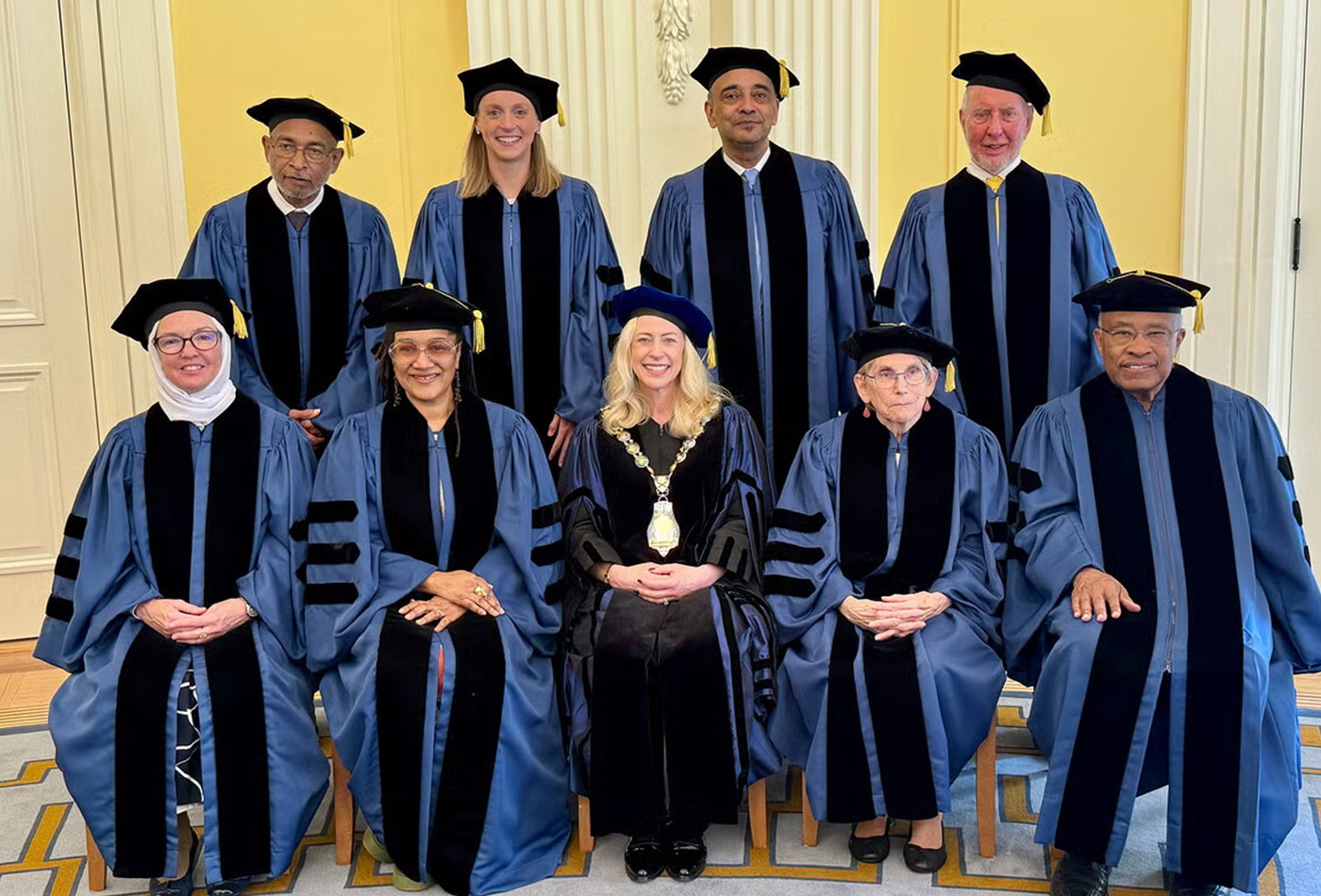
Stubbe was one of eight distinguished individuals to receive honorary degrees during Yale’s annual commencement.
JoAnne Stubbe, Novartis Professor of Chemistry, Emerita, was one of eight distinguished individuals to receive an honorary degree at Yale University’s 325th graduation ceremony this spring.
The awarding of honorary degrees—a Yale tradition since 1702—recognizes pioneering achievement and exemplary contributions to the common good.
“The eight individuals we honor this morning serve as examples to you, our graduates, to encourage you to aspire to excellence and to value those elements of human character that they embody: creativity, curiosity, discipline, integrity, and a passion for public service,” said Yale President Maurie McInnis. “Their presence here also honors you who graduate today, and all of us who are here to salute you.”
Stubbe was awarded a Doctor of Science degree in recognition of her groundbreaking science, elegant research, and inspirational teaching and mentorship.
“You have transformed our understanding of how life operates and evolves at the molecular level and reshaped how we think about the chemistry of living systems,” McInnis noted when awarding the degree. “Your deep and elegant research has revealed how enzymes harness the reactivity of free radicals—unstable entities often associated with damage and disorder—to carry out the precise chemistry required for life, enabling new targets for therapeutic development.”
This honorary doctorate joins a lengthy list of illustrious honors for Stubbe, which includes the National Medal of Science, the Welch Award, the Priestley Medal, the Pearl Meister Greengard Prize, the Benjamin Franklin Medal, the MIT James R. Killian Jr. Faculty Achievement Award , the Penn Chemistry Distinguished Alumni Award, and an additional honorary doctorate from Harvard University.
Stubbe, who retired from MIT in 2016, is renowned for her groundbreaking research on the mechanism of ribonucleotide reductases (RNRs)—essential enzymes required for DNA synthesis and repair in all organisms. Her interdisciplinary approach has significantly advanced the understanding of enzyme catalysis and the interface between chemistry and biology.