Startup Founder Helps Scientists Communicate
Chemistry alum Deborah Pan Dorner ’03 reflects on her career in this feature from the MIT Alumni Association's Slice of MIT.
This feature was originally posted on the MIT Alumni Association’s Slice of MIT.
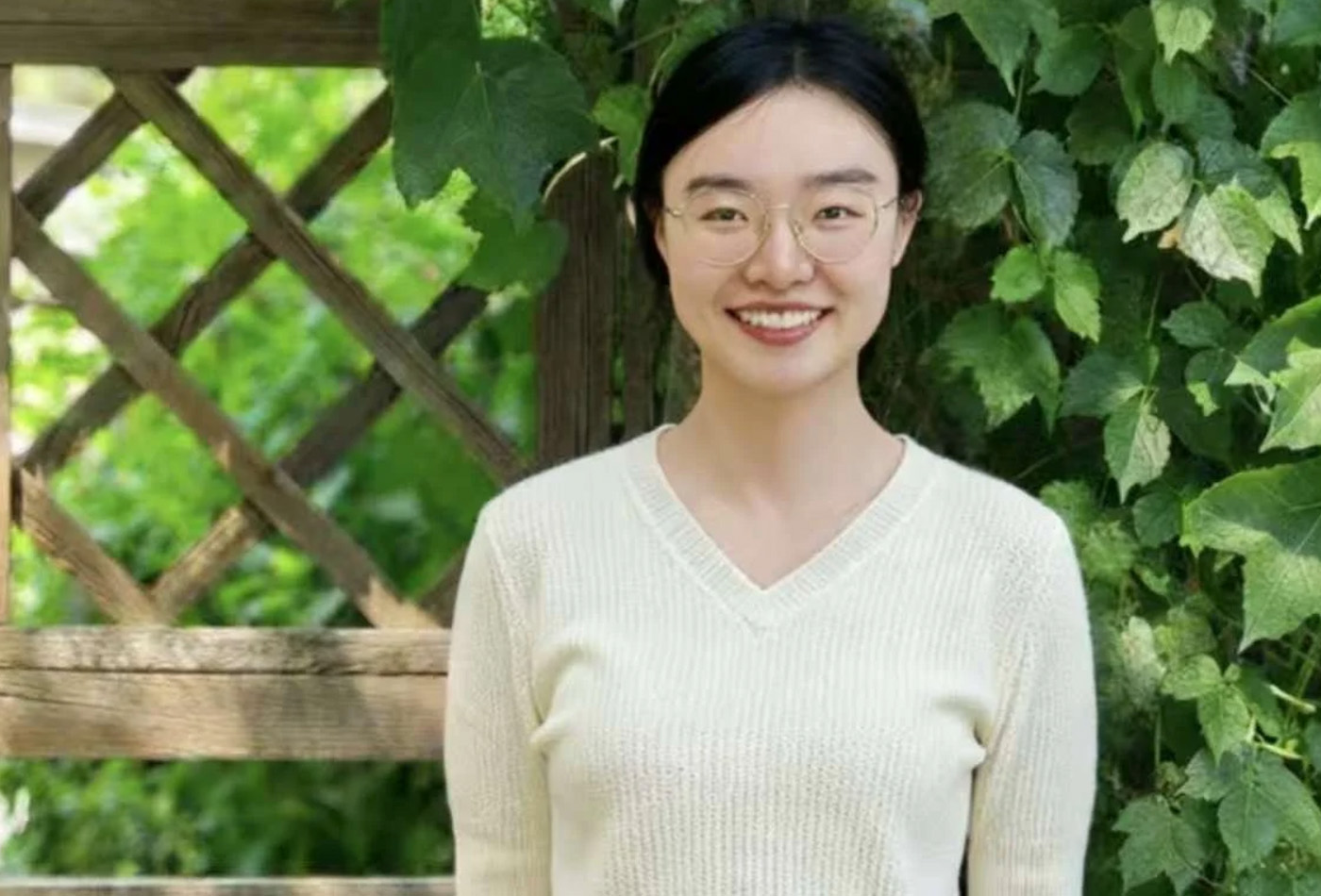
In retrospect, it’s easy to see that Deborah Pan Dorner ’03 was born to help people understand science. She learned some basics early from her father, an electrical engineer, who liked to give hands-on science and math lessons to his children. “He once had me throw things into a bathtub filled to the brim with water to demonstrate Archimedes’ principle of displacement,” recalls Dorner. “My mother wasn’t overly pleased with that experiment.”
Dorner’s childhood also gave her an exquisite sensitivity to language. “Growing up in New Jersey, my family conversed in a bespoke trifecta of English verbs, Taiwanese nouns, and Japanese word endings,” says Dorner. “Only the four of us spoke or understood it. I knew the people who heard us in the supermarket didn’t understand us. And I think that taught me that I could adapt language depending on the people I was speaking with.”
Today, Dorner’s facility for both science and language is paying off at Bond and Matter, a boutique healthcare marketing agency she cofounded in 2020. Partnering with biotech and pharmaceutical companies, Bond and Matter provides strategy, copywriting, and design services for projects ranging from the full-scale marketing launch of new vaccines targeted to healthcare professionals to public health education campaigns for consumers.
How do we take complex ideas like pandemics, vaccines, and cancer pathways and make them accessible and amenable to each audience? Looking back, I see it’s a lesson I learned at MIT.
Destiny or not, Dorner took a while to find her professional path. First, she and her sister, Caroline Pan ’95, fulfilled their father’s dream: “He always said he wished he’d come to America to study at MIT; he ended up at Carnegie Mellon University instead,” she says. Both sisters attended MIT, where Dorner majored in chemistry and Pan in mechanical engineering. “At MIT it soon became obvious that I wasn’t the smartest kid in class,” says Dorner. “It was a hard lesson but a good one that taught me to persevere. And it was clear that a long-time future in lab work might not work out; I was very clumsy, always dropping things.”
Despite her “butterfingers,” Dorner took a job after graduation as a research chemist in a lab at Merck. The job was more a placeholder than a career path. “Most of my Course 5 classmates were going to medical school or heading into PhD programs,” she explains. “I knew I didn’t want to follow either of those paths. I just didn’t know which path I did want to follow.”
It wasn’t until her boss asked her to review some slides in a meeting that she glimpsed what that path might be. “Even though I was by far the youngest person in the room, I made all these suggestions,” she says. “Let’s move the molecule from left side of the slide to the right. Let’s change the headline. My boss was impressed and said that maybe there was a future for me in writing about the science instead of doing it.”
Dorner left her job at Merck after three years and worked in a series of positions in medical communications. Over the next 14 years, she honed her wordsmith talents, grew skillful in the interplay between clinical content and creativity, and learned how best to engage with both consumers and health-care professionals. “When a physician says what we created captures the concept better than he could have, it’s enormously gratifying,” she says.
Ready for a new adventure, in 2020 she launched Bond and Matter with a colleague and friend, Sid Gokhale. The business name, which employs words with both scientific and conventional meanings, was chosen to convey the company’s dual focus on science and creativity.
“How do we take complex ideas like pandemics, vaccines, and cancer pathways and make them accessible and amenable to each audience? Looking back, I see it’s a lesson I learned at MIT, how to process large amounts of data and distill that into a narrative,” Dorner says. “And it’s a lesson I learned at home, in nightly conversation where we spoke our own language that mixed science, art, music, and culture all at the same time.”